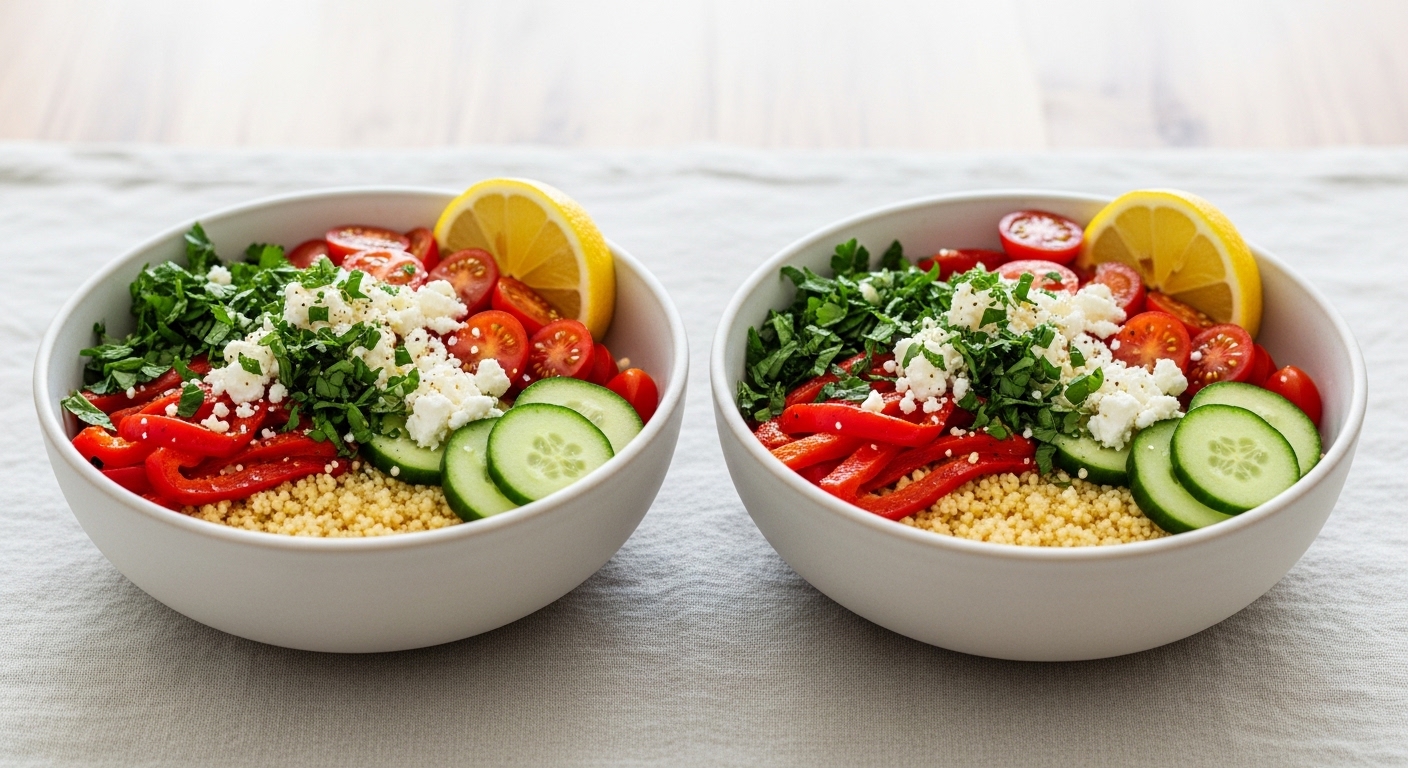
Imagine a bowl so bright, so full of life, it makes your taste buds do a little happy dance. That’s Mediterranean Couscous Bowls—a dish where fluffy couscous meets crisp vegetables, tangy olives, briny capers, and a zesty lemon-herb dressing. It’s not just a meal; it’s a celebration of sun-soaked flavors, inspired by the coastlines of Greece, Morocco, and Italy. Whether you’re packing for lunch, feeding a crowd at a picnic, or looking for a healthy dinner option, these bowls deliver bold taste and effortless style in every bite.
Packed with protein-rich chickpeas, fiber-filled veggies, and heart-healthy fats from avocado or olive oil, Mediterranean Couscous Bowls are as nutritious as they are delicious. They’re gluten-free (with the right couscous), low-carb friendly when adapted, and perfect for meal prep lovers who want something flavorful, not boring. Plus, they come together in under 30 minutes—no oven required.
Why You’ll Love This Recipe
- Taste that transports you to the Mediterranean: Every bite bursts with tangy lemon, earthy oregano, and savory garlic.
- Super easy to make: No complicated techniques—just cook, chop, mix, and enjoy.
- Meal-prep friendly: Make a big batch and eat for three days straight—it gets better as flavors meld.
- Fully customizable: Swap ingredients based on what’s fresh, seasonal, or in your fridge.
- Nutrition powerhouse: Packed with plant-based protein, antioxidants, and healthy fats.
- Perfect for any occasion: Great for lunch, dinner, potlucks, or even as a light main course.
Essential Ingredients for Your Mediterranean Couscous Bowls
Using quality, fresh ingredients is key to making these bowls shine. Here’s everything you’ll need:
- 1 cup whole wheat or gluten-free couscous (traditionally made from semolina, but GF versions work beautifully)
- 1½ cups water or low-sodium vegetable broth (for extra flavor)
- 1 can (15 oz) chickpeas, drained and rinsed
- 1 cucumber, diced
- 1 red bell pepper, finely chopped
- ½ red onion, thinly sliced
- ¼ cup Kalamata olives, pitted and halved
- 2 tbsp capers, drained
- ¼ cup fresh parsley or mint, chopped
- Juice of 1 large lemon (about 3–4 tbsp)
- 3 tbsp extra virgin olive oil
- 1 clove garlic, minced
- 1 tsp dried oregano
- Salt and black pepper to taste
- Optional add-ins: cherry tomatoes, avocado slices, feta cheese crumbles, grilled chicken, or shrimp
Kitchen Tools You’ll Need
- Small saucepan with lid
- Fine mesh strainer
- Bowl for mixing
- Cutting board and sharp knife
- Whisk (optional, for dressing)
- Measuring cups and spoons
Step-by-Step Instructions: How to Make Mediterranean Couscous Bowls
- Cook the couscous: Bring water or broth to a boil in a small saucepan. Stir in couscous, remove from heat, cover, and let sit for 5 minutes. Fluff with a fork and transfer to a large mixing bowl. Let cool slightly.
- Prepare the veggies: While couscous cooks, dice cucumber, chop bell pepper, slice red onion, and mince garlic. Drain and rinse chickpeas thoroughly.
- Make the dressing: In a small bowl, whisk together lemon juice, olive oil, garlic, oregano, salt, and pepper until smooth and emulsified.
- Assemble the bowl: Add all veggies, chickpeas, olives, capers, and herbs to the couscous. Pour the dressing over everything and gently fold to combine.
- Chill and serve: For best flavor, refrigerate for at least 30 minutes before serving. Top with optional extras like feta or avocado.
Pro Tips for Perfect Mediterranean Couscous Bowls
- Toast the couscous first (optional): Sauté dry couscous in olive oil for 2–3 minutes before adding liquid for a nuttier, more complex flavor.
- Don’t skip the resting time: Letting the bowl chill allows flavors to meld and textures to soften.
- Use room-temperature ingredients: This helps the dressing blend more evenly.
- Double the batch: These bowls keep well in the fridge for up to 4 days—ideal for meal prep.
- Boost protein: Add grilled chicken, shrimp, or white beans for a heartier version.
Creative Variations to Try
Healthy & Light Version
Skip the oil slightly and use a splash of apple cider vinegar instead of half the lemon juice. Add leafy greens like spinach or arugula for extra nutrients.
Spicy Mediterranean Couscous Bowls
Add a pinch of red pepper flakes, diced jalapeño, or a dash of harissa paste to the dressing for a fiery kick.
High-Protein Power Bowls
Top with grilled chicken breast, poached eggs, or lentils. Serve with a dollop of tzatziki for creaminess.
Keto-Friendly Couscous Alternative
Swap regular couscous for cauliflower rice or zucchini noodles. Use almond milk and omit chickpeas if needed.
Gluten-Free Option
Choose certified gluten-free couscous (like Trader Joe’s or Bob’s Red Mill brand). Always double-check labels.
What to Serve With Mediterranean Couscous Bowls
This dish shines as a complete meal, but pairs beautifully with:
- A warm crusty bread or pita for dipping
- Grilled halloumi cheese skewers
- A simple green salad with vinaigrette
- Sparkling water with lemon slices or herbal tea
For a festive touch, serve with a side of roasted sweet potatoes or grilled zucchini.
Storage and Reheating Tips
- Refrigerator: Store in an airtight container for up to 4 days.
- Freezer: Not recommended—couscous becomes mushy after freezing.
- Reheating: Eat cold or at room temperature. If reheating, add a splash of water or broth and microwave gently, stirring halfway through. Avoid overheating, or the couscous will lose its fluffy texture.
Frequently Asked Questions (FAQ)
Can I make Mediterranean Couscous Bowls ahead of time?
Absolutely! Assemble the bowls and store in the fridge for up to 48 hours. The longer they chill, the better the flavors blend.
Is couscous healthy?
Traditional couscous is made from semolina, which is high in carbohydrates and lower in fiber than whole grains. However, it’s still part of a balanced diet and rich in energy-boosting B vitamins. Opt for whole wheat or quinoa-based couscous for extra fiber.
Can I substitute couscous?
Yes! Try pearl barley, quinoa, farro, or even brown rice. Just adjust cooking times accordingly.
Are these bowls suitable for vegetarians?
Yes—this recipe is naturally vegetarian. Add feta or olives for extra flavor without meat.
How can I make this dish more filling?
Add protein like grilled chicken, salmon, lentils, or hard-boiled eggs. Include starchy veggies like roasted beets or sweet potato cubes.
Final Thoughts: Why These Bowls Belong in Your Rotating Menu
Mediterranean Couscous Bowls aren’t just another trendy recipe—they’re a flavor-packed, nutrient-dense solution for busy weeknights and relaxed weekends alike. With their vibrant colors, satisfying crunch, and sunshine-inspired taste, they bring the essence of coastal cuisine straight to your kitchen. Whether you’re new to Mediterranean flavors or a seasoned fan, this dish proves that healthy eating doesn’t mean sacrificing taste.
So go ahead—grab that bunch of parsley, squeeze a lemon, and treat yourself to something truly delicious. Your taste buds (and your body) will thank you.
Recipe Card: Mediterranean Couscous Bowls
| Prep Time | 15 minutes |
|---|---|
| Cook Time | 5 minutes |
| Total Time | 20–30 minutes + chilling |
| Servings | 4 |
| Calories | Approx. 380 per serving |
| Cuisine | Mediterranean |
| Course | Lunch, Dinner, Side Dish |
Serve chilled or at room temperature. Garnish with extra parsley and a sprinkle of lemon zest for a restaurant-worthy finish.