Dijon Salmon Tray Bake: A Flavorful One-Pan Wonder
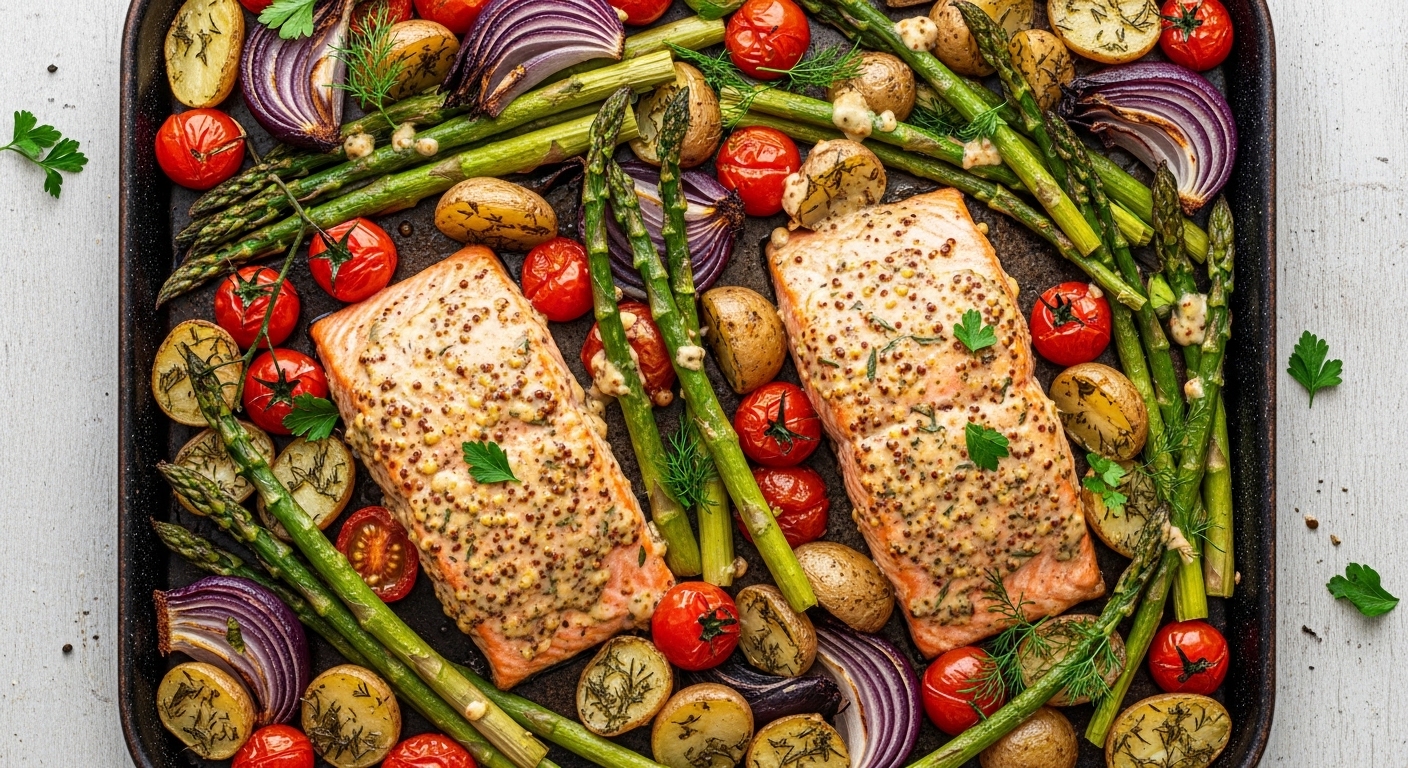
Looking for a dinner that’s as easy to make as it is delicious? The Dijon Salmon Tray Bake delivers rich, creamy flavor with minimal cleanup—perfect for busy weeknights or elegant weekend meals. This dish combines tender salmon fillets with a tangy Dijon mustard glaze, roasted vegetables, and herbs, all baked together in a single tray for maximum convenience and taste.
Originating from French culinary traditions, Dijon mustard adds a sharp, slightly sweet kick that elevates simple ingredients into something extraordinary. Whether you’re new to baking fish or a seasoned home cook, this recipe proves that impressive results don’t require hours in the kitchen or fancy equipment.
Why You’ll Love This Dijon Salmon Tray Bake
This one-pan meal is designed for real life. With fewer dishes to wash and bold flavors that satisfy even the pickiest eaters, it’s no wonder this dish has become a household favorite. The salmon stays moist thanks to the buttery Dijon sauce, while roasted veggies soak up every last bit of flavor. Plus, it’s naturally gluten-free (when using certified Dijon) and packed with omega-3s—making it both indulgent and nutritious.
Whether you’re meal-prepping for the week, impressing guests, or simply craving something comforting yet refined, this tray bake hits the spot every time. And because it uses pantry staples like garlic, lemon, and fresh thyme, you likely already have everything on hand.
Quick Recipe Summary
| Prep Time | 15 minutes |
| Cook Time | 25–30 minutes |
| Total Time | 40–45 minutes |
| Servings | 4 |
| Cuisine | French-inspired / Modern British |
| Course | Dinner |
| Calories (approx.) | 480 kcal per serving |
Essential Ingredients & Measurements
Gather these ingredients before starting—this recipe comes together quickly and efficiently when you have everything measured out:
- Salmon fillets – 4 skin-on, bone-in fillets (~6 oz each), patted dry
- Dijon mustard – 3 tbsp (preferably French-style for best flavor)
- Olive oil – 2 tbsp, plus extra for drizzling
- Garlic – 3 cloves, minced (or 1 tsp garlic powder if pressed for time)
- Lemon – 1 whole (zest + juice), plus extra wedges for serving
- Fresh thyme – ½ tsp finely chopped (or ¼ tsp dried)
- Salt and black pepper – to taste
- Broccoli florets – 3 cups, cut into bite-sized pieces
- Baby potatoes – 1 lb, halved or quartered (red or Yukon Gold work best)
- Red onion – ½ medium, sliced into thick wedges
- Fresh parsley – chopped, for garnish
Optional Add-Ons for Extra Flavor
- Capers or cornichons for briny contrast
- Crumbled goat cheese on top after baking
- Toasted almonds or pine nuts for crunch
Step-by-Step Instructions
- Preheat oven to 400°F (200°C). Line a large rimmed baking sheet with parchment paper or foil for easy cleanup.
- Prepare the marinade: In a small bowl, mix Dijon mustard, olive oil, garlic, lemon zest, lemon juice, thyme, salt, and pepper until smooth.
- Arrange vegetables on the prepared tray. Scatter broccoli, potatoes, and red onion evenly across the pan—spread them out so they cook evenly.
- Drizzle vegetables with 1 tablespoon of the mustard mixture and toss lightly to coat. Reserve most of the remaining glaze for the salmon.
- Place salmon fillets on top of the vegetables, skin-side down. Generously brush each fillet with the reserved Dijon glaze, making sure it’s well coated.
- Bake for 20–25 minutes, depending on thickness. Salmon is done when it flakes easily with a fork and reaches an internal temperature of 145°F (63°C).
- Rest briefly for 3–5 minutes before serving. Garnish with fresh parsley and serve with lemon wedges.
Chef Tips for Perfect Results
- Don’t skip drying the salmon: Excess moisture prevents a nice sear and can cause steaming instead of roasting.
- Cut veggies uniformly: This ensures even cooking—especially important for potatoes, which take longer than broccoli.
- Use high-quality Dijon: Lower-end brands can be too vinegary or thin. Look for a brand with a smooth, creamy texture and balanced sweetness.
- Check doneness early: Overcooked salmon dries out fast. Start checking at 20 minutes.
- Let the tray cool slightly before handling—it retains heat well and will finish cooking off the heat.
Common Mistakes to Avoid
- Overcrowding the pan: Leave space between salmon and veggies for proper air circulation.
- Skipping acidity: Lemon juice brightens the dish and cuts through the richness of the mustard.
- Using cold ingredients straight from the fridge: Let everything come to room temperature for consistent cooking.
- Not preheating the oven: Cold ovens lead to uneven baking and soggy edges.
Ingredient Substitutions & Variations
Flexibility is key in home cooking! Here’s how to adapt this recipe:
- Vegetable swaps: Swap broccoli for asparagus, green beans, or zucchini. Use sweet potato instead of regular potatoes for a caramelized edge.
- Protein alternatives: Replace salmon with cod, haddock, or even chicken thighs (adjust cook time accordingly).
- Vegan option: Use firm tofu or tempeh marinated in tamari, maple syrup, and Dijon mustard.
- Indian twist: Add curry powder, cumin, and turmeric to the mustard glaze for a spiced-up version. Serve with basmati rice and naan.
- Healthier low-carb version: Omit potatoes; double the amount of asparagus and add cherry tomatoes.
Restaurant-Style Version
For a more upscale presentation, finish the dish under the broiler for 2–3 minutes to brown the tops. Sprinkle with microgreens or edible flowers before serving. A dollop of crème fraîche or Greek yogurt mixed with lemon makes a luxurious side sauce.
Serving Suggestions
Pair your Dijon Salmon Tray Bake with:
- Steamed rice or quinoa for a complete grain base
- A crisp green salad dressed with vinaigrette to balance richness
- Sautéed spinach or sautéed mushrooms on the side
- Whole-grain bread to mop up leftover juices
Serve immediately while hot—the salmon benefits from that first warm bite!
Storage & Reheating Guide
- Refrigerator: Store leftovers in an airtight container for up to 3 days.
- Freezer: Not recommended for salmon—texture degrades upon thawing.
- Reheating: Warm gently in a skillet over low heat with a splash of water or broth to prevent drying. Alternatively, microwave for 1–2 minutes, covered, at 50% power.
Nutrition Facts (Approximate Per Serving)
| Calories | 480 kcal |
| Protein | 34 g |
| Fat | 28 g |
| Carbohydrates | 22 g |
| Fiber | 4 g |
| Sugar | 5 g |
| Sodium | 420 mg |
| Omega-3 Fatty Acids | ~1.8 g |
Frequently Asked Questions (FAQs)
Can I use frozen salmon for this recipe?
Yes, but thaw it completely in the refrigerator first. Pat dry thoroughly before seasoning—moisture is the enemy of good browning.
What if I don’t have fresh thyme?
Dried oregano, rosemary, or even a pinch of smoked paprika can substitute. Just reduce the amount by half.
How do I know when the salmon is perfectly cooked?
It should look opaque near the skin and flake easily with a fork. If it’s still translucent around the center, give it another 2–3 minutes.
Can I make this ahead of time?
You can prep the marinade and chop veggies up to a day in advance. Assemble and refrigerate, then bake when ready—add 5–7 extra minutes if cold.
Is Dijon Salmon Tray Bake suitable for special occasions?
Absolutely! Its elegant presentation and restaurant-quality flavor make it ideal for dinner parties. Simply elevate with wine pairings like Sauvignon Blanc or Pinot Noir.
Key Takeaways
- The Dijon Salmon Tray Bake combines ease and elegance in one pan.
- Bold flavors come from Dijon mustard, lemon, and fresh herbs—no complicated techniques needed.
- Customize with your favorite veggies or proteins to keep meals exciting.
- It’s nutritious, satisfying, and perfect for busy lifestyles.
Final Thoughts: Your New Go-To Dinner
If you’ve been searching for a dinner that feels gourmet but takes under an hour, your search ends here. The Dijon Salmon Tray Bake isn’t just a meal—it’s a confidence booster. Every bite delivers the bright, savory punch of Dijon paired with tender fish and roasted goodness. Best of all, cleanup is a breeze.
Next time you’re staring into your fridge wondering what to cook, reach for salmon, mustard, and those veggies you’ve been meaning to use. Trust me, this recipe transforms ordinary ingredients into something memorable. Give it a try tonight—and let us know how it turns out!