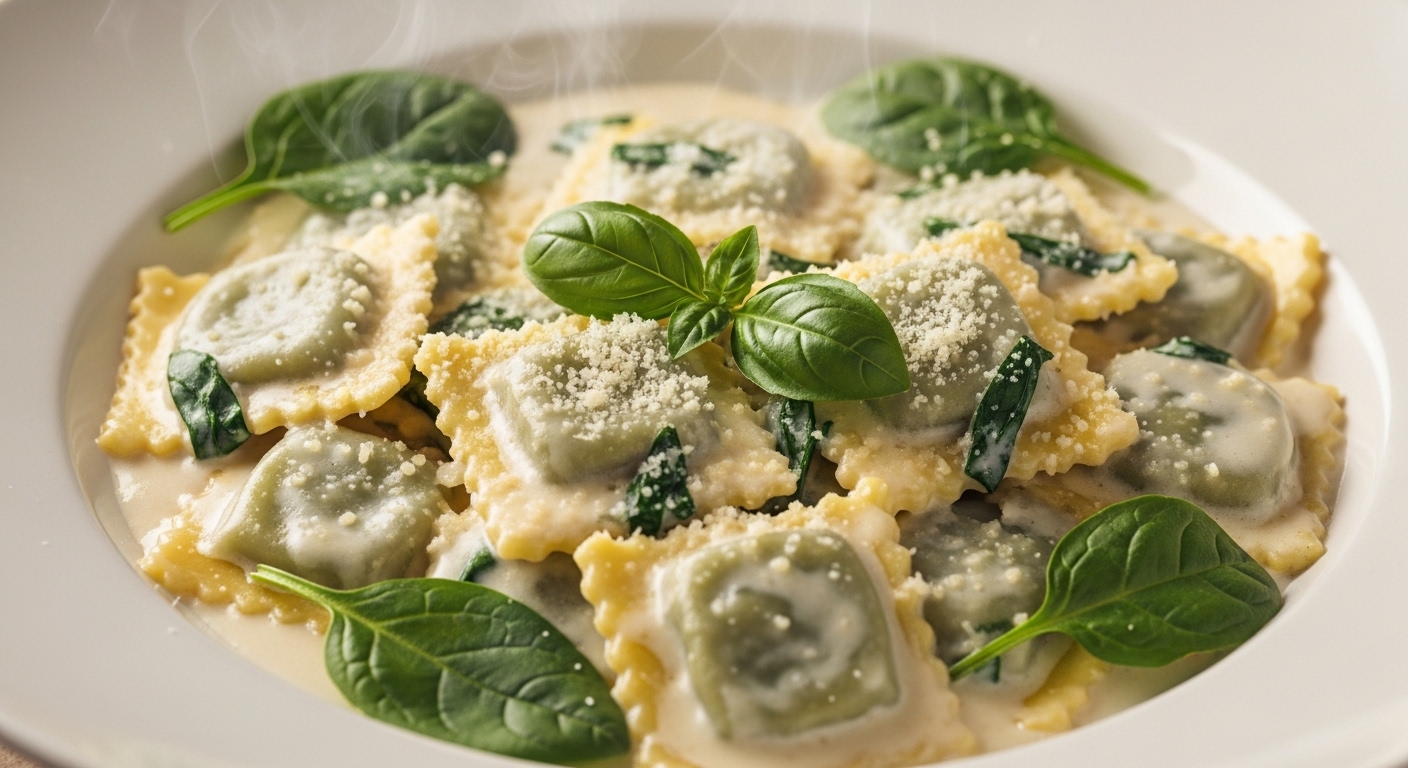
Have you ever tasted a bite of perfectly cooked creamy spinach ravioli and felt like you’ve been transported to a cozy trattoria in Tuscany? There’s something magical about the way tender pasta enveloped in rich, velvety cheese filling melts on your tongue—especially when it’s paired with a light but flavorful sauce. This beloved Italian dish isn’t just comforting; it’s elegant, satisfying, and surprisingly simple to make at home. Whether you’re hosting guests or treating yourself to a gourmet dinner, creamy spinach ravioli delivers both indulgence and ease. In this guide, we’ll walk you through an authentic yet approachable recipe that captures the essence of traditional Italian cooking—without requiring hours in the kitchen.
Quick Recipe Summary
| Prep Time | Cook Time | Total Time | Servings | Cuisine | Course | Calories (approx.) |
|---|---|---|---|---|---|---|
| 30 minutes | 15–20 minutes | 45–50 minutes | 4 | Italian | Dinner / Main Course | 480 kcal |
What Makes Creamy Spinach Ravioli So Special?
The beauty of creamy spinach ravioli lies in its balance of textures and flavors. Fresh spinach adds earthiness and nutrients, while ricotta and mozzarella create a luscious, melt-in-your-mouth interior. When nestled in a delicate pasta shell and simmered in butter, sage, or a simple tomato reduction, each bite becomes a symphony of savory notes. Unlike frozen versions found in stores, homemade creamy spinach ravioli offers full control over ingredients—ensuring no preservatives, excess sodium, or artificial fillers compromise the experience. Plus, making it from scratch lets you customize the filling to your taste, whether you prefer garlic-infused cream or a hint of nutmeg.
Essential Ingredients for Perfect Creamy Spinach Ravioli
- Pasta dough: 2 cups all-purpose flour + 1 egg (plus 1 tsp olive oil)
- Filling:
- 1 cup fresh baby spinach (blanched and squeezed dry)
- 1 cup ricotta cheese
- ½ cup grated Parmesan
- ¼ cup shredded mozzarella
- 2 cloves garlic, minced
- Zest of ½ lemon
- Salt and freshly ground black pepper to taste
- Sauce:
- 3 tbsp unsalted butter
- 2–3 fresh sage leaves
- Optional: ¼ cup heavy cream or vegetable broth for extra richness
- For serving: Extra Parmesan, chopped parsley, crushed red pepper flakes
Step-by-Step Instructions
1. Prepare the Pasta Dough
On a clean surface, mound your flour and create a well in the center. Crack the egg into the well, add olive oil, and begin mixing from the inside outward using a fork. Gradually incorporate the flour until a shaggy dough forms. Knead by hand for 8–10 minutes until smooth and elastic—this develops gluten for pliable sheets. Wrap in plastic wrap and rest for 30 minutes at room temperature. This resting period relaxes the gluten, making rolling easier.
2. Blanch and Drain Spinach
Bring a pot of salted water to a boil. Add spinach and cook for 30 seconds only—just enough to wilt it slightly. Immediately transfer to an ice bath using tongs to stop cooking. Squeeze out every drop of moisture with your hands or a clean towel. Overly wet spinach will make your filling soggy, so be thorough here.
3. Make the Filling
In a bowl, combine blanched spinach, ricotta, Parmesan, mozzarella, garlic, lemon zest, and a generous pinch each of salt and pepper. Mix gently but thoroughly—overmixing can make the filling tough. Taste and adjust seasoning if needed.
4. Roll and Fill the Ravioli
Divide dough into four pieces. Keep one piece covered while working with one at a time. Roll through a pasta machine starting at setting #1, gradually thinning to #6 or until paper-thin. Alternatively, roll by hand with a rolling pin. Lay thin sheets on a floured surface, spoon small mounds of filling (about 1 tsp per ravioli) spaced 1 inch apart. Brush edges with water, place another sheet on top, and press firmly around each mound to seal, removing air bubbles. Use a ravioli cutter or pizza wheel to trim into squares or circles. Press corners together securely.
5. Cook the Ravioli
Bring a large pot of salted water to a gentle boil. Gently slide ravioli into the water—do not overcrowd. Cook for 3–5 minutes until they float to the surface and the pasta feels al dente. Scoop out with a spider strainer, being careful not to break them.
6. Finish with Butter & Sage (Classic Sauce)
Melt butter in a skillet over medium heat. Add sage leaves and toast for 1–2 minutes until fragrant but not browned. Toss warm ravioli directly into the pan, adding a splash of pasta water if needed to loosen. Sprinkle with extra Parmesan and parsley before serving immediately.
Chef Tips for Restaurant-Quality Results
- Don’t skip resting the dough: It ensures even texture and prevents cracking during rolling.
- Keep everything cold: Chilled filling helps maintain shape during cooking and prevents bursting.
- Use a damp cloth while filling: Covers unsealed ravioli to prevent drying.
- Test one ravioli first: If it breaks open, your filling might be too wet or the seal insufficient.
- Serve immediately: Homemade ravioli are best enjoyed right after cooking for maximum tenderness.
Common Mistakes to Avoid
- Overfilling: Leads to broken ravioli during boiling. Stick to 1 tsp per piece.
- Skipping salt in pasta water: Undermines flavor—use about 1 tbsp salt per quart of water.
- Boiling too vigorously: Causes ravioli to collide and tear. Keep water at a lively simmer.
- Using store-bought dry spinach: Fresh is far superior in texture and color.
Ingredient Substitutions & Variations
Vegetarian Option:
This recipe is naturally vegetarian. For a vegan version, swap ricotta with blended silken tofu or cashew cream, and use nutritional yeast instead of Parmesan.
Gluten-Free:
Replace all-purpose flour with a certified gluten-free blend (e.g., brown rice and tapioca starch mix). Note: texture may differ slightly.
Flavor Boosters:
- Add sautéed mushrooms or sun-dried tomatoes to the filling for depth.
- Swap sage with rosemary or thyme in the sauce.
- Drizzle finished ravioli with balsamic glaze for sweetness contrast.
Serving Suggestions
Pair creamy spinach ravioli with a crisp white wine like Pinot Grigio or Vermentino. Garnish with shaved Parmesan, toasted pine nuts, or microgreens. For a complete meal, serve alongside a simple arugula salad dressed with lemon vinaigrette and crusty bread on the side.
Storage & Reheating
Refrigerator: Uncooked ravioli can be stored on a floured tray in the fridge for up to 2 days. Cooked ravioli last 2–3 days in an airtight container.
Freezing: Place uncooked ravioli on a baking sheet, freeze until solid, then transfer to a freezer bag for up to 1 month. Boil directly from frozen—add 1–2 extra minutes to cooking time.
Reheating: Never microwave plain pasta. Instead, reheat in a pan with a bit of butter and pasta water over low heat until warmed through.
Nutrition Facts (Approximate Per Serving)
- Calories: 480
- Protein: 18g
- Carbohydrates: 42g
- Fat: 24g
- Fiber: 2g
- Sugar: 3g
- Sodium: 520mg
- Calcium: 28% DV
- Iron: 12% DV
Key Takeaways
- Homemade creamy spinach ravioli deliver superior flavor, texture, and customization compared to store-bought.
- The secret to success lies in proper dough handling, precise filling measurement, and careful sealing.
- This dish balances comfort and sophistication—ideal for weeknight dinners or special occasions.
- With minor tweaks, it can easily adapt to dietary preferences like vegan or gluten-free.
- Mastering this recipe opens the door to countless pasta innovations—try different cheeses, herbs, or sauces next time.
Frequently Asked Questions
Can I make creamy spinach ravioli ahead of time?
Yes! Uncooked ravioli freeze beautifully. Cooked ones should be used within 2–3 days refrigerated or frozen for up to 1 month.
Why did my ravioli split open during cooking?
Most likely due to overfilling, poor sealing, or boiling too vigorously. Ensure tight seals and use gentle, rolling simmer.
Is spinach necessary in the filling?
While traditional recipes call for spinach, you can substitute with kale (blanched), chard, or even artichoke hearts for variety—just drain well!
How do I prevent sticking when assembling ravioli?
Lightly dust all surfaces with flour, avoid excess filling, and press edges firmly without tearing the pasta.
Can I use pre-made pasta sheets?
Absolutely! Just ensure they’re fresh or high-quality dried sheets. Store-bought can sometimes be brittle.
Conclusion
Creamy spinach ravioli may seem like a dish reserved for skilled chefs, but with patience, practice, and these foolproof techniques, anyone can master it at home. The result? A plate that looks impressive, tastes divine, and brings people together. So roll up your sleeves, gather your ingredients, and let the aroma of fresh pasta fill your kitchen. Once you’ve tried this, you’ll find yourself reaching for the ravioli maker again and again—because sometimes, the simplest dishes hold the deepest joy.
Leave a Reply