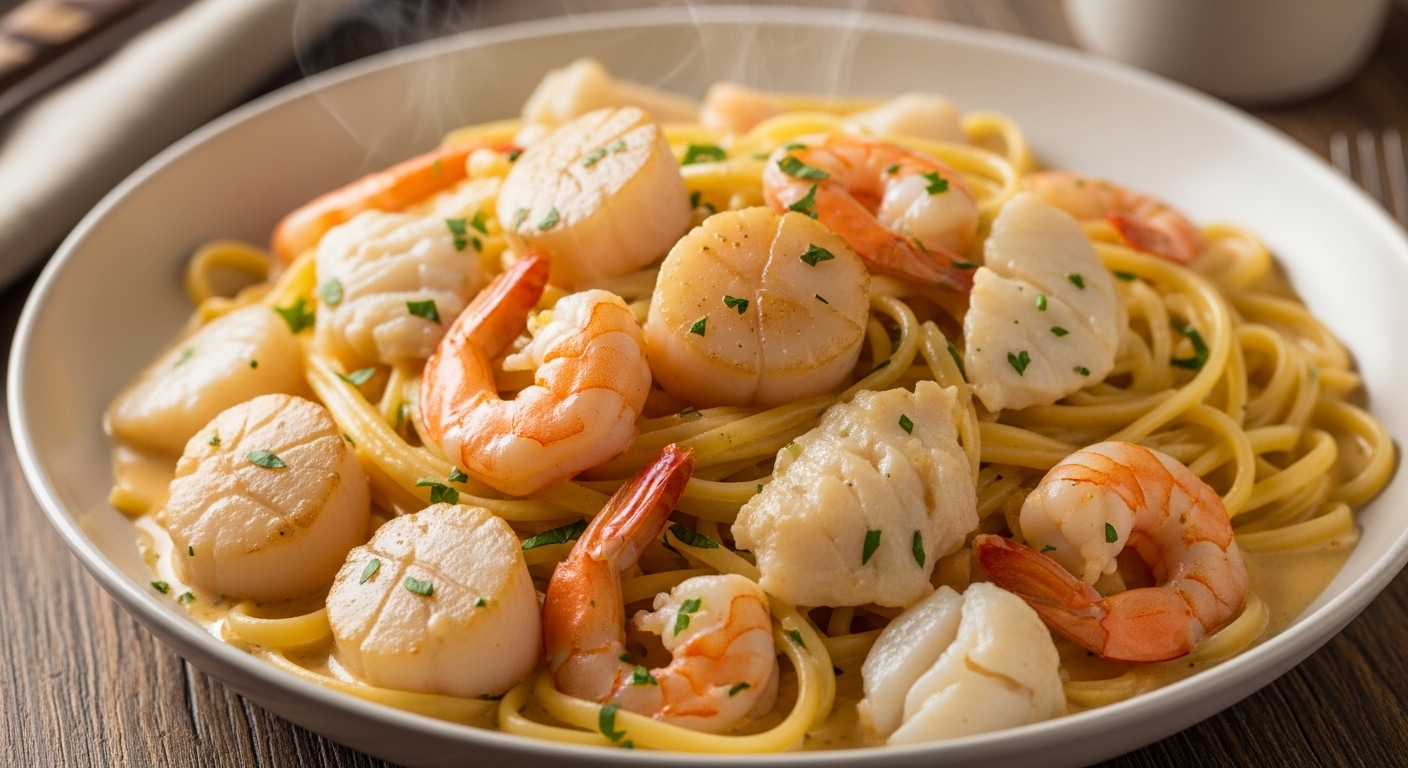
There’s something undeniably magical about a bowl of **creamy seafood pasta**—warm, rich, and brimming with the ocean’s bounty. Whether you’re hosting a dinner party or treating yourself after a long week, this dish delivers on flavor, elegance, and pure comfort. The creamy sauce coats every strand of pasta, while tender shrimp, succulent scallops, and flaky fish come together in perfect harmony. Originating from coastal Italian kitchens, creamy seafood pasta has become a global favorite—and for good reason. It’s not just a meal; it’s an experience.
In this detailed guide, we’ll walk you through everything you need to know to master this restaurant-quality dish at home—from selecting the freshest ingredients to avoiding common pitfalls. You’ll learn how to balance flavors, build a silky sauce, and serve a dish that feels indulgent yet achievable.
Quick Recipe Summary
- Prep Time: 15 minutes
- Cook Time: 25 minutes
- Total Time: 40 minutes
- Servings: 4
- Cuisine: Italian-American
- Course: Main Course
- Calories: ~650 per serving
Why Creamy Seafood Pasta Is Worth Every Effort
Creamy seafood pasta isn’t just about convenience—it’s about transformation. With minimal effort, you can turn simple pantry staples into a luxurious meal that rivals high-end trattorias. The secret lies in layering flavors: garlic, white wine, fresh herbs, and a velvety cream base create depth without overwhelming the delicate taste of seafood.
This dish is incredibly versatile. You can customize it with different types of shellfish, swap in gluten-free pasta, or even make it dairy-free for dietary needs. And because seafood cooks quickly, there’s no risk of overcooking—just pure, tender perfection.
Essential Ingredients for Creamy Seafood Pasta
Quality matters when it comes to seafood. Freshness is non-negotiable. Here’s what you’ll need:
- 1 lb (450g) linguine or fettuccine – Choose high-quality dried pasta for best texture.
- 1 lb mixed seafood – Shrimp (peeled), scallops, and cod or haddock (cut into chunks)
- 1 cup heavy cream – Full-fat gives the richest mouthfeel.
- ½ cup unsalted butter – For richness and emulsification.
- 3 cloves garlic – Minced finely for aromatic depth.
- ½ cup dry white wine – Adds brightness and deglazes the pan beautifully.
- 1 tbsp olive oil – For sautéing.
- 1 lemon – Zest and juice for acidity and freshness.
- ¼ cup grated Parmesan cheese – Nutty and salty, enhances creaminess.
- Salt and freshly ground black pepper – To taste.
- Fresh parsley – Chopped, for garnish.
Step-by-Step Cooking Instructions
- Boil the pasta: Bring a large pot of salted water to a boil. Cook linguine according to package instructions until al dente. Reserve 1 cup of pasta water before draining.
- Sauté garlic: Heat olive oil and 2 tablespoons of butter in a large skillet over medium heat. Add minced garlic and cook for 1 minute until fragrant—do not let it brown.
- Deglaze with wine: Pour in white wine and simmer for 2–3 minutes to reduce slightly. This builds flavor without making the dish too alcoholic.
- Add seafood: Increase heat to medium-high. Add shrimp and scallops first (they take longer), followed by fish chunks. Cook for 3–4 minutes per side until opaque and cooked through. Remove and set aside.
- Make the sauce: Reduce heat to low. Stir in remaining butter, cream, lemon zest, and half the Parmesan. Simmer gently for 2–3 minutes until slightly thickened.
- Combine pasta and sauce: Add drained pasta to the skillet. Toss well, adding reserved pasta water as needed to loosen the sauce. Fold in seafood and lemon juice.
- Finish and serve: Garnish with parsley, extra Parmesan, and a twist of black pepper. Serve immediately.
Chef’s Tips for Restaurant-Quality Results
- Pat seafood dry: Before cooking, pat all seafood completely dry with paper towels. This ensures proper browning instead of steaming.
- Don’t overcook: Seafood cooks fast—overdoing it makes it rubbery. Remove from heat when just done.
- Use quality wine: Even if you’re not drinking it, a decent white wine elevates the sauce. Avoid overly sweet or cheap varieties.
- Reserve pasta water: Starchy water is your best friend for emulsifying the sauce and helping it cling to the noodles.
- Season gradually: Taste the sauce before adding salt—seafood and cheese already provide plenty of umami.
Common Mistakes to Avoid
- Browning garlic: Burning garlic turns bitter. Keep heat moderate and stir constantly.
- Thin sauce: If the cream separates, add a splash of pasta water and whisk vigorously to re-emulsify.
- Soggy seafood: Overcrowding the pan causes steaming instead of searing. Cook in batches if necessary.
- Neglecting acid: Without lemon juice, the dish feels flat. Always finish with fresh citrus.
Ingredient Substitutions & Variations
Vegan Creamy Seafood Pasta
Swap heavy cream for full-fat coconut milk or cashew cream. Use tofu scramble or king oyster mushrooms as “scallops.”
Gluten-Free Version
Use gluten-free pasta labeled “al dente.” Brands like Barilla or DeLallo work well.
Low-Carb Alternative
Substitute linguine with zucchini ribbons or shirataki noodles.
Spicy Kick
Add red pepper flakes or a dash of hot sauce for heat.
Indian-Inspired Twist
Use garam masala, coconut cream, and add mussels or clams with curry leaves.
Serving Suggestions
- Serve with a crisp Sauvignon Blanc or Pinot Grigio.
- Accompany with garlic bread or a simple arugula salad with lemon vinaigrette.
- Garnish with microgreens or edible flowers for a photogenic plate.
- For a festive touch, top with crispy pancetta or smoked salmon.
Storage & Reheating Instructions
- Refrigerate: Store leftovers in an airtight container for up to 3 days.
- Freeze: Not recommended—cream-based sauces separate upon thawing.
- Reheat: Warm gently in a saucepan over low heat, adding a splash of cream or pasta water to restore consistency. Do not boil vigorously.
Nutrition Facts (Approximate Per Serving)
- Calories: 650
- Protein: 32g
- Fat: 40g
- Carbohydrates: 55g
- Fiber: 2g
- Sugar: 3g
- Sodium: 680mg
Key Takeaways
- Creamy seafood pasta combines tender seafood, rich sauce, and perfectly cooked pasta for a satisfying meal.
- Fresh ingredients and proper technique are key to success.
- The dish is highly customizable for dietary preferences.
- With practice, you can replicate restaurant-quality results at home.
FAQs
1. Can I use frozen seafood?
Yes, but thaw it completely and pat dry. Frozen seafood may release excess water, so adjust cooking time accordingly.
2. What if I don’t have white wine?
You can substitute with chicken broth or lemon juice diluted in water. While less complex, it still works.
3. How do I prevent the cream from curdling?
Never boil the cream mixture after adding it. Keep heat low and stir gently. Adding cold pasta helps stabilize the temperature.
4. Can I make this ahead of time?
Best enjoyed fresh, but you can cook seafood and sauce separately up to a day ahead. Reassemble and reheat gently.
5. What’s the best pasta shape?
Linguine is ideal—its wide surface area holds the sauce well. Fettuccine also works, but avoid thin pastas like spaghetti.
Conclusion: Elevate Your Dinner Game with Creamy Seafood Pasta
If you’ve ever wanted to impress someone with a homemade meal that tastes like it came from a seaside villa, **creamy seafood pasta** is your answer. It’s elegant, comforting, and surprisingly easy once you know the tricks. Whether you’re cooking for loved ones or craving a little luxury, this dish delivers on all fronts.
Remember: freshness, timing, and patience are your allies. Don’t rush the sauce, respect the seafood, and always taste as you go. With this recipe, you’re not just making pasta—you’re crafting a moment of joy.
So roll up your sleeves, fire up the stove, and get ready to enjoy one of the most beloved comfort foods of all time. Your taste buds will thank you.
Leave a Reply