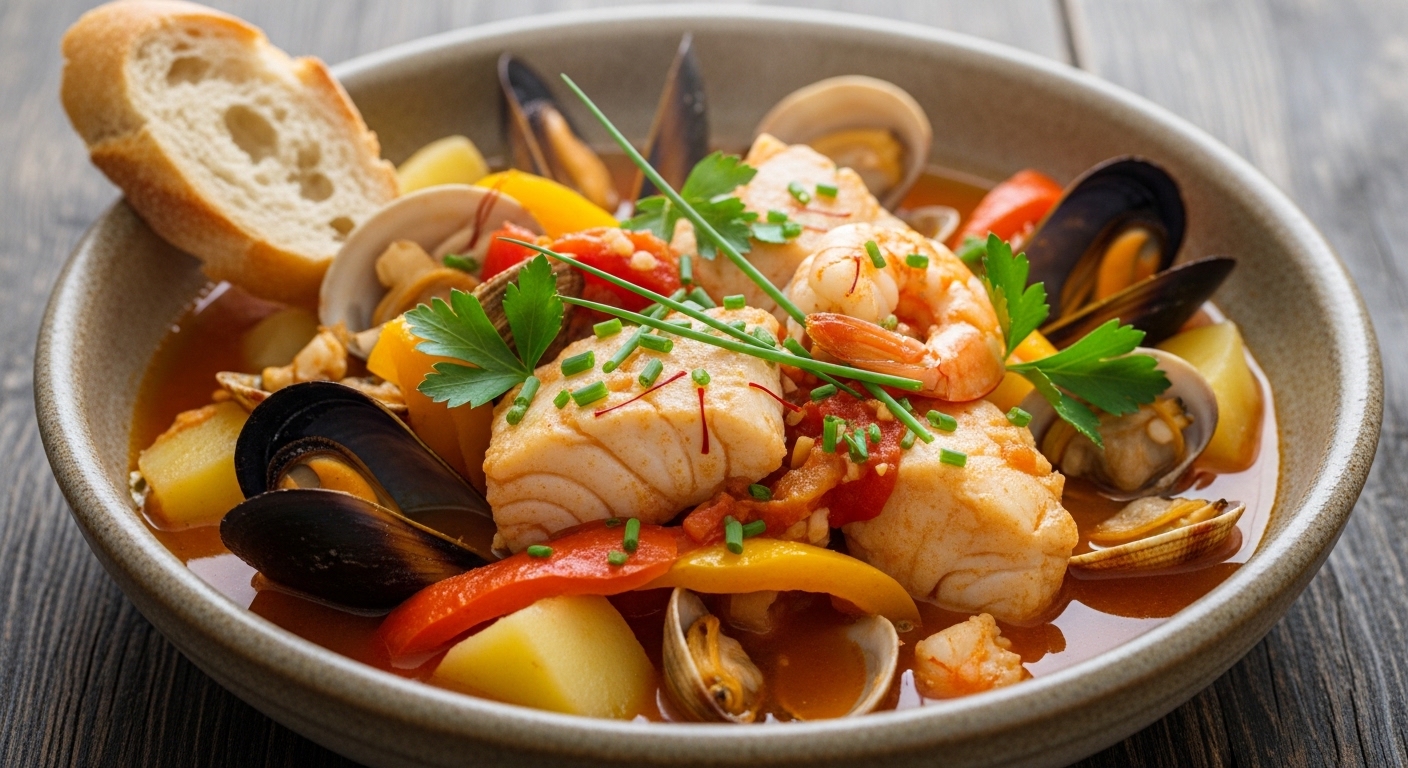
Looking for a flavorful, comforting fish stew that captures the essence of Catalonia’s seaside cuisine? Catalan fish stew—known locally as suquet de peix—is a traditional coastal dish bursting with fresh seafood, saffron-infused broth, and bold Mediterranean flavors. This rustic yet elegant stew has been simmered in Catalan households for centuries, offering a taste of the sea with every spoonful. Whether you’re hosting a dinner party or craving a warm, nourishing meal after a long day, this recipe delivers rich umami depth and vibrant color. Let’s dive into how to recreate this beloved Spanish classic in your own kitchen.
Key Takeaways
- Catalan fish stew is a traditional Mediterranean dish featuring fresh fish, shellfish, and aromatic vegetables.
- The key flavors come from saffron, garlic, paprika, and tomatoes, balanced with white wine and herbs.
- This recipe serves 4–6 and takes about 45 minutes total time.
- Best served hot over crusty bread or rice to soak up the fragrant broth.
Quick Recipe Summary Table
| Prep Time | Cook Time | Total Time | Servings | Cuisine | Course | Calories (approx.) |
|---|---|---|---|---|---|---|
| 20 minutes | 25 minutes | 45 minutes | 4–6 | Catalan / Spanish | Main Course | 320 kcal |
What Makes Catalan Fish Stew Special?
Catalan fish stew is more than just a seafood medley—it’s a celebration of Catalonia’s fishing heritage along the Costa Brava. Originating from coastal towns like Cadaqués and Girona, suquet de peix was traditionally made by fishermen using whatever catch was available that day. The stew is known for its creamy tomato-based broth, enriched with saffron for golden hue and floral aroma, and thickened with a roux of flour and olive oil. Unlike French bouillabaisse, it’s less complex in spices but deeper in texture and soul. Each bite carries the warmth of the Mediterranean sun and the simplicity of honest cooking.
Why Home Cooks Love It
- Rich, comforting broth that clings to every ingredient.
- Flexible ingredients—use any firm fish and shellfish you prefer.
- One-pot wonder—minimal cleanup, maximum flavor.
- Perfect for sharing—ideal for family meals or dinner parties.
Essential Ingredients for Authentic Catalan Fish Stew
To achieve the true taste of Catalan fish stew, use fresh, high-quality ingredients. Here’s what you’ll need:
Broth & Base
- 3 tbsp extra virgin olive oil
- 1 large onion, finely chopped
- 3 garlic cloves, minced
- 1 red bell pepper, diced
- 2 medium carrots, sliced
- 2 celery stalks, diced
- 1 tsp sweet paprika
- 1 pinch saffron threads (about ¼ tsp)
- ½ cup dry white wine
- 1 (28 oz) can crushed tomatoes or 2 cups fresh tomatoes, blended
- 4 cups fish stock or seafood broth
- 2 tbsp tomato paste
- 1 bay leaf
- Salt and black pepper to taste
Fish & Seafood
- 1 lb firm white fish fillets (cod, halibut, or monkfish), cut into chunks
- 1 lb mixed shellfish (mussels, clams, shrimp, squid), cleaned
- 12 oz firm fish like monkfish or swordfish, optional
Thickening & Garnish
- 2 tbsp all-purpose flour
- Fresh parsley, chopped (for garnish)
- Lemon wedges (for serving)
Step-by-Step Cooking Instructions
- Sauté the aromatics: Heat olive oil in a large pot over medium heat. Add onion, garlic, bell pepper, carrots, and celery. Cook for 8–10 minutes until softened and golden at the edges.
- Add spices: Stir in paprika and saffron. Cook for 1 minute to bloom the flavors.
- Deglaze with wine: Pour in white wine, scraping the bottom of the pot. Let it reduce by half, about 3–4 minutes.
- Build the stew: Add crushed tomatoes, tomato paste, fish stock, and bay leaf. Bring to a gentle boil, then reduce heat and simmer for 10 minutes.
- Thicken the broth: In a small bowl, mix flour with 2 tbsp cold water to make a slurry. Slowly whisk into the stew. Simmer 5 minutes until slightly thickened.
- Add seafood: Start with mussels and clams (they take longer). Add white fish and squid. Cover and cook 5–7 minutes until fish flakes easily and shellfish open.
- Final seasoning: Discard any unopened shellfish. Season with salt and pepper. Remove bay leaf.
- Garnish and serve: Ladle into bowls. Top with fresh parsley and lemon wedges. Serve immediately.
Chef Tips for Perfect Catalan Fish Stew
- Don’t overcook the fish: Add it toward the end to keep it tender and flaky.
- Use quality saffron: It’s pricey, but ¼ tsp makes a dramatic difference in color and aroma.
- Simmer gently: Keep the heat low to prevent the broth from boiling away too fast.
- Toast saffron first: Briefly crush and toast in a dry pan to release its full fragrance.
- Taste as you go: Adjust salt and acidity before adding seafood for best balance.
Common Mistakes to Avoid
- Using too much paprika: It should enhance, not dominate. Use only 1 tsp.
- Boiling aggressively: High heat causes fish to toughen and broth to break.
- Skipping the roux: The flour slurry helps bind the stew and prevents curdling.
- Overcrowding the pot: Cook shellfish in batches if needed to avoid steaming instead of sautéing.
Ingredient Substitutions & Variations
Want to adapt Catalan fish stew to your pantry or dietary needs? Try these swaps:
Vegetarian Version
- Replace fish with hearts of palm, artichoke hearts, and mushrooms.
- Use vegetable stock and add smoked paprika for depth.
Vegan Option
- Skip seafood entirely; use chickpeas, potatoes, and zucchini.
- Thicken with cornstarch slurry instead of flour.
Indian-Inspired Twist
- Add turmeric, cumin, and coriander for a golden, spiced broth.
- Include coconut milk for creaminess and a tropical note.
Healthier Light Version
- Use low-sodium broth and less olive oil.
- Substitute heavy cream with unsweetened almond milk (optional).
- Boost fiber with lentils or white beans.
Serving Suggestions
Serve your Catalan fish stew with:
- Crusty bread: A baguette or ciabatta soaks up the rich broth perfectly.
- Rice or noodles: White rice or thin egg noodles complement the stew.
- Green salad: Pair with arugula or romaine dressed in lemon vinaigrette.
- White wine: A crisp Albariño or Pinot Grigio enhances the flavors.
Storage & Reheating
- Refrigerate: Store in an airtight container for up to 3 days.
- Freeze: Best within 2 months. Note: Shellfish texture may soften upon thawing.
- Reheat gently: Warm on stove over low heat, adding a splash of broth if too thick. Avoid microwave heating.
Nutrition Facts (Approximate per Serving)
Based on 1 cup of stew with 1 slice bread:
- Calories: 320
- Protein: 28g
- Carbohydrates: 22g
- Fat: 14g
- Fiber: 3g
- Sodium: 580mg
FAQs About Catalan Fish Stew
1. What fish can I use in Catalan fish stew?
Use firm-fleshed fish like cod, halibut, monkfish, or hake. You can also include shrimp, squid, mussels, and clams for variety. Avoid delicate fish like sole or flounder, which fall apart easily.
2. Can I make this stew ahead of time?
Yes! The flavors deepen when chilled. Just reheat gently and add seafood separately if storing overnight, as it absorbs too much liquid when cooked in advance.
3. Is Catalan fish stew spicy?
No, it’s mildly seasoned. Paprika adds warmth but not heat. For a kick, add a pinch of smoked paprika or red pepper flakes.
4. What’s the difference between Catalan fish stew and Spanish paella?
Paella is a rice dish cooked in a wide pan, while Catalan fish stew is a broth-based dish served in bowls. Both use saffron and seafood, but the textures and presentation differ greatly.
5. Do I need saffron to make authentic suquet de peix?
Saffron is traditional and essential for the signature golden color and aroma. If unavailable, you can substitute with turmeric (for color) and a pinch of saffron flavoring, though the result won’t be fully authentic.
Conclusion: Bring the Coast to Your Kitchen
Catalan fish stew is more than a recipe—it’s a culinary journey along the rugged shores of Catalonia. With its harmonious blend of fresh seafood, aromatic vegetables, and saffron-kissed broth, this dish embodies the spirit of Mediterranean home cooking. Whether you’re a seasoned chef or a beginner in the kitchen, this recipe offers simplicity, flexibility, and unforgettable flavor. So gather your ingredients, light a candle, and let the scent of garlic and ocean breeze fill your home. Your next seafood feast starts now.