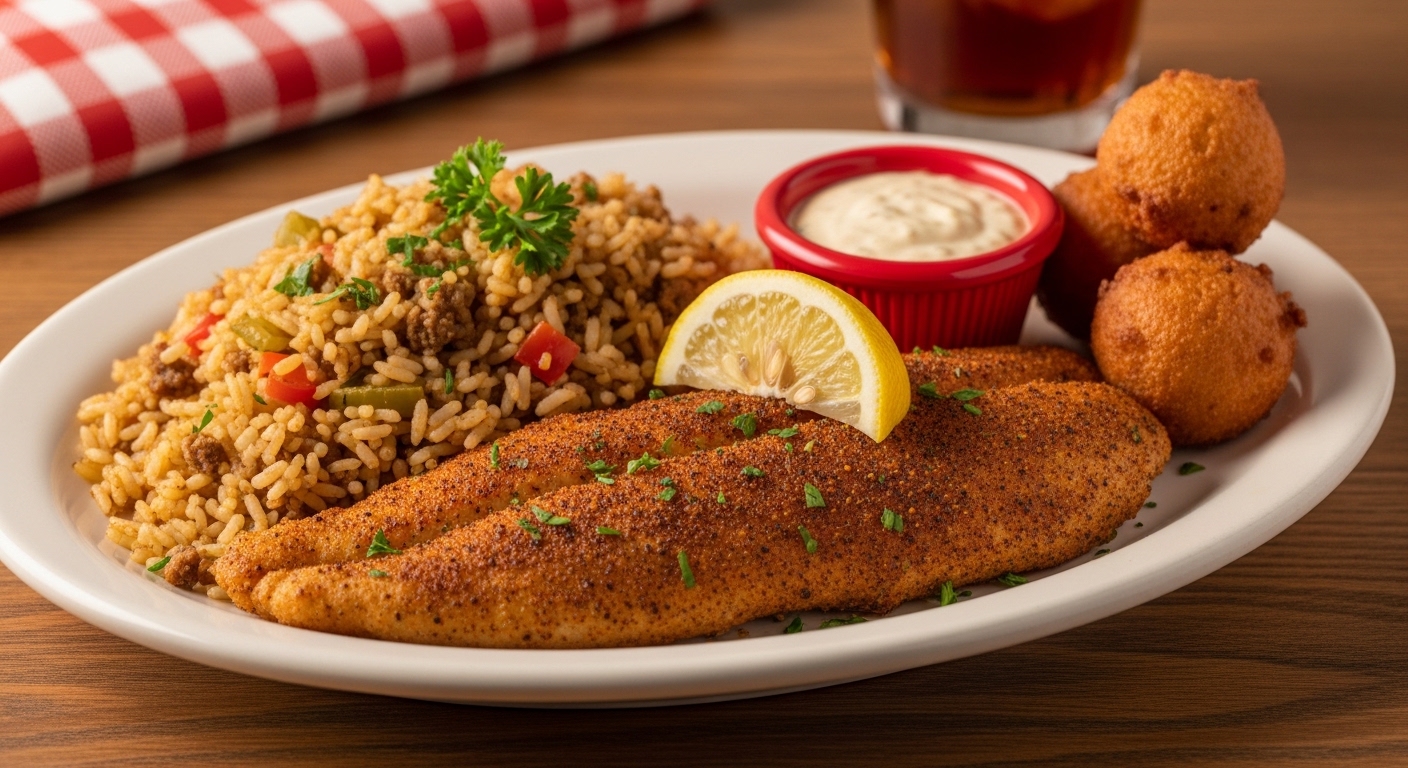
There’s something deeply satisfying about a dish that bursts with flavor and tells a story—and the Cajun Catfish Plate is one of those unforgettable meals. Originating from the vibrant culinary traditions of Louisiana, this dish combines perfectly seasoned catfish with the bold, spicy kick of Cajun seasoning, all served over a bed of creamy, buttery white rice or smothered in rich, tomato-based gravy. Whether you’re a seafood lover or just craving a taste of the South, this Cajun Catfish Plate delivers rich, zesty flavors that dance on your palate with every bite.
What makes this dish truly special is its balance of heat and comfort. The catfish is typically pan-fried until golden and crispy on the outside while remaining tender and flaky inside. It’s then tossed in a generous coat of aromatic Cajun spices—think paprika, garlic powder, cayenne, oregano, and thyme—giving it that signature red hue and fiery punch. Served with a side of creamy coleslaw, cornbread, or just a simple green salad, this plate feels like a warm hug from the bayou.
Whether you’re hosting a dinner party or treating yourself to a home-cooked feast, learning how to make an authentic Cajun Catfish Plate is a must. In this guide, we’ll walk you through everything from ingredient selection to serving suggestions—so you can recreate this restaurant-quality dish in your own kitchen with confidence.
Quick Recipe Summary Table
- Prep Time: 15 minutes
- Cook Time: 20 minutes
- Total Time: 35 minutes
- Servings: 4
- Cuisine: Cajun / Southern / Creole
- Course: Main Dish
- Calories (approx.): 520 per serving (without sides)
Why You’ll Love This Cajun Catfish Plate
The beauty of a Cajun Catfish Plate lies in its simplicity and depth of flavor. Unlike many seafood dishes that rely heavily on heavy creams or complex sauces, this recipe celebrates bold seasoning and fresh ingredients. The catfish acts as a neutral canvas, absorbing the fiery, aromatic blend of spices that define Cajun cooking. When paired with a side of creamy rice or a tangy remoulade sauce, the result is a harmonious blend of textures and tastes that feels both rustic and refined.
Plus, catfish is not only affordable but also incredibly versatile. It holds up beautifully when pan-fried, making it ideal for weeknight dinners or weekend feasts. And because it cooks quickly, you won’t spend hours in the kitchen—just a little time and attention to bring out those golden, crispy edges.
Ingredients You’ll Need
Here’s everything you need to prepare a delicious Cajun Catfish Plate:
For the Catfish:
- 1 lb catfish fillets (about 4 pieces), skin-on or skinless
- 1 cup all-purpose flour
- 1/2 cup cornmeal (for extra crunch)
- 2 eggs
- 1/4 cup buttermilk
- 2 tablespoons Cajun seasoning (store-bought or homemade)
- Salt and black pepper, to taste
- Vegetable oil (for frying), about 1/2 inch deep
For Serving (Optional):
- Steamed white rice or jasmine rice
- Creole mustard sauce or remoulade (store-bought or homemade)
- Lemon wedges
- Fresh parsley, chopped
Homemade Cajun Seasoning (Makes about 1/4 cup):
- 2 tsp smoked paprika
- 1 tsp garlic powder
- 1 tsp onion powder
- 1/2 tsp dried oregano
- 1/2 tsp dried thyme
- 1/4 tsp cayenne pepper (adjust to taste)
- 1/4 tsp black pepper
- 1/4 tsp salt
Step-by-Step Cooking Instructions
Follow these simple steps to create a mouthwatering Cajun Catfish Plate at home.
1. Prepare the Breading Station
Set up a classic three-bowl breading station:
– Bowl 1: Combine the flour, cornmeal, 1 tablespoon of Cajun seasoning, salt, and black pepper.
– Bowl 2: Whisk together the eggs and buttermilk.
– Bowl 3: Mix the remaining 1 tablespoon of Cajun seasoning with a pinch of salt and pepper (optional for extra spice).
2. Coat the Catfish
Pat the catfish fillets dry with paper towels. Dip each piece first into the flour mixture, then into the egg wash, and finally back into the seasoned flour again. Press gently to ensure an even coating. Place the coated fillets on a plate and let them rest for 5–10 minutes. This helps the breading stick better during frying.
3. Heat the Oil
In a large skillet or cast-iron pan, heat about 1/2 inch of vegetable oil over medium-high heat. To test if it’s ready, sprinkle a pinch of flour into the oil—if it sizzles immediately, it’s hot enough.
4. Fry the Catfish
Carefully place the coated fillets into the hot oil. Do not overcrowd the pan—cook in batches if needed. Fry for 3–4 minutes per side, or until golden brown and cooked through. The internal temperature should reach 145°F (63°C). Remove with a slotted spoon and drain on a wire rack or paper towels to keep them crispy.
5. Serve Immediately
Plate the fried catfish over a bed of steamed white rice. Drizzle with Creole mustard sauce or remoulade, garnish with lemon wedges and fresh parsley. Serve with a side of coleslaw or cornbread for the full experience.
Chef Tips for Perfect Cajun Catfish
To elevate your Cajun Catfish Plate to restaurant quality, keep these expert tips in mind:
- Pat Dry Thoroughly: Moisture is the enemy of crispiness. Always pat the fish dry before breading.
- Use Medium-High Heat: Too low, and the breading will absorb oil; too high, and the outside burns before the fish cooks.
- Don’t Skip the Resting Step: Letting the coated fish sit helps the breading adhere and prevents it from falling off during frying.
- Make Your Own Seasoning: Store-bought Cajun blends vary widely. Making your own ensures the right balance of heat, smokiness, and herbs.
- Double-Fry for Extra Crispness: For ultra-crispy results, fry once at 325°F (163°C) to cook through, then increase heat to 375°F (190°C) for a final 1–2 minutes.
Common Mistakes to Avoid
Even experienced cooks can stumble with this dish. Here’s what to watch out for:
- Overcrowding the Pan: This lowers the oil temperature and causes the catfish to steam instead of fry.
- Using Cold Ingredients: Room-temperature eggs and buttermilk help the breading stick better.
- Skipping the Cornmeal: While optional, cornmeal adds texture and a slight nutty flavor that complements the spice.
- Not Testing the Oil Temperature: Frying at the wrong heat leads to greasy or undercooked fish.
Ingredient Substitutions & Variations
Want to customize your Cajun Catfish Plate? Here are some great options:
Substitutions:
- Catfish: Use cod, haddock, or tilapia—they work well with Cajun seasoning.
- Flour: Gluten-free flour blend works if you need a gluten-free version.
- Cornmeal: Omit if unavailable—it’s optional and doesn’t affect flavor significantly.
- Buttermilk: Substitute with regular milk + 1 tbsp vinegar or lemon juice (let sit 5 minutes).
Variations:
- Grilled Cajun Catfish: Brush fillets with olive oil and grill over medium-high heat for 4–5 minutes per side.
- Baked Version: Bake at 400°F (204°C) for 15–20 minutes after coating. Add 10 minutes for extra crispiness.
- Spicy Remoulade Sauce: Mix mayonnaise, Dijon mustard, capers, pickles, hot sauce, and lemon juice.
Serving Suggestions
A Cajun Catfish Plate shines when paired with complementary sides and sauces:
- Rice: Creamy white rice or jasmine rice soaks up the juices beautifully.
- Coleslaw: A tangy, crunchy slaw cuts through the richness of the fish.
- Cornbread: Warm, buttery cornbread is a Southern staple.
- Garlic Butter Sauce: Melt butter with garlic, lemon juice, and parsley. Drizzle over fish.
- Pickled Vegetables: Add a bright, acidic contrast with pickled okra or peppers.
Storage & Reheating Instructions
Storing Leftovers:
– Let the catfish cool completely, then store in an airtight container in the refrigerator for up to 3 days.
– Keep rice and sides separate to maintain texture.
Reheating:
– For best results, reheat in a preheated oven at 375°F (190°C) for 10–12 minutes. This keeps the fish crispy.
– Avoid microwaving—it softens the breading.
Nutrition Facts (Approximate Per Serving)
- Calories: 520 kcal
- Protein: 32 g
- Fat: 28 g
- Carbohydrates: 35 g
- Fiber: 2 g
- Sugar: 2 g
- Sodium: 680 mg
- Cholesterol: 120 mg
FAQs About Cajun Catfish Plate
1. Is catfish a sustainable fish choice?
Yes! Catfish is one of the most sustainably farmed fish in the U.S., especially farm-raised channel catfish. Look for labels like “ASC” or “MSC” for wild-caught options.
2. Can I make this dish ahead of time?
You can bread the catfish and refrigerate it for up to 24 hours. Cook just before serving for the crispiest results.
3. What if I don’t like spicy food?
Reduce or omit the cayenne pepper in the Cajun seasoning. Use mild paprika and add red pepper flakes only to taste.
4. How do I know when the catfish is fully cooked?
The flesh should be opaque and flake easily with a fork. The internal temperature should reach 145°F (63°C).
5. Can I use a different type of oil for frying?
Yes! Peanut oil, canola oil, or vegetable oil all work well. Avoid olive oil due to its low smoke point.
Conclusion: Bring the Bayou to Your Table
There’s nothing quite like the bold, comforting flavors of a well-prepared Cajun Catfish Plate. With its crispy exterior, tender interior, and fiery seasoning, this dish captures the essence of Louisiana cuisine in every bite. Whether you’re new to Cajun cooking or a seasoned pro, this recipe is easy to master and guaranteed to impress.
So gather your ingredients, fire up the stove, and let the aroma of spiced catfish fill your kitchen. Your family and friends will thank you—and you might just discover a new favorite meal. Now, go ahead and make that Cajun Catfish Plate. Your taste buds will thank you.
Leave a Reply