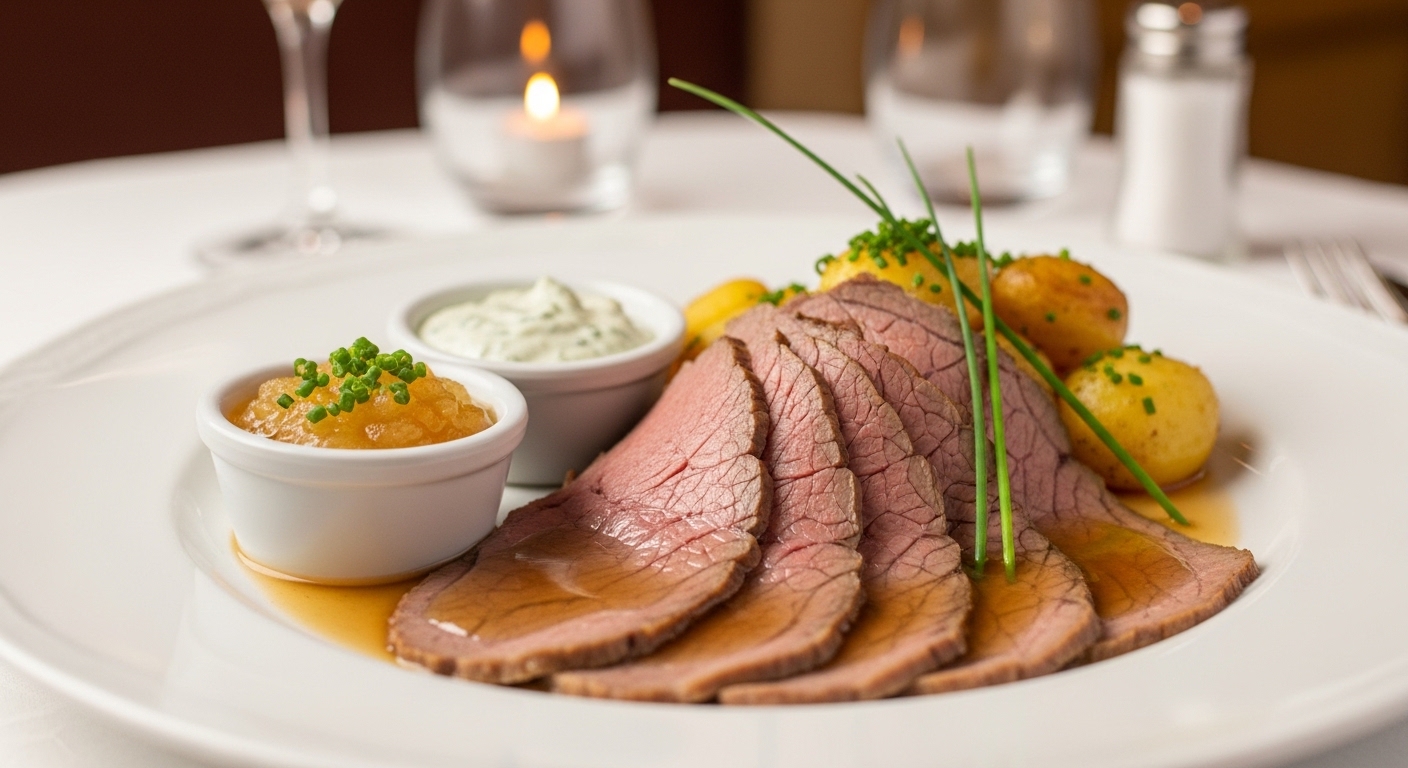
Ever tasted a dish so comforting, it feels like a warm hug from your grandmother? Austrian Tafelspitz—a traditional boiled beef stew—is exactly that. This humble yet elegant meal, rooted in Central European cuisine, features tender, slow-cooked beef simmered in water with aromatic herbs and served with classic sides like boiled potatoes, horseradish cream, and fresh parsley sauce. It’s not just food; it’s heritage on a plate.
If you’re searching for an authentic, hearty, and deeply satisfying meal that brings warmth to the table, Tafelspitz is your answer. Whether you’re hosting a cozy dinner or simply craving something wholesome and nostalgic, this recipe delivers every time. Let’s dive into how to recreate this iconic dish at home.
Quick Recipe Summary
- Prep Time: 15 minutes
- Cook Time: 3 hours (plus 1 hour resting)
- Total Time: 4 hours 15 minutes
- Servings: 6 people
- Cuisine: Austrian
- Course: Main Course
- Calories (approx.): 380 kcal per serving
What Is Austrian Tafelspitz?
Tafelspitz translates to “table steak” in German—a name that hints at its simplicity and everyday elegance. Unlike its French or Italian counterparts, Tafelspitz isn’t about heavy sauces or complex preparations. Instead, it celebrates the natural flavors of high-quality beef, enhanced by gentle braising in water with onions, carrots, celery, and bay leaves. The result? A melt-in-your-mouth cut of meat that’s both nutritious and deeply flavorful.
Traditionally served during festive occasions or family gatherings, Tafelspitz is a symbol of Austrian culinary tradition. Its roots trace back centuries, evolving from peasant fare into a refined dish enjoyed across Europe. Today, it remains a staple in Viennese homes and fine-dining restaurants alike.
Ingredients You’ll Need
To make authentic Austrian Tafelspitz, gather these ingredients:
- 2 kg (4.4 lbs) top round roast or chuck roast – lean yet flavorful, ideal for slow cooking
- 2 large onions, peeled and halved
- 3 carrots, roughly chopped
- 2 celery stalks, chopped
- 2 bay leaves
- 1 tsp black peppercorns
- 1 tbsp salt (adjust to taste)
- Water – enough to cover the meat completely (about 3 liters/12 cups)
For the sides:
- 6 medium potatoes, peeled and quartered
- Fresh parsley – for garnish
- Horseradish cream (see recipe below)
- Parsley sauce (Grüne Soße) – optional but traditional
Horseradish Cream (Krenkräuterquark)
- 1 cup sour cream
- 2 tbsp freshly grated horseradish
- Salt and white pepper to taste
Optional Parsley Sauce (Grüne Soße)
- 1 bunch chives
- 1 bunch flat-leaf parsley
- 1 handful chervil
- 1 handful sorrel
- 1 small onion, peeled
- 1 egg yolk
- 1 tbsp Dijon mustard
- 2 tbsp white wine vinegar
- Salt and pepper
Step-by-Step Cooking Instructions
- Prepare the Meat: Rinse the beef roast under cold water and pat dry. There’s no need to sear it—unlike many stews, Tafelspitz is traditionally boiled whole, which helps retain moisture and tenderness.
- Add Vegetables and Spices: Place the onions, carrots, celery, bay leaves, and peppercorns in the bottom of a large pot. Top with the beef.
- Cover with Water: Pour in enough water to fully submerge the meat. Bring to a gentle boil over medium-high heat.
- Braise Slowly: Reduce heat to low, cover the pot, and let it simmer for 2.5 to 3 hours. Skim off any foam or impurities that rise to the surface.
- Check Doneness: The meat should be fork-tender. Test by inserting a knife—it should slide through easily.
- Remove and Rest: Transfer the beef to a cutting board and let it rest for 15–20 minutes. This allows juices to redistribute.
- Cook Potatoes: In the same pot (no need to rinse), add the potatoes. Cover with fresh boiling water and cook for 20–25 minutes until tender.
- Make Horseradish Cream: Whisk together sour cream and horseradish until smooth. Season with salt and white pepper.
- Assemble Sides (if making Grüne Soße): Blend all green herbs with onion, egg yolk, mustard, vinegar, salt, and pepper until creamy. Serve chilled.
- Slice and Serve: Thinly slice the rested beef against the grain. Arrange on a platter with boiled potatoes, garnished with parsley. Offer horseradish cream and parsley sauce on the side.
Chef Tips for Perfect Tafelspitz
- Use Fresh Herbs: Bay leaves and peppercorns should be whole, not pre-ground, to avoid bitterness.
- Don’t Rush the Boil: Simmer gently—boiling too hard can toughen the meat.
- Liquid Matters: Always use enough water to prevent scorching. If liquid evaporates too much, add hot water sparingly.
- Rest the Beef: Skipping this step leads to dry slices. Patience pays off!
- Season Later: Avoid salting too early—it can toughen the protein. Taste and adjust before serving.
Common Mistakes to Avoid
- Overcooking the Meat: Tafelspitz should remain tender, not mushy. Monitor closely after 2 hours.
- Skipping the Resting Period: This ruins texture and flavor distribution.
- Using Low-Quality Beef: Choose cuts like top round or chuck—they braise beautifully.
- Adding Acid Too Early: Vinegar or lemon juice can tighten proteins. Save for later in the process.
Variations & Substitutions
Want to put your spin on Tafelspitz? Here are some ideas:
- Vegetarian Version: Replace beef with king oyster mushrooms or seitan. Simmer in vegetable broth with same aromatics.
- Indian-Inspired Twist: Add cumin, coriander, and turmeric to the broth for a spiced Tafelspitz. Serve with basmati rice and raita.
- Lighter Option: Use leaner cuts and reduce salt. Serve with steamed greens instead of potatoes.
- Gluten-Free: Naturally gluten-free. Just ensure any store-bought horseradish is certified GF.
Serving Suggestions
Authentic Tafelspitz is best enjoyed with:
- Boiled Potatoes – creamy and simple, they soak up the savory broth.
- Horseradish Cream – sharp and tangy, balances the richness of beef.
- Parsley Sauce (Grüne Soße) – a seven-herb blend that adds freshness and complexity.
- Pickled Red Cabbage – cuts through the heaviness with acidity.
- White Bread or Rye Crispbread – for soaking up extra juices.
Storage & Reheating
- Refrigerate: Store sliced beef and potatoes separately in airtight containers for up to 3 days.
- Freeze: Cooked beef can be frozen for up to 3 months. Thaw overnight in the fridge.
- Reheat Safely: Warm gently in a saucepan with a splash of water or broth. Avoid microwaving—it dries out the meat.
Nutrition Facts (Approximate per Serving)
- Calories: 380
- Protein: 32g
- Fat: 20g
- Carbohydrates: 18g
- Fiber: 2g
- Sodium: 750mg (adjustable based on salt added)
Key Takeaways
- Austrian Tafelspitz is a timeless, comforting dish made by slow-boiling beef with root vegetables and herbs.
- It’s traditionally served with boiled potatoes, horseradish cream, and optional parsley sauce.
- The key to success lies in low-and-slow braising, proper resting, and using quality ingredients.
- While simple, it carries deep cultural significance and deserves a spot in your weekly rotation.
FAQs About Austrian Tafelspitz
1. Can I cook Tafelspitz in a pressure cooker?
Yes! Use a pressure cooker and reduce cooking time to about 45–60 minutes on high pressure. The meat will be tender and juicy.
2. Is Tafelspitz the same as boiled beef?
Essentially, yes. Tafelspitz is a specific style of boiled beef originating from Austria, typically served with traditional accompaniments.
3. Can I use a different cut of beef?
Stick to well-marbled cuts like chuck or top round. Avoid very lean or tough cuts like flank steak, which won’t benefit from long braising.
4. What if I don’t have all the herbs for Grüne Soße?
You can skip it or use a mix of parsley, chives, and chervil. Authenticity matters less than enjoying the meal!
5. Is Tafelspitz healthy?
Absolutely. It’s rich in protein, low in fat if prepared without excess salt, and packed with nutrients from vegetables. Pair it with fiber-rich sides for a balanced meal.
Conclusion: Bring Warmth to Your Table with Tafelspitz
There’s magic in a pot that simmers slowly, filling your kitchen with earthy, savory aromas. Austrian Tafelspitz isn’t just a recipe—it’s a moment of connection, a nod to tradition, and a celebration of simplicity. Whether you’re feeding a family or treating yourself, this dish proves that great meals don’t need drama. Just time, care, and a love for good ingredients.
So roll up your sleeves, fire up the stove, and give Tafelspitz a try. Your taste buds—and your soul—will thank you.
Leave a Reply