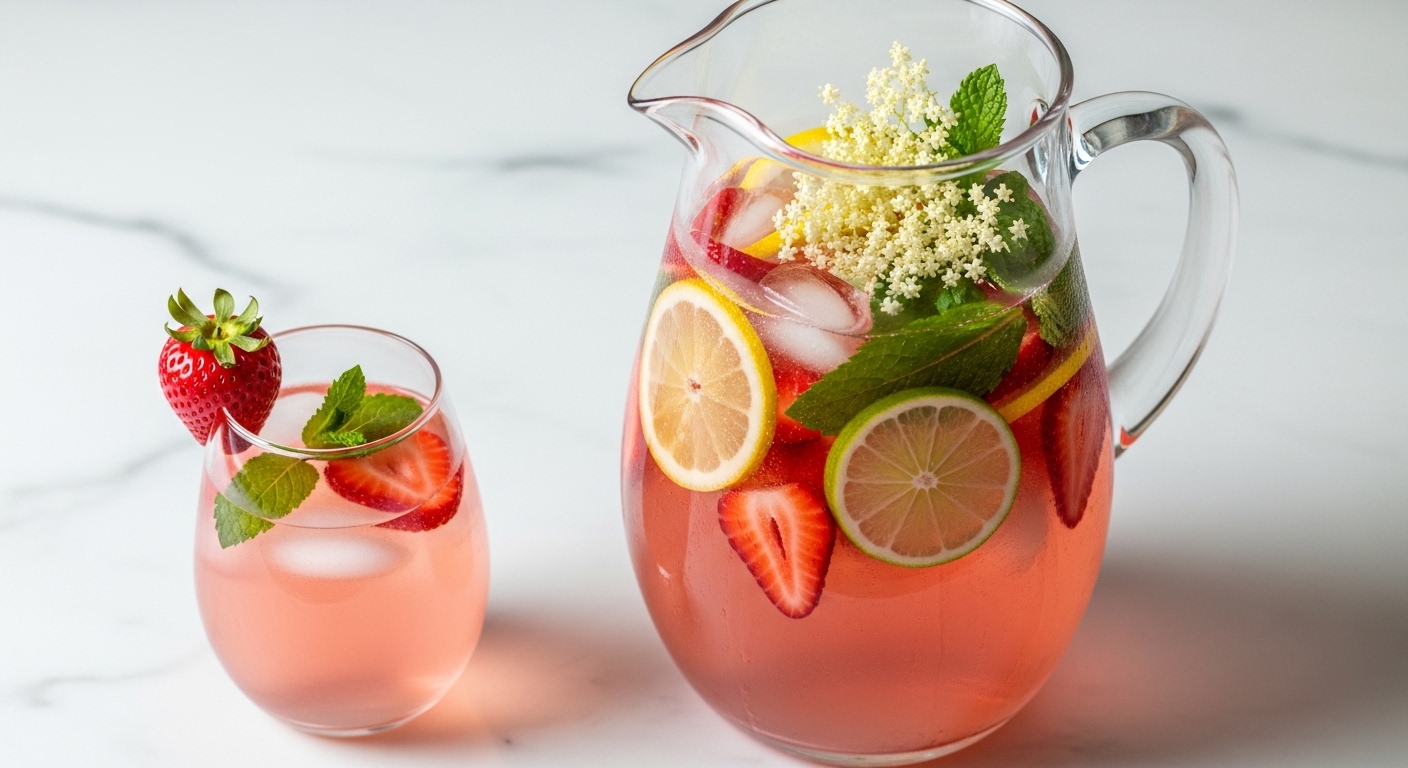
Imagine sipping on a glass of vibrant pink sangria that tastes like sunshine and summer in every sip. That’s exactly what you get with elderflower rosé sangria—a dazzling fusion of crisp rosé wine, fragrant elderflower liqueur, juicy fruit, and sparkling water. This isn’t your average punch bowl drink; it’s an elevated, Instagram-worthy cocktail that’s perfect for backyard BBQs, garden parties, or even a quiet evening on the patio. With its floral aroma, balanced sweetness, and refreshing fizz, elderflower rosé sangria has become a summertime favorite across North America. Whether you’re hosting guests or treating yourself, this drink delivers elegance, ease, and pure refreshment in one stunning glass.
Why You’ll Love This Elderflower Rosé Sangria Recipe
- Tastes Like Summer: The delicate floral notes of elderflower pair beautifully with bright red wine, creating a drink that feels light yet deeply flavorful.
- Super Easy to Make: No complicated techniques—just mix and chill. Perfect for beginners or anyone short on time.
- Batches Well: Make a large pitcher ahead of time and keep it cold for hours without losing its freshness.
- Family-Friendly Appeal: While it contains alcohol, you can easily create a non-alcoholic version using elderflower syrup and sparkling soda.
- Vibrant Presentation: Serve in mason jars or wine glasses with fruit skewers for a festive, photogenic look.
Ingredients You’ll Need
To craft the perfect elderflower rosé sangria, gather these simple, high-quality ingredients. All measurements are for a standard 6-serving pitcher (about 1.5 liters).
- 1 bottle (750ml) dry rosé wine – Look for a fruity, medium-bodied option like Provence rosé for best results
- 1/3 cup elderflower liqueur (such as St-Germain)
- 1/4 cup fresh orange juice (not from concentrate)
- 2 tablespoons honey or agave nectar – adjust to taste
- 1 cinnamon stick – optional but adds warmth
- 1/2 cup brandy or triple sec – for added depth (optional)
- 1 lemon, sliced into rounds
- 1 orange, sliced into rounds
- 1 cup seedless red grapes, halved
- 1 cup diced pineapple
- 1/2 cup sliced strawberries
- Sparkling water or prosecco, for serving (add just before drinking to preserve bubbles)
Optional Substitutions & Variations
- No elderflower liqueur? Use 1/4 cup elderflower syrup + 1/4 cup extra orange juice.
- Want a lower ABV version? Skip the brandy and use more sparkling water.
- Gluten-free? Most commercial elderflower liqueurs are gluten-free—double-check labels if sensitive.
- Swap rosé for white wine for a lighter, crisper version (call it elderflower white sangria).
Kitchen Tools Needed
- Large glass pitcher or punch bowl (at least 1.5 quarts)
- Wooden spoon or whisk
- Fine mesh strainer (to catch fruit pieces when serving)
- Citrus juicer (optional, but helpful)
- Sharp knife and cutting board
- Serving glasses (wine glasses, mason jars, or tumblers)
Step-by-Step Instructions
- Prepare the Fruit: Wash and slice all fruits thinly so they infuse evenly into the sangria. Place orange, lemon, grapes, pineapple, and strawberries in the bottom of your pitcher.
- Add Spices & Liquids: Stir together rosé wine, elderflower liqueur, orange juice, honey, and brandy (if using) in the pitcher. Add the cinnamon stick for aromatic depth.
- Chill Overnight (Recommended): For maximum flavor infusion, cover the pitcher and refrigerate for at least 2–4 hours—or ideally overnight. This allows the wine and spirits to mingle fully with the fruit.
- Final Assembly: When ready to serve, top each glass with a splash of chilled sparkling water or prosecco. Stir gently before pouring to distribute fruit evenly.
- Garnish & Enjoy: Drop a few fruit slices into each glass or thread them onto skewers for a beautiful presentation. Serve immediately over ice if desired.
Pro Tips for the Best Elderflower Rosé Sangria
- Don’t Over-Sweeten: Start with less honey and taste before adding more—rosé can vary in acidity.
- Use Fresh Fruit: Avoid canned or pre-cut fruit; fresh gives better texture and aroma.
- Layer Flavors Gradually: Add citrus first, then berries and tropical fruit—this prevents bruising and keeps flavors distinct.
- Keep It Cold: Always store sangria in the refrigerator—never at room temperature—to prevent spoilage.
- Make It Ahead: This drink gets better with time! Prepare up to 24 hours in advance.
Variations to Try
Spicy Elderflower Rosé Sangria
Add a pinch of cayenne pepper or a thin slice of jalapeño when mixing the wine base. The heat contrasts beautifully with the floral sweetness.
Health-Conscious Version
Replace honey with monk fruit sweetener, skip the brandy, and use low-sugar rosé. Add cucumber slices for extra hydration and subtle flavor.
High-Protein Mocktail
Blend sangria base with unsweetened almond milk and a scoop of vanilla protein powder. Serve frozen as a creamy, alcohol-free alternative.
Berry-Infused Twist
Substitute half the strawberries with blackberries or raspberries. Their tartness enhances the elderflower’s brightness.
What to Serve With Elderflower Rosé Sangria?
This light, effervescent sangria pairs wonderfully with Mediterranean-inspired appetizers. Try it alongside:
- Grilled shrimp skewers with lemon-herb marinade
- Caprese salad with balsamic glaze
- Mini quiches or bruschetta with tomatoes and basil
- Light pastas with sun-dried tomato sauce
- Fresh fruit platter with melon and grapes
The floral-citrus profile complements savory dishes without overpowering them—making it ideal for spring and summer gatherings.
Storage and Reheating Tips
Sangria is best consumed fresh, but if you must store leftovers:
- Keep refrigerated in an airtight container for up to 2 days.
- Do not add sparkling water until serving—it loses carbonation quickly.
- Stir well before re-serving; fruit may settle at the bottom.
- Never microwave or reheat—it will ruin the wine and flatten the bubbles.
Frequently Asked Questions (FAQ)
Can I make elderflower rosé sangria without alcohol?
Absolutely! Simply omit the brandy and triple sec, increase the sparkling water by 1/2 cup, and use elderflower syrup instead of liqueur. The result is a refreshing mocktail that still captures the essence of the original.
How long does sangria last in the fridge?
Unopened, sangria stays fresh for up to 24–48 hours in the refrigerator. After opening and serving, consume within 1–2 days. Avoid leaving it out at room temperature for more than 2 hours.
Can I use frozen fruit?
Yes, but thaw slightly first and pat dry to prevent dilution. Frozen fruit also helps keep the sangria extra cold—great for outdoor events!
Is elderflower rosé sangria suitable for kids?
Not in its traditional form due to alcohol content. However, the non-alcoholic version is kid-friendly and delicious—many adults enjoy it too!
What if I can’t find elderflower liqueur?
Try substituting with limoncello (lemon liqueur) or even a splash of peach schnapps for similar floral-citrus notes. Just adjust sweetness accordingly.
Final Thoughts
Elderflower rosé sangria isn’t just a drink—it’s an experience. With its elegant color, complex layers of flavor, and effortless preparation, it’s no wonder this beverage has taken social media by storm. Whether you’re celebrating a milestone, hosting friends, or simply craving something special, this recipe delivers both sophistication and joy in every pour. Don’t wait for summer to arrive—grab some rosé and elderflower liqueur today and turn your next gathering into a memorable affair. Your guests will be asking for the recipe long after the last glass is empty.
Recipe Card
- Prep Time: 15 minutes
- Chill Time: 2–4 hours (or overnight)
- Total Time: ~4 hours
- Servings: 6
- Calories: Approximately 180 per serving (varies by wine and additions)
- Cuisine: Spanish-inspired / Modern Cocktail
- Course: Appetizer, Beverage, Party Drink