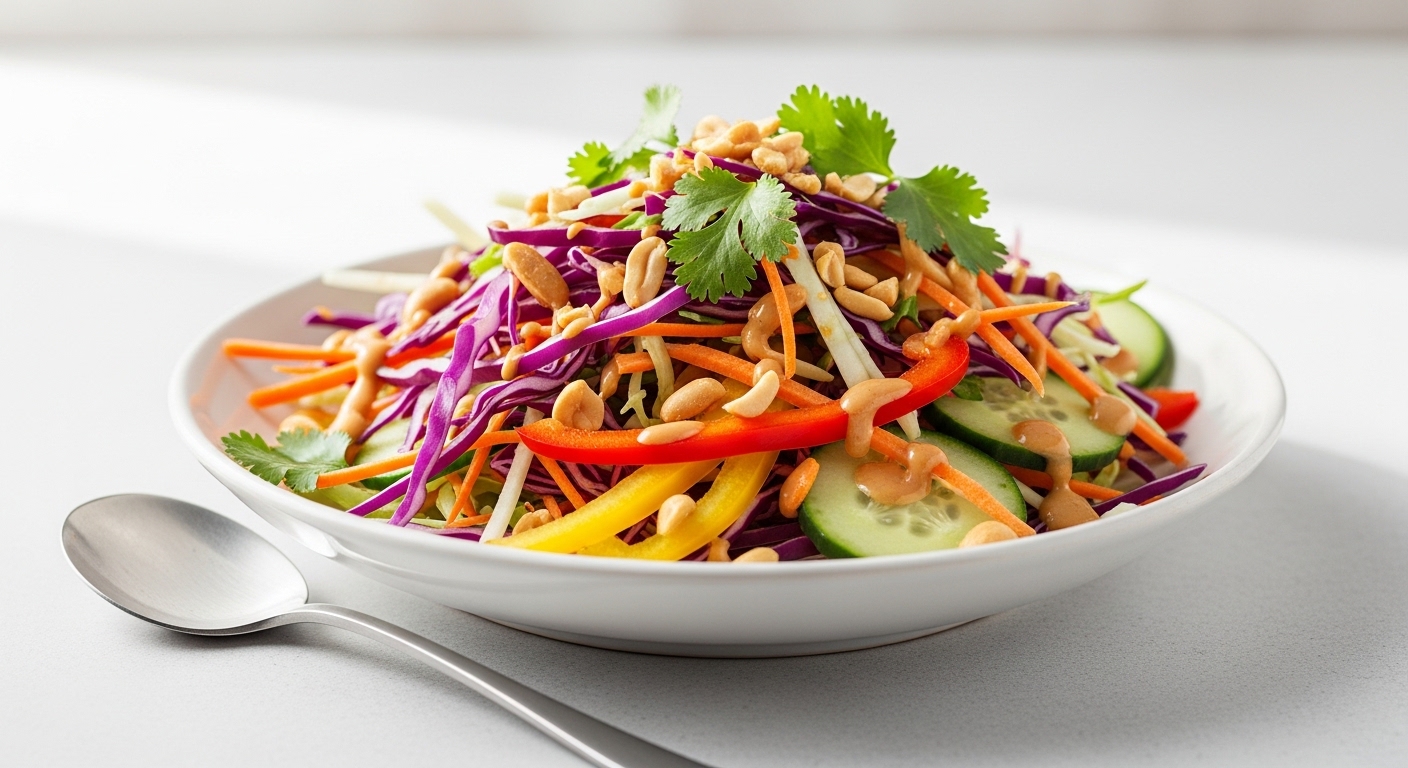
There’s nothing quite like a bowl of chilled Thai peanut salad on a hot summer afternoon. This vibrant, cooling dish combines the bold flavors of Thai cuisine with the comforting richness of peanut dressing—creating a harmony of sweet, savory, salty, and spicy notes that dance on your palate. Whether you’re hosting a dinner party, packing a picnic, or simply craving something light yet satisfying, this chilled Thai peanut salad delivers every time.
Unlike traditional hot salads, this version is served ice-cold, making it perfect for warm weather. The crunch from fresh vegetables, the silkiness of creamy peanut sauce, and the zing of lime and chili all come together in a way that feels both indulgent and refreshing. It’s no wonder this dish has become a favorite among food lovers who want bold taste without the heat of a curry or the heaviness of a stir-fry.
Why You’ll Love This Chilled Thai Peanut Salad
- Tastes like a Thai restaurant: Get that authentic Southeast Asian flavor at home with minimal effort.
- Quick to prepare: Ready in under 20 minutes—perfect for busy weeknights or last-minute guests.
- Customizable & healthy: Swap ingredients based on dietary needs or what’s fresh at the market.
- No cooking required: Ideal for meal prep since it holds up beautifully when refrigerated.
- Vibrant & photogenic: Bright colors and contrasting textures make it Instagram-worthy.
Key Ingredients for the Perfect Chilled Thai Peanut Salad
To create this irresistible dish, you’ll need a mix of fresh produce, pantry staples, and aromatic spices. Here’s everything you’ll use:
For the Salad Base:
- 1 large cucumber, julienned
- 2 medium carrots, peeled and grated
- 1 cup cherry tomatoes, halved
- ½ red onion, thinly sliced
- 1 bell pepper (red or yellow), diced
- 1 cup bean sprouts
- ¼ cup fresh cilantro, chopped
- 1–2 stalks green onions, sliced (plus extra for garnish)
- Optional add-ins: shredded cabbage, water chestnuts, or cooked edamame
For the Creamy Peanut Dressing:
- ¾ cup natural peanut butter (unsweetened recommended)
- 3 tablespoons soy sauce (or tamari for gluten-free)
- 2 tablespoons rice vinegar
- 1 tablespoon honey or maple syrup
- 1 teaspoon sesame oil
- 1–2 cloves garlic, minced
- 1-inch piece fresh ginger, grated
- 1–2 Thai chilies or serrano peppers, finely chopped (adjust for spice level)
- Lime juice from 1 lime (about 2 tablespoons)
- 2–3 tablespoons warm water (to thin as needed)
- Pinch of sugar or palm sugar if using unsweetened peanut butter
Kitchen Tools You’ll Need
- Large mixing bowl
- Small saucepan (optional, for warming water if needed)
- Whisk or fork
- Chef’s knife and cutting board
- Measuring spoons and cups
- Zester or microplane (for ginger and lime)
Step-by-Step Instructions: How to Make Chilled Thai Peanut Salad
- Prep the vegetables: Wash and dry all produce thoroughly. Julienne the cucumber into thin matchsticks. Grate the carrot using a box grater or food processor. Slice the red onion as thinly as possible—soaking briefly in cold water removes harshness.
- Make the dressing: In a small bowl, whisk together peanut butter, soy sauce, rice vinegar, honey, sesame oil, garlic, ginger, and chopped chilies. Add lime juice gradually while stirring. If the mixture is too thick, drizzle in warm water one tablespoon at a time until it reaches a pourable but creamy consistency.
- Combine ingredients: In a large mixing bowl, gently toss together cucumber, carrots, tomatoes, red onion, bell pepper, bean sprouts, cilantro, and green onions. Pour the dressing over the salad and fold everything together until evenly coated.
- Chill before serving: Cover the bowl and refrigerate for at least 30 minutes. This allows the flavors to meld and the salad to reach its signature chilled temperature.
- Garnish and serve: Before serving, top with extra cilantro, crushed peanuts, or a sprinkle of sesame seeds. Serve in individual bowls or as part of a larger spread.
Pro Tips for Elevating Your Chilled Thai Peanut Salad
- Toast your peanuts: Lightly toast raw peanuts in a dry skillet over medium heat for 3–5 minutes until fragrant. Chop them coarsely and sprinkle over the top before serving for added crunch and nuttiness.
- Balance acidity early: Adding lime juice directly to cut vegetables helps prevent browning and adds brightness without making the salad soggy.
- Don’t skip chilling: While not mandatory, refrigeration is essential for achieving that refreshing, restaurant-quality experience.
- Mince chilies carefully: Wear gloves when handling fresh chilies to avoid irritation; remove seeds if you prefer less heat.
- Make it ahead: Prepare the salad base and dressing separately up to 24 hours in advance. Toss just before serving to maintain texture.
Variations to Try
Spicy Version:
Add an extra pinch of red pepper flakes or swap Thai chilies for habaneros. For maximum heat, leave some seeds intact.
High-Protein Option:
Mix in 1–2 cups of grilled chicken strips, shrimp, or firm tofu cubes. Marinate briefly in half the dressing beforehand for deeper flavor.
Keto-Friendly Adaptation:
Replace honey with erythritol or monk fruit sweetener. Use coconut aminos instead of soy sauce. Skip the rice vinegar and use lemon juice.
Gluten-Free Friendly:
Ensure all packaged ingredients (like soy sauce) are certified gluten-free. Tamari makes a great substitute.
What to Serve With Chilled Thai Peanut Salad
This salad shines as a standalone dish, but here are some ideal pairings:
- Grilled proteins: Skewers of chicken, pork belly, or fish complement the rich dressing.
- Rice or noodles: Serve over jasmine rice, vermicelli noodles, or cauliflower rice for heartier meals.
- Bread options: Fresh baguette slices, rice crackers, or lettuce wraps for dipping.
- Soup or broth: Pair with a warm miso soup or tom kha for a balanced meal.
Storage and Reheating Tips
Unlike many salads, this dish actually improves when stored properly. Store leftovers in an airtight container in the refrigerator for up to 3 days. Do not freeze—the texture of vegetables will degrade. When ready to eat, give it a gentle stir and taste for seasoning; sometimes a squeeze of lime or dash of soy sauce enhances the flavor upon reheating.
Frequently Asked Questions (FAQ)
Can I make this salad ahead of time?
Yes! Prepare the vegetable mix and dressing separately up to 24 hours ahead. Combine just before serving to preserve crispness.
Is this salad vegetarian or vegan?
It can be both! Use plant-based honey or maple syrup for vegan, and ensure soy sauce is gluten-free if needed. Avoid adding meat or fish.
How do I make it creamier?
Add more peanut butter or blend in a splash of coconut milk or silken tofu for a luxe, velvety texture.
Can I use other nuts instead of peanuts?
Absolutely! Cashew butter or almond butter work well, though they yield a milder flavor. Adjust sweetness accordingly.
Does it keep well after refrigeration?
The vegetables stay crisp for about 3 days, but the best quality is within the first 24 hours for optimal taste and texture.
Final Thoughts: Why This Chilled Thai Peanut Salad Belongs in Your Rotation
If you’ve been searching for a dish that’s easy, elegant, and bursting with flavor—look no further. This chilled Thai peanut salad is more than just a side—it’s a complete culinary experience that brings the sun-drenched markets of Thailand right into your kitchen. Its balance of textures, temperatures, and tastes makes it versatile enough for casual lunches or festive gatherings alike.
Whether you’re meal prepping for the week or impressing friends at a potluck, this recipe delivers consistent results with minimal fuss. Plus, it’s naturally customizable—so every bite can feel personal. Give it a try tonight, and let the cool crunch of cucumber meet the warm embrace of peanut sauce. Your taste buds will thank you.
Recipe Card: Chilled Thai Peanut Salad
- Prep Time: 15 minutes
- Cook Time: 0 minutes
- Total Time: 45 minutes (including chilling)
- Servings: 4 as a main or 6 as a side
- Calories: Approximately 280 per serving (based on standard ingredients)
- Cuisine: Thai-Inspired Fusion
- Course: Appetizer, Main Dish, Salad
Note: Calorie count may vary based on substitutions and portion size. Always adjust to fit your dietary goals.