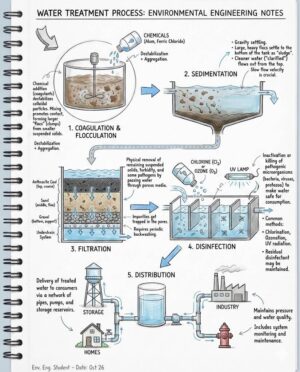
The imperative of the Water Treatment Process is foundational to public health and industrial viability globally, ensuring that raw source water, whether from rivers, lakes, reservoirs, or groundwater, is transformed into finished water that is both potable and palatable. This process is far more complex than simple cleaning; it involves a meticulous, multi-stage interplay of chemical and physical unit operations designed to eliminate or significantly reduce a spectrum of impurities. These impurities exist across three main states: suspended solids, colloidal matter, and dissolved substances. The overarching goal is not just aesthetic improvement—the removal of bad taste, odor, or color—but primarily the removal of pathogenic microorganisms, toxins, and fine particles to meet stringent regulatory standards, such as those governing residual contaminants and overall water quality stability.
The journey of water purification typically begins with pretreatment, especially for surface water sources, which carry significant debris and sediment. This initial phase often includes screening to remove large debris like sticks and leaves, preventing damage to downstream equipment. Following mechanical screening, the water may undergo storage in bankside reservoirs, allowing natural biological purification to reduce contaminant load before intense treatment begins. A critical early consideration is the optimization of the water’s properties for subsequent chemical reactions. This leads directly into the core separation phase, which focuses heavily on the removal of solids.
The first truly chemical step in conventional water treatment is Coagulation, which is non-negotiable for removing non-settleable solids, especially colloidal particles. These colloidal particles are often stabilized by strong negative surface charges, preventing them from aggregating naturally. Coagulation involves introducing positively charged chemicals—coagulants—such as mineral salts (aluminum-based like aluminum sulfate, or iron-based like ferric chloride) or specialized cationic polymers. The function of these chemicals is to neutralize the negative surface charges of the colloids, significantly reducing the zeta potential. This destabilization is vital because it allows the formerly repellent micro-particles to attract and adhere to one another, forming the nascent micro-flocs necessary for removal.
Aluminum-based coagulants are globally prominent, with aluminum sulfate (alum) being a classic example. When alum hydrolyzes in water, it generates positively charged aluminum ions and various complex species like polynuclear aluminum hydroxide. Specialized polymerised chlorides, such as polyaluminium chlorides (PAC), are also commonly manufactured and utilized, often favored for their effectiveness across a broader pH range and their tendency to produce less residual sludge. Iron-based coagulants, like ferric chloride and ferric sulphate, operate on a similar principle of colloidal destabilization, but their use requires particularly careful pH management.
The efficacy of both aluminum and iron salts is intrinsically linked to the inherent alkalinity and pH of the source water. Since the hydrolysis of these metal salts releases hydrogen ions, it tends to reduce the water’s pH, which can push the water outside the narrow optimal pH window required for efficient reaction. This operational challenge necessitates the simultaneous introduction of Alkalinity Control Agents, such as lime (calcium hydroxide) or soda ash (sodium carbonate), to buffer the water and ensure the coagulation reactions proceed efficiently while preventing the finished water from becoming corrosive in the distribution system. This careful chemical formulation is a cornerstone of precise water treatment management.
The second stage is Flocculation, a physical process immediately following coagulation, where the water is gently mixed. This slow, deliberate movement encourages the micro-flocs created during coagulation to collide and combine, growing into much larger, heavier, and more stable aggregates known as flocs. Polyelectrolytes, or ‘polymers,’ are often introduced during this phase, acting as flocculant aids. These high molecular weight, synthetic organic compounds act as bridging agents, absorbing and linking the smaller particles together, significantly improving the resultant floc structures’ size, density, and settleability. Polymers are classified by their ionic charge—cationic (positive charge, often used as primary coagulants), anionic (negative charge, effective flocculant aids), or nonionic (no net charge, used for specific applications). The selection of the correct charge density and molecular weight is determined through careful jar testing based on raw water characteristics.
Proper flocculation is highly sensitive to mixing energy; if the mixing is too fast or aggressive, the formed flocs can shear apart, compromising downstream efficiency. Conversely, if it is too slow, particle contact is insufficient. The goal is to produce large, dense, and readily settleable flocs, as the quality of the floc formed directly dictates the efficiency of the next stages—sedimentation and filtration. Failure in this chemical dosing and physical aggregation stage profoundly compromises the entire purification process, potentially leading to excessive final water turbidity.
Once the flocs are sufficiently large and dense, the water moves into the third step: Sedimentation, also known as Clarification. This is a crucial physical process where the flow is slowed significantly within large basins or clarifiers, relying purely on gravity. Since the flocs are heavier than water, they slowly sink to the bottom of the basin, forming a layer of sludge. Sedimentation is highly effective, removing the majority of the aggregated solids and drastically reducing the particle load on the subsequent filtration stage. Sludge management is a necessary peripheral process, where the waste solids accumulated at the bottom are routinely removed and typically require further specialized chemical management (e.g., conditioning with lime or polymers) to dewater and stabilize it before final disposal, completing the water-treatment cycle’s waste management requirements.
Filtration is the fourth major physical stage, designed to remove any residual suspended solids, unsettled flocs, and fine microorganisms that escaped sedimentation. Water passes through a filter medium, which can consist of graded layers of materials like sand, gravel, and sometimes anthracite coal or granular activated carbon (GAC). The filter media function by physically trapping particles within their pores. Traditional filters may use rapid sand filtration, while modern facilities increasingly employ advanced membrane technologies like microfiltration, ultrafiltration, and reverse osmosis (RO), particularly when treating recycled or saline water, or when extremely high purity is required. Membrane filtration, however, often requires extensive pre-treatment and a higher level of technical expertise and energy supply.
Notably, activated carbon in filters serves an important secondary function: removing dissolved organic compounds responsible for unpleasant taste and odor, thereby addressing aesthetic quality issues. Filtration, regardless of the medium chosen, must be regularly maintained through processes like backwashing to prevent clogging and ensure consistent removal efficiency, which is directly impacted by the quality of the floc presented to it by the clarification stages.
Disinfection represents the final, non-negotiable chemical process, serving as the ultimate safeguard for public health by eliminating or inactivating pathogenic organisms (bacteria, viruses, and protozoa). This process is functionally divided into two categories: primary disinfection, which achieves the required kill rate of microorganisms within the treatment plant, and secondary disinfection, which maintains a stable disinfectant residual throughout the distribution network to prevent microbial regrowth as the water travels to the consumer’s tap. Common chemical disinfectants include chlorine gas, hypochlorites (bleach), chloramines, and chlorine dioxide. Plant operators must meticulously calculate dosage, often using CT (Concentration multiplied by Time) metrics, to ensure adequate contact time and residual concentration are achieved.
Alternative disinfection methods, such as Ozone or Ultraviolet (UV) light, can be highly effective for primary disinfection within the plant. However, because these methods do not leave a stable residual, they must often be followed by the addition of a persistent chemical disinfectant, such as chloramines, for secondary protection in the piping system to meet ongoing public health standards. Following disinfection, water treatment plants commonly adjust the water pH and, in many regions, add fluoride to support dental health. pH adjustment is critical as it improves taste, reduces corrosion of infrastructure, and helps maintain the efficacy of the chemical disinfectants in the distribution system.
The successful application of water treatment chemicals is highly dependent on operational parameters and raw water quality variables. Four key factors significantly influence the coagulation process: pH, initial turbidity, temperature, and inherent alkalinity. For traditional metal salts, deviation outside the narrow optimal pH window is highly detrimental, leading to poor floc formation and chemical wastage. Furthermore, the physical mixing mechanism is crucial; Flash Mixing must ensure rapid dispersion of metal salts into the raw water stream, typically within a very short timeframe of one to two seconds. The chemical formulation guide must, therefore, cross-reference chemical requirements with mechanical operational procedures, ensuring that the kinetic requirements of the chemical reactions are met by the physical design of the plant.
Regulatory compliance is a paramount pillar supporting the entire water treatment process. Given that these chemicals directly contact drinking water, their purity and the potential for contaminants, such as heavy metals like lead or antimony, must be rigorously controlled. National standards, such as the ANSI/NSF 60 standard in the U.S., govern acceptable impurity levels within the treatment chemicals themselves, ensuring that the act of purification does not inadvertently introduce new health risks. Plant operators must confirm adherence to these standards, utilizing resources like official lists of approved chemicals, thereby mitigating risks associated with residuals and potential by-product formation in the finished drinking water, which is a critical public health responsibility.
In summary, the effective formulation and utilization of water treatment chemicals require a synthesized understanding that marries chemistry, fluid dynamics, and strict regulatory adherence. Every step is integrated and vital, from the careful selection of coagulants—be they mineral salts or advanced polyelectrolytes—to the precise dosing of pH adjustment agents like lime, and the meticulous calculation of disinfectant residuals. The aim is to translate complex chemical science into actionable operational knowledge, enabling professionals to manage the challenges of fluctuating raw water quality and consistently deliver safe, high-quality finished drinking water by mastering the intricacies of chemical selection, application, and formulation methods.
Finally, chemical safety and logistical considerations must be integrated into the process. The handling and storage of many treatment chemicals, such as concentrated acids, bases, or specialized polymers, are inherently hazardous and require specific protocols for storage and handling. Dedicated tanks, temperature control, compatibility with container materials like fiberglass-reinforced plastic, and specialized personal protective equipment (PPE) are mandatory to ensure occupational safety for plant personnel managing the chemical supply chain and dosing systems. This holistic approach ensures not only water quality safety but also the physical safety of the workforce.