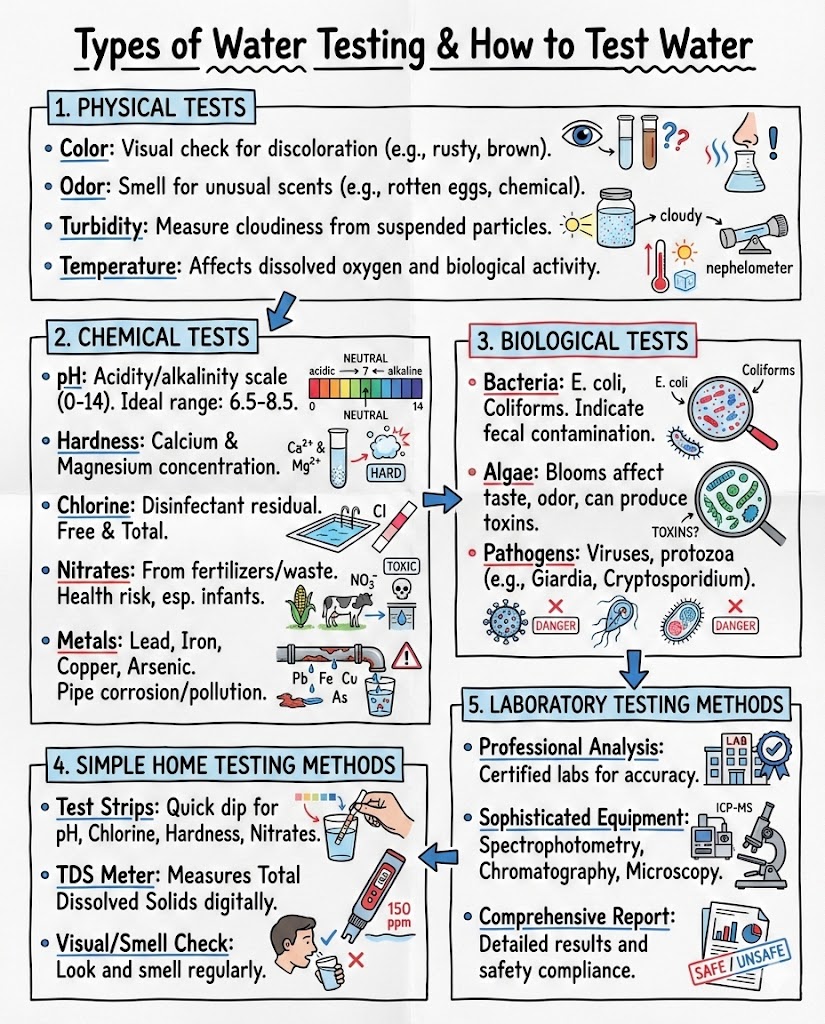
Clean and safe water is essential for drinking, cooking, agriculture, and industrial use. Water testing helps identify contaminants, assess water quality, and ensure compliance with health and environmental standards. This article explains the main types of water testing and practical methods to test water, from simple home checks to advanced laboratory analysis.
What Is Water Testing and Why Is It Important?
Water testing is the process of analyzing water to determine its physical, chemical, and biological characteristics. It helps to:
- Ensure drinking water is safe for human consumption
- Detect harmful contaminants like bacteria, heavy metals, and chemicals
- Monitor water used in agriculture, industries, and households
- Protect public health and the environment
Regular testing is especially important for groundwater, borewell water, and private water sources.
Types of Water Testing
Water testing can be broadly classified into physical, chemical, and biological testing.
1. Physical Water Testing
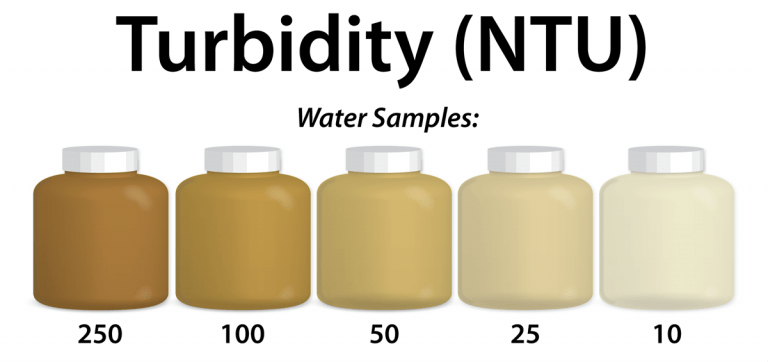

Physical tests evaluate the visible and sensory characteristics of water.
Key parameters include:
- Color – Indicates dissolved organic matter or industrial waste
- Turbidity – Measures cloudiness caused by suspended particles
- Temperature – Affects taste, chemical reactions, and aquatic life
- Odor & Taste – Often signals contamination or chemical presence
These tests are usually the first step in water quality assessment.
2. Chemical Water Testing

Chemical testing identifies dissolved substances that may affect health or usability.
Common chemical tests include:
- pH Level – Measures acidity or alkalinity
- Total Dissolved Solids (TDS) – Indicates overall mineral content
- Hardness – Calcium and magnesium concentration
- Chlorine – Residual disinfectant levels
- Nitrates & Nitrites – Common in agricultural runoff
- Heavy Metals – Lead, arsenic, mercury, and iron
Chemical tests are critical for drinking water safety and industrial applications.
3. Biological (Microbiological) Water Testing

Biological testing checks for microorganisms that can cause diseases.
Key biological indicators:
- Total Coliform Bacteria – General contamination indicator
- E. coli – Signals fecal contamination
- Pathogens – Viruses, protozoa, and parasites
This type of testing is essential for drinking water, especially in rural and untreated water sources.
How to Test Water: Methods Explained
1. Home Water Testing Kits

Home testing kits are affordable and easy to use.
Steps:
- Collect water in a clean container
- Use test strips or reagents as instructed
- Compare color changes with the chart provided
Best for: pH, chlorine, hardness, TDS, and basic contaminants
Limitations: Not highly precise; cannot detect all contaminants
2. Digital Water Testing Meters

Digital meters provide quick and accurate readings.
Common devices:
- TDS meters
- pH meters
- Conductivity meters
Best for: Regular household and RO water monitoring
Limitations: Each meter measures only specific parameters
3. Laboratory Water Testing
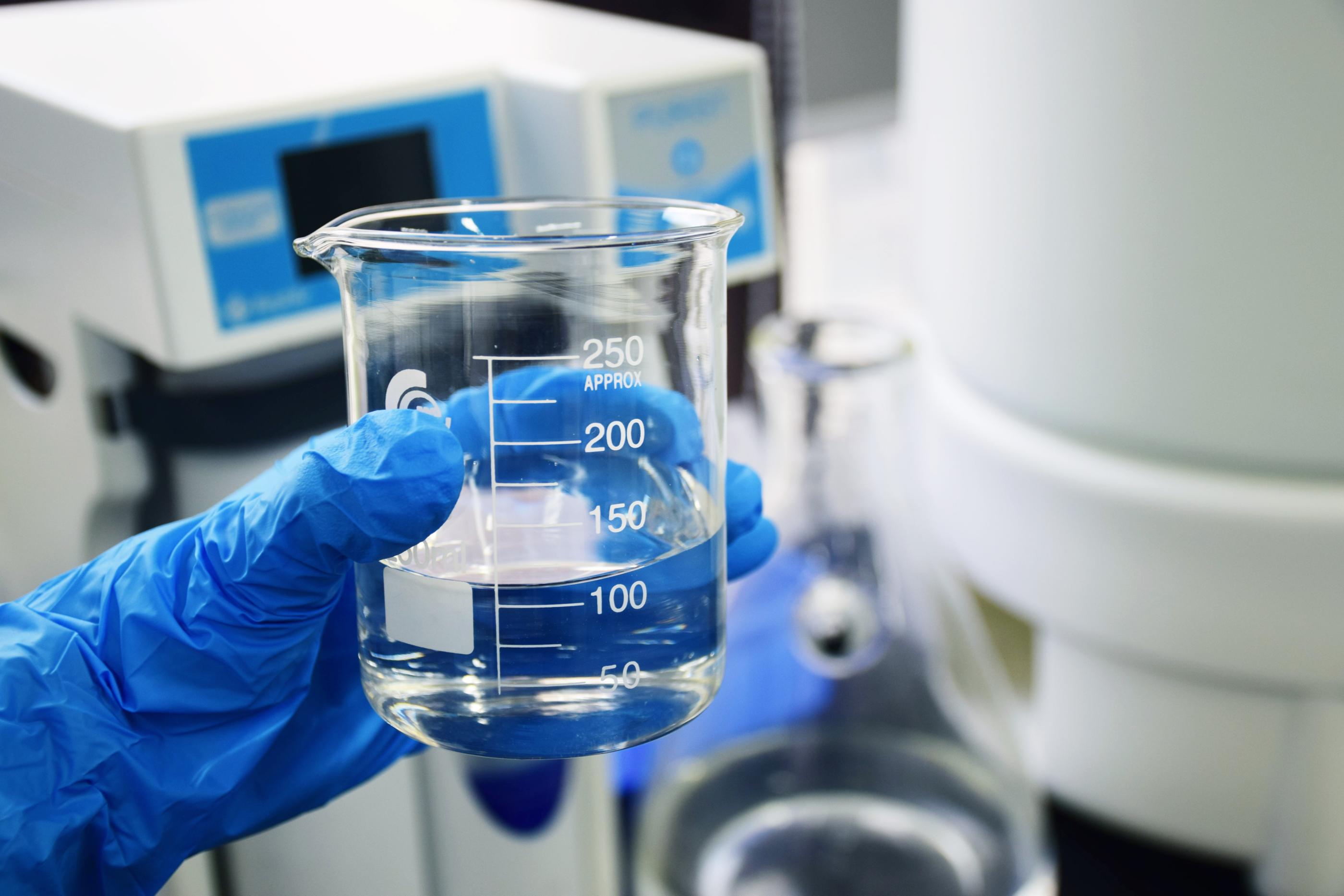
Laboratory testing offers the most accurate and comprehensive results.
Process:
- Collect a water sample in a sterile container
- Send it to a certified laboratory
- Receive a detailed water quality report
Best for: Drinking water certification, borewell water, industrial and municipal testing
Limitations: Higher cost and longer turnaround time
4. Online Water Testing Services
Many professional labs now offer doorstep water sample collection and digital reports.
Advantages:
- Convenience
- Certified results
- Expert recommendations for treatment
How Often Should You Test Water?
- Drinking water (home or borewell): Once every 6–12 months
- RO or purifier output: Every 3–6 months
- Agricultural water: Before every major crop cycle
- Industrial water: As per regulatory standards
Final Thoughts
Understanding the types of water testing and how to test water helps ensure safety, health, and compliance. While home kits and digital meters are ideal for routine checks, laboratory testing remains essential for complete and reliable analysis. Regular water testing is a proactive step toward protecting your family, business, and environment.