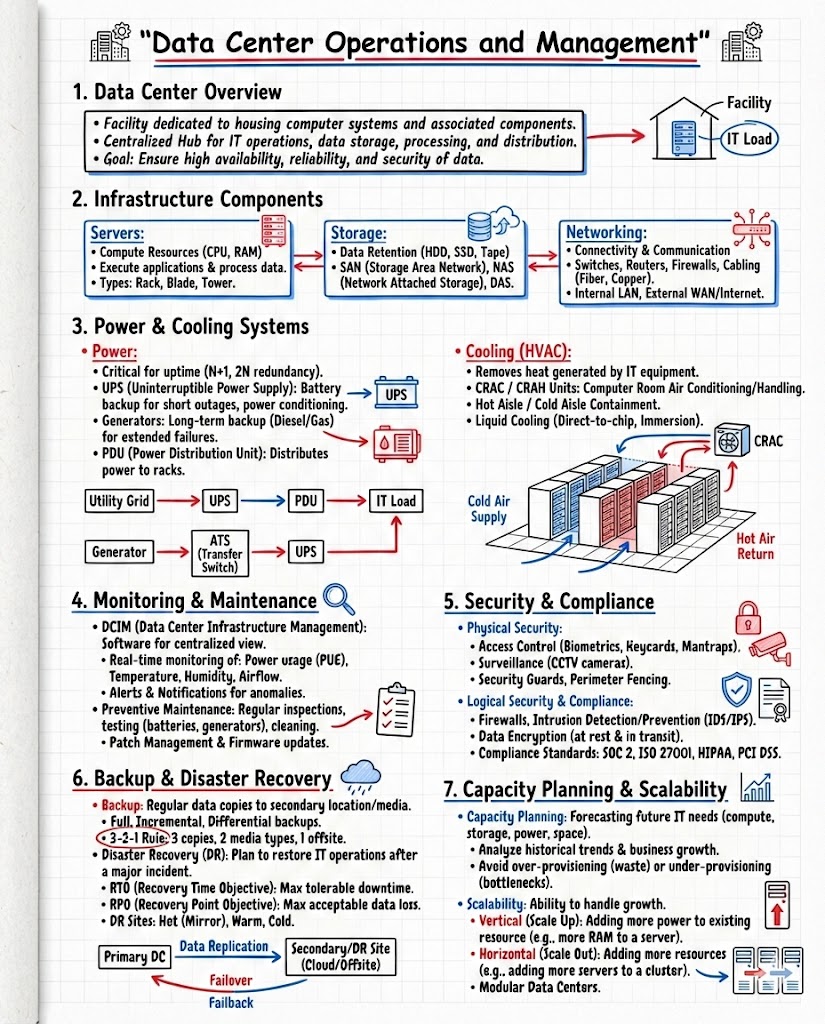
In today’s digital age, data centers serve as the backbone of modern computing, housing the servers, storage, and networking equipment that power everything from cloud services to enterprise applications. Effective operations and management of these facilities ensure reliability, efficiency, and scalability. This article explores the fundamentals, best practices, challenges, and emerging trends in data center operations and management.
What is a Data Center?
A data center is a physical facility that organizations use to house their critical applications and data. It includes IT equipment like servers and storage systems, as well as supporting infrastructure such as power supplies, cooling systems, and security measures. Data center operations encompass the day-to-day activities required to keep these facilities running smoothly, while management involves strategic planning, optimization, and oversight to align with business goals.
Key Components of a Data Center
Data centers are complex ecosystems with several essential components:
- Servers and Storage: The core computing and data storage units.
- Networking Equipment: Routers, switches, and firewalls that enable data transmission.
- Power Systems: Uninterruptible power supplies (UPS), generators, and power distribution units to ensure continuous operation.
- Cooling Infrastructure: HVAC systems, liquid cooling, or air handlers to manage heat generated by equipment.
- Security Systems: Physical barriers, surveillance, access controls, and cybersecurity measures.
Techniques like server consolidation and load management help reduce energy consumption in these components.
Data Center Operations
Operations focus on the tactical aspects of running a data center. This includes monitoring system performance, performing routine maintenance, and responding to incidents. Key activities involve:
- Monitoring and Automation: Using tools to track metrics like temperature, power usage, and network traffic in real-time.
- Maintenance: Scheduled upkeep of hardware and software to prevent failures.
- Incident Management: Quick resolution of outages or issues to minimize downtime.
Proactive approaches, such as continuous monitoring and predictive maintenance, help prevent problems before they escalate.
Management Best Practices
Effective management optimizes resources, enhances security, and promotes sustainability. Here are some evidence-based best practices:
- Implement DCIM Software: Data Center Infrastructure Management (DCIM) tools provide visibility into assets, capacity, and energy use, enabling better decision-making.
- Energy Efficiency: Adopt cooling improvements and renewable energy sources to lower costs and environmental impact.
- Security Protocols: Layer physical and digital security, including multi-factor authentication and regular audits.
- Capacity Planning: Forecast growth to avoid overprovisioning or underutilization.
- Compliance and SLAs: Ensure adherence to regulations like GDPR or HIPAA, and meet service level agreements (SLAs) through robust processes.
Proactive management strategies, including strategic planning, can lead to higher performance and reliability. Tools like monitoring software and automation platforms are crucial for these efforts.
Challenges in Data Center Operations and Management
Despite advancements, data centers face several hurdles:
- Complexity of Environments: Managing multi-vendor setups increases operational difficulty.
- Budget and Resource Constraints: Limited funding and skilled personnel can hinder efficiency.
- Energy Consumption: High power demands contribute to rising costs and environmental concerns.
- Outages and Downtime: These are becoming more expensive, with potential financial losses in the millions.
- Construction and Scalability: Building new facilities in 2024 and beyond involves technical complexities, such as integrating AI-driven demands.
Addressing these requires a focus on limited resources and warranty management.
Future Trends
Looking ahead to 2026 and beyond, several trends are shaping the industry:
- AI and Hyperscale Growth: AI integration is driving hyperscale data centers, requiring advanced cooling and power designs.
- Sustainability: A shift toward green data centers with renewable energy and efficient designs.
- DataOps and Collaboration: Accelerating data delivery through DataOps practices for better decision-making.
- Edge Computing: Decentralizing data processing to reduce latency.
- Enhanced Governance: Focus on data quality, governance, and AI ethics in management.
Modern designs emphasize modularity and scalability to accommodate these changes. A 10-step strategy for data center planning includes assessing needs, incorporating cloud hybrids, and prioritizing security.
Conclusion
Data center operations and management are critical for maintaining the reliability and efficiency of digital infrastructure. By adopting best practices, addressing challenges head-on, and staying ahead of trends like AI and sustainability, organizations can future-proof their facilities. As the demand for data continues to grow, investing in robust strategies will be key to success.