Water is essential to life. It’s something most people in developed countries take for granted—turn on the tap, and clean, safe water flows out. Yet, in 2026, an increasing number of homeowners are taking extra steps to ensure their water is truly safe. From urban apartments to rural homesteads, water testing has shifted from a rare precaution to a routine part of home maintenance. But what’s driving this shift? Is it a response to new threats, changing regulations, or simply greater awareness? The answer lies in a combination of environmental, technological, and societal factors that have converged in recent years.
This article explores the reasons behind the growing trend of residential water testing in 2026. It examines the types of contaminants homeowners are concerned about, the availability and affordability of testing methods, and the role of public health initiatives and media coverage in shaping consumer behavior. The goal is not to alarm, but to inform—providing a clear, factual overview of why water quality has become a priority for so many households.
Understanding Water Contamination: What’s in Your Tap?
Before diving into the reasons for increased testing, it’s important to understand what homeowners are testing for. Water contamination can occur at multiple stages: from the source (such as rivers, lakes, or groundwater), during treatment at municipal facilities, and even within the home’s plumbing system. Contaminants fall into several categories, each with distinct health implications.
Common Types of Water Contaminants
There are four primary categories of water contaminants that concern homeowners:
- Biological contaminants: These include bacteria, viruses, and parasites. While municipal water systems are designed to eliminate these, aging infrastructure or treatment failures can allow them to enter the supply. Examples include E. coli and Giardia.
- Chemical contaminants: These range from naturally occurring substances like arsenic and radon to human-made chemicals such as pesticides, industrial solvents, and pharmaceutical residues. Agricultural runoff and improper disposal of household products are common sources.
- Heavy metals: Lead, copper, mercury, and cadmium are among the most concerning. Lead, in particular, remains a major issue in older homes with lead pipes or solder. Even low levels of lead exposure can affect cognitive development in children.
- Disinfection byproducts: When chlorine or other disinfectants react with organic matter in water, they can form compounds like trihalomethanes (THMs) and haloacetic acids (HAAs), which are linked to long-term health risks.
Not all contaminants are immediately visible or detectable by taste or smell. Many, like lead or certain pesticides, are odorless and colorless, making testing the only reliable way to identify their presence.
The Role of Aging Infrastructure
One of the most significant contributors to water quality concerns is the age and condition of water delivery systems. In many parts of the United States, Canada, and Europe, water infrastructure was installed decades ago. According to the American Society of Civil Engineers, much of the U.S. water system is nearing or past its intended lifespan. Pipes corrode, joints fail, and treatment plants struggle to keep up with evolving contaminant profiles.
For example, the 2014 Flint, Michigan water crisis brought national attention to the dangers of lead leaching from old pipes when water chemistry changes. Although Flint is an extreme case, it highlighted a broader vulnerability: even treated water can become contaminated as it travels through aging distribution networks. Homeowners in older neighborhoods—especially those built before the 1980s—are increasingly aware of this risk.
Why 2026? The Convergence of Factors
While water quality concerns are not new, several developments in the early 2020s have accelerated homeowner interest in testing. These include advances in testing technology, increased media coverage of water-related health issues, regulatory changes, and broader public awareness of environmental health.
1. Improved Accessibility and Affordability of Testing Kits
One of the most practical reasons for the rise in home water testing is the availability of affordable, easy-to-use testing kits. In the past, homeowners who wanted their water tested had to contact a certified laboratory, pay significant fees, and wait days or weeks for results. Today, a wide range of at-home testing options exist, from basic strips that detect pH and chlorine levels to comprehensive kits that screen for heavy metals, bacteria, and pesticides.
Companies like Tap Score, SafeHome, and WaterCheck now offer mail-in kits that allow users to collect a water sample and send it to a certified lab for analysis. These services typically cost between $50 and $200, depending on the number of contaminants tested. Results are delivered online within days, often with clear explanations and recommendations.
Additionally, smartphone-connected devices and digital testers are becoming more common. These tools use sensors to provide real-time readings and can sync with apps that track water quality over time. While not as accurate as lab tests, they offer a convenient way for homeowners to monitor changes and decide when a full lab analysis is needed.
2. Heightened Public Awareness and Media Coverage
Media reports of water contamination incidents have played a significant role in shaping public perception. High-profile cases—such as the discovery of per- and polyfluoroalkyl substances (PFAS) in drinking water near military bases and industrial sites—have been widely covered in news outlets and documentaries. PFAS, often called “forever chemicals” due to their persistence in the environment, have been linked to cancer, hormonal disruption, and immune system effects.
Social media has also amplified awareness. Platforms like YouTube, TikTok, and Instagram feature content creators who test their own water, share results, and discuss filtration options. These videos often go viral, especially when they reveal unexpected contaminants. While some content may be sensationalized, it has undeniably contributed to a culture of vigilance around household water safety.
Public health campaigns have further reinforced the message. Organizations like the Environmental Protection Agency (EPA), the World Health Organization (WHO), and non-profits such as the Environmental Working Group (EWG) regularly publish water quality reports and advocate for stricter regulations. Their resources are increasingly accessible to the general public, making it easier for homeowners to understand risks and take action.
3. Regulatory Changes and Policy Shifts
Governments at local, national, and international levels have introduced new regulations and guidelines that affect water quality standards. In the United States, the EPA updated its Lead and Copper Rule in 2021, requiring water systems to take more aggressive steps to reduce lead exposure, including replacing lead service lines. While these changes are aimed at utilities, they have prompted homeowners to take a more active role in monitoring their own water.
Similarly, the European Union’s revised Drinking Water Directive, which came into effect in 2023, sets stricter limits on contaminants like PFAS and microplastics. These regulations have led to increased testing by water suppliers, but they have also raised consumer expectations. Homeowners want to know not just that their water meets legal standards, but that it is truly safe for daily use—especially for vulnerable groups like children, pregnant women, and the elderly.
In some regions, local governments now offer free or subsidized water testing programs. For example, several cities in California and New York provide free lead testing kits to residents, particularly in low-income neighborhoods. These initiatives have made testing more accessible and normalized the practice as part of responsible homeownership.
4. The Rise of Well Water Use and Private Systems
Not all homes are connected to municipal water supplies. In rural and suburban areas, many households rely on private wells. According to the U.S. Geological Survey, about 15% of Americans—roughly 43 million people—use private groundwater wells for drinking water. Unlike public systems, private wells are not regulated by federal or state agencies, meaning homeowners are solely responsible for monitoring water quality.
In 2026, more people are choosing to live in rural or semi-rural areas, driven by remote work trends and a desire for more space. This shift has increased the number of homeowners managing private water systems. Without regular testing, well water can be contaminated by agricultural runoff, septic system leaks, or naturally occurring minerals like arsenic and uranium.
Well owners are increasingly aware of these risks. Many now test their water annually or after significant weather events, such as floods, which can introduce contaminants. Testing is especially important before installing water treatment systems, as the choice of filter or purifier depends on the specific contaminants present.
The Health and Economic Incentives for Testing
Beyond environmental and regulatory factors, homeowners are motivated by health and financial considerations. The potential health impacts of contaminated water are well-documented, and the cost of inaction can be high—both in medical expenses and property value.
Health Risks of Untreated Contaminants
Exposure to certain water contaminants can lead to both short-term and long-term health effects. Short-term issues include gastrointestinal illnesses from bacteria or parasites, often referred to as “traveler’s diarrhea” even when contracted at home. Symptoms like nausea, vomiting, and diarrhea can result from drinking water contaminated with Campylobacter or Norovirus.
Long-term exposure is more insidious. Lead, for instance, accumulates in the body over time and can cause developmental delays in children, high blood pressure in adults, and kidney damage. Arsenic exposure is linked to skin lesions, cardiovascular disease, and several types of cancer. Even low levels of nitrate, commonly found in agricultural areas, can cause methemoglobinemia (“blue baby syndrome”) in infants.
While most municipal water systems are effective at removing harmful pathogens, they may not eliminate all chemical contaminants. For example, reverse osmosis systems used in treatment plants can remove many pollutants, but they are not always 100% efficient, especially for emerging contaminants like pharmaceuticals and microplastics.
Property Value and Insurance Considerations
Water quality can also affect a home’s market value and insurability. Buyers are increasingly requesting water quality reports during home inspections, particularly in areas with known contamination issues. A home with documented lead or PFAS in the water may be harder to sell or may require remediation before closing.
Some insurance companies now offer discounts or specialized policies for homes with certified water treatment systems. Conversely, properties with known water issues may face higher premiums or exclusions. Testing provides homeowners with the documentation needed to make informed decisions about filtration, plumbing upgrades, or disclosure during real estate transactions.
How Homeowners Are Responding: Testing and Treatment
As awareness grows, so do the actions homeowners are taking. Testing is often the first step, but it’s usually followed by mitigation strategies tailored to the specific contaminants found.
Common Testing Methods
Homeowners have several options for testing their water:
- DIY test strips: These are inexpensive and provide quick results for basic parameters like pH, chlorine, hardness, and nitrate. They are useful for routine monitoring but lack precision for detecting low levels of contaminants.
- Mail-in lab kits: These offer the most comprehensive analysis. Users collect a sample and send it to a certified laboratory. Results typically include detailed reports with contaminant levels compared to health guidelines.
- Professional testing services: Some companies send technicians to collect samples and perform on-site analysis. This is more expensive but ensures proper sampling and handling.
- Continuous monitoring devices: Smart water quality monitors can be installed under the sink or at the main water line. They track parameters like turbidity, chlorine, and TDS (total dissolved solids) in real time and send alerts via smartphone apps.
The choice of method depends on the homeowner’s budget, concerns, and technical comfort. For most, a combination of annual lab testing and periodic DIY checks provides a balanced approach.
Treatment Options After Testing
Once contaminants are identified, homeowners can choose from a range of treatment systems:
- Pitcher filters: Affordable and easy to use, these are effective for removing chlorine, lead, and some pesticides. However, they have limited capacity and may not address all contaminants.
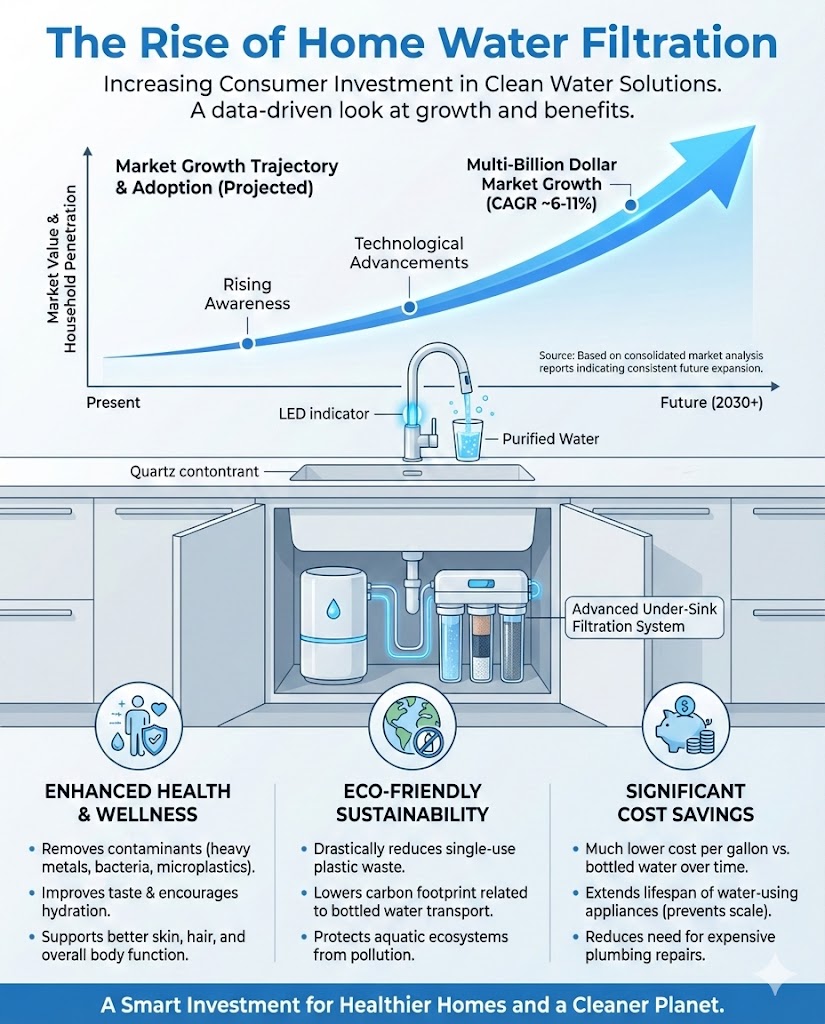
- Under-sink filters: These include activated carbon filters and reverse osmosis systems. Reverse osmosis is highly effective at removing dissolved solids, heavy metals, and many chemicals, but it wastes water and requires regular maintenance.
- Whole-house systems: Installed at the main water line, these treat all water entering the home. They are ideal for removing sediment, chlorine, and hardness but may not address specific contaminants without additional components.
- UV purifiers: These use ultraviolet light to kill bacteria and viruses. They are often used in conjunction with other filters, especially in well water systems.
It’s important to note that no single system removes all contaminants. Treatment should be based on test results and tailored to the household’s specific needs.
Key Takeaways
- Water testing is becoming more common among homeowners in 2026 due to a combination of environmental, technological, and regulatory factors.
- Contaminants such as lead, PFAS, bacteria, and heavy metals pose real health risks, many of which are not detectable without testing.
- Aging water infrastructure, especially in older homes and cities, increases the risk of contamination during distribution.
- Advances in testing technology have made it easier and more affordable for homeowners to check their water quality.
- Media coverage and public health campaigns have raised awareness, encouraging proactive behavior.
- Regulatory changes are pushing utilities to improve water safety, but homeowners are taking additional steps to ensure protection.
- Private well users are particularly vulnerable and must test regularly, as their water is not regulated.
- Testing informs treatment decisions, helping homeowners choose the right filtration or purification system.
- Water quality can impact health, property value, and insurance, making testing a wise investment.
FAQ
How often should I test my home’s water?
For municipal water users, testing once a year is generally sufficient, unless there are known issues in your area or changes in taste, odor, or appearance. Well owners should test at least annually, and after heavy rainfall or flooding. If you have young children, are pregnant, or have a compromised immune system, more frequent testing may be advisable.
Can I rely on my local water utility’s report?
Utility reports, often called Consumer Confidence Reports, provide valuable information about your water supply. However, they reflect conditions at the treatment plant and may not account for contamination that occurs in pipes between the plant and your home. Testing your tap water gives a more accurate picture of what you’re actually drinking.
What should I do if my water test shows high levels of contaminants?
First, confirm the results with a second test from a certified lab. If contaminants are confirmed, consult a water treatment professional to determine the best solution. In cases of lead or bacterial contamination, avoid using tap water for drinking or cooking until the issue is resolved. Contact your local health department if the problem may affect your community.