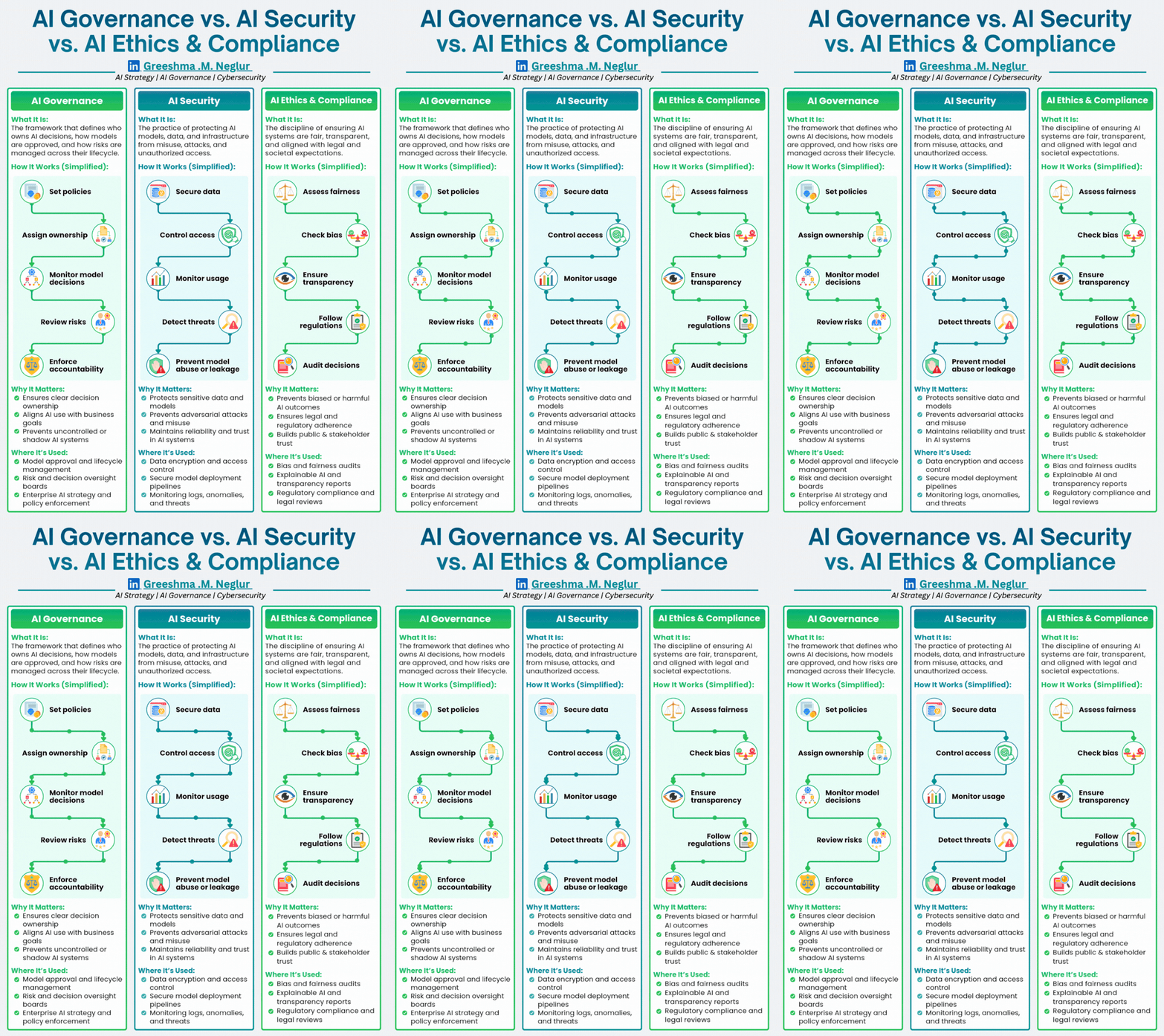
Artificial Intelligence (AI) is no longer a futuristic concept—it’s embedded in everyday tools, from recommendation algorithms to automated customer service and medical diagnostics. As AI systems grow more powerful and widespread, so do concerns about how they are developed, deployed, and controlled. Three key areas have emerged to address these concerns: AI governance, AI security, and AI ethics & compliance. While they often overlap, each plays a distinct role in shaping responsible AI use.
Understanding these domains helps organizations, policymakers, and the public make informed decisions about AI’s role in society. This article breaks down each concept, explains their differences, and highlights how they work together to ensure AI is used safely and fairly.
Defining AI Governance
AI governance refers to the frameworks, policies, and structures that guide the development, deployment, and oversight of AI systems within an organization or across a sector. It establishes who is accountable for AI decisions, how risks are managed, and how transparency is maintained.
Governance is about setting the rules of the game. It includes creating internal AI committees, defining approval processes for new AI models, and ensuring alignment with organizational values and legal requirements. For example, a bank using AI to assess loan applications must have governance mechanisms to review model fairness, audit outcomes, and respond to customer complaints.
Key Components of AI Governance
- Accountability structures: Clear lines of responsibility for AI outcomes.
- Risk management frameworks: Processes to identify, assess, and mitigate AI-related risks.
- Transparency protocols: Guidelines for documenting AI systems and explaining decisions.
- Stakeholder engagement: Involving diverse groups—employees, customers, regulators—in AI planning.
Effective AI governance doesn’t happen in isolation. It often involves collaboration between legal, technical, and business teams to ensure AI aligns with both operational goals and societal expectations.
Understanding AI Security
AI security focuses on protecting AI systems from malicious attacks, data breaches, and unintended failures. Unlike traditional cybersecurity, which guards networks and devices, AI security deals with unique vulnerabilities in machine learning models and data pipelines.
For instance, an attacker might manipulate input data to trick a facial recognition system into misidentifying someone—a technique known as an adversarial attack. Or they could steal sensitive training data used to build a medical AI model. These threats require specialized defenses.
Common AI Security Challenges
- Data poisoning: Corrupting training data to degrade model performance or introduce biases.
- Model inversion: Reconstructing private training data from model outputs.
- Evasion attacks: Altering inputs during inference to bypass detection (e.g., fooling spam filters).
- Model stealing: Copying a proprietary model by querying it repeatedly.
AI security measures include robust data validation, encryption of model weights, continuous monitoring for anomalies, and secure deployment environments. Organizations must treat AI systems not just as software, but as dynamic assets requiring ongoing protection.
Exploring AI Ethics & Compliance
AI ethics & compliance centers on ensuring that AI systems operate in ways that are fair, transparent, and respectful of human rights. It combines moral principles with legal and regulatory requirements to prevent harm and promote trust.
Ethics in AI asks questions like: Is this system biased against certain groups? Does it respect user privacy? Can people understand how decisions are made? Compliance, on the other hand, ensures adherence to laws such as the EU’s AI Act, GDPR, or sector-specific regulations like HIPAA in healthcare.
Core Principles of AI Ethics
- Fairness: Avoiding discrimination based on race, gender, age, or other protected attributes.
- Transparency: Making AI decision-making processes understandable to users and stakeholders.
- Privacy: Protecting personal data used in training and inference.
- Human oversight: Ensuring humans can intervene or override AI decisions when necessary.
- Beneficence and non-maleficence: Designing AI to do good and avoid harm.
Compliance often translates these principles into actionable steps: conducting bias audits, maintaining data protection impact assessments, and providing clear user notifications. While ethics is broader and more philosophical, compliance is practical and enforceable.
How These Domains Interconnect
AI governance, security, and ethics & compliance are not separate silos—they reinforce each other. Strong governance enables consistent application of ethical standards and security protocols. For example, a governance board might mandate regular security testing and ethical reviews before deploying a new AI tool.
Similarly, ethical concerns often drive regulatory changes, which in turn shape governance policies. The EU AI Act classifies AI systems by risk level, requiring stricter oversight for high-risk applications like hiring or law enforcement. Organizations must then update their governance and compliance strategies to meet these new standards.
Security also supports ethics. A breach that exposes sensitive user data violates both privacy (an ethical principle) and data protection laws (a compliance issue). Preventing such breaches is a shared responsibility across all three domains.
Key Takeaways
- AI governance sets the organizational structure and policies for responsible AI use.
- AI security protects AI systems from technical threats and vulnerabilities.
- AI ethics & compliance ensures AI aligns with moral values and legal requirements.
- These areas are interdependent: strong governance supports ethical and secure AI, while ethics and security inform governance decisions.
- Organizations should integrate all three into a unified AI strategy rather than treating them in isolation.
Frequently Asked Questions
1. Can an AI system be secure but unethical?
Yes. A system might be technically secure—protected from hacking or data leaks—but still make biased or harmful decisions. For example, a secure hiring AI could unfairly reject qualified candidates from underrepresented groups due to biased training data. Security alone doesn’t guarantee ethical outcomes.
2. Is AI compliance the same as AI ethics?
Not exactly. Compliance refers to meeting legal and regulatory standards, which can vary by region and industry. Ethics is broader and involves moral judgment about what is right or fair, even in areas not yet regulated. A company might comply with current laws but still face ethical criticism for its AI practices.
3. Who is responsible for AI governance in an organization?
Responsibility is typically shared. Senior leadership sets the tone and allocates resources, while cross-functional teams—including legal, IT, data science, and compliance—implement governance policies. Some organizations appoint dedicated AI ethics officers or establish AI review boards to oversee high-stakes decisions.