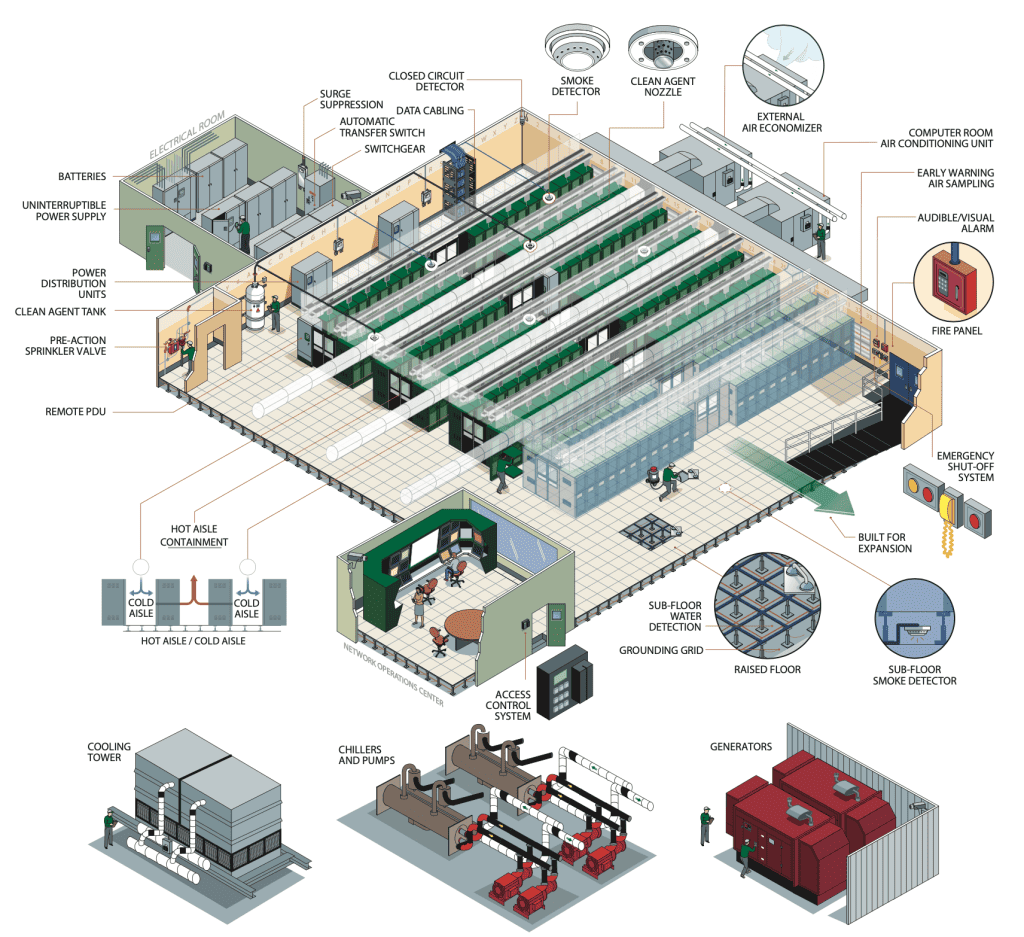
Imagine a vast, climate-controlled warehouse humming with servers, cables, and cooling systems—all working in precise coordination to store, process, and deliver digital information. This is a data center. But behind the scenes of every reliable, efficient data center lies a carefully planned design layout. The way a data center is physically arranged directly impacts its performance, energy efficiency, scalability, and long-term operational costs. Whether it’s a small server room or a massive hyperscale facility, the design layout is the foundation upon which reliability and functionality are built.
Data center design layout refers to the strategic arrangement of infrastructure components within a facility. This includes the placement of server racks, power distribution units (PDUs), cooling systems, network cabling, fire suppression systems, and physical security measures. The goal is to create an environment that supports high availability, minimizes downtime, and adapts to future technological demands. A well-designed layout ensures that heat is managed effectively, power is distributed efficiently, and maintenance can be performed with minimal disruption.
As digital transformation accelerates across industries—from healthcare and finance to education and entertainment—the demand for robust data centers continues to grow. Cloud computing, artificial intelligence, and the Internet of Things (IoT) rely heavily on data centers to process and store massive volumes of information. In this context, the importance of thoughtful design cannot be overstated. A poorly planned layout can lead to overheating, power inefficiencies, cable congestion, and increased risk of system failures. Conversely, a well-structured design enhances resilience, reduces operational expenses, and supports sustainable growth.
Core Principles of Effective Data Center Layout
Designing a data center is not simply about fitting as many servers as possible into a space. It requires adherence to a set of core principles that guide decision-making throughout the planning and construction phases. These principles ensure that the facility operates efficiently, safely, and reliably over its lifespan.
1. Redundancy and Fault Tolerance
One of the most critical aspects of data center design is redundancy. This means incorporating backup systems for power, cooling, and network connectivity so that if one component fails, another can take over without interrupting operations. For example, a data center might use dual power feeds from separate substations, multiple uninterruptible power supplies (UPS), and redundant cooling units. This fault-tolerant design is essential for maintaining uptime, especially in mission-critical environments.
2. Scalability and Flexibility
Technology evolves rapidly, and data center needs can change dramatically over time. A good layout anticipates future growth and allows for easy expansion. Modular designs, where components are added in standardized units, are increasingly popular. They enable operators to scale capacity incrementally without overhauling the entire facility. Flexibility also means accommodating different types of equipment—such as high-density servers or storage arrays—without requiring major structural changes.
3. Thermal Management
Servers generate significant heat, and excessive temperatures can damage hardware and reduce performance. Effective thermal management is therefore a cornerstone of data center design. This involves strategic placement of cooling systems, such as computer room air conditioners (CRACs) or in-row coolers, and organizing server racks to promote airflow. The use of hot aisle/cold aisle configurations—where cold air is directed into the fronts of servers and hot air is exhausted from the back—helps prevent hot and cold air from mixing, improving cooling efficiency.
4. Power Efficiency
Power consumption is one of the largest operational costs for data centers. Designers aim to minimize energy waste by optimizing the path of electrical distribution and using high-efficiency transformers, PDUs, and UPS systems. Power Usage Effectiveness (PUE), a metric that compares total facility energy to IT equipment energy, is often used to evaluate efficiency. A lower PUE indicates a more efficient design. Additionally, integrating renewable energy sources or using advanced power management software can further reduce environmental impact.
5. Physical Security and Access Control
Data centers house sensitive information and critical infrastructure, making physical security a top priority. The layout must include controlled access points, surveillance systems, biometric scanners, and secure zones for different levels of personnel. Segregating areas—such as separating public access zones from server rooms—helps prevent unauthorized entry and reduces the risk of accidental damage.
Key Components in Data Center Layout Design
A data center is composed of several interconnected systems, each playing a vital role in its overall functionality. Understanding how these components are arranged and integrated is essential for effective design.
Server Racks and Cabinets
Server racks are the backbone of any data center. They house servers, storage devices, and networking equipment in a structured, accessible manner. Standard rack sizes are typically 19 inches wide and vary in height, with common configurations being 42U or 48U (where “U” stands for rack unit, approximately 1.75 inches). Proper spacing between racks allows for maintenance access and airflow. Racks are often arranged in rows, aligned with the hot aisle/cold aisle model to optimize cooling.
Power Distribution Infrastructure
Power must be delivered reliably from the utility source to individual servers. This involves multiple layers of distribution: from the main electrical panel to PDUs, and then to rack-mounted power strips. Redundant power paths ensure continuity during outages. Some data centers use 2N redundancy, meaning two independent power systems serve the same load, while others use N+1, where one extra component is available as backup. Grounding and surge protection are also critical to prevent electrical damage.
Cooling Systems
Cooling is one of the most energy-intensive aspects of data center operations. Traditional systems include CRAC units that circulate chilled air through raised floors. More modern approaches use in-row or overhead cooling, which bring cooling closer to the heat source. Liquid cooling, where coolant is circulated directly to servers, is gaining traction for high-density setups. The layout must ensure that cooling units are positioned to cover all server areas without creating hot spots.
Network Cabling and Structured Wiring
Data centers rely on extensive cabling to connect servers, switches, and storage devices. A well-organized cabling system reduces signal interference, simplifies troubleshooting, and supports future upgrades. Structured cabling standards, such as those defined by TIA-942, recommend using color-coded cables, labeled ports, and dedicated pathways (such as overhead trays or underfloor conduits). Proper cable management also prevents airflow blockage, which can impede cooling.
Fire Suppression and Environmental Monitoring
Safety systems are integrated into the layout to protect both equipment and personnel. Fire suppression systems, such as clean agent gas (e.g., FM-200) or water mist, are designed to extinguish fires without damaging electronics. Smoke detectors, temperature sensors, and humidity monitors provide real-time environmental data, allowing operators to respond quickly to anomalies. These systems are typically connected to a central monitoring platform for centralized control.
Common Layout Models in Data Center Design
Data centers come in various sizes and configurations, and their layouts often follow established models based on scale, purpose, and technology. These models provide a framework for organizing space and infrastructure.
1. Tiered Data Centers (Based on Uptime Institute Standards)
The Uptime Institute classifies data centers into four tiers, each reflecting different levels of redundancy and availability:
- Tier I: Basic infrastructure with no redundancy. Suitable for small businesses with minimal downtime tolerance.
- Tier II: Includes redundant power and cooling components. Offers improved reliability over Tier I.
- Tier III: Allows for maintenance without shutting down operations. Features multiple power and cooling paths.
- Tier IV: Fully fault-tolerant with 2N+1 redundancy. Designed for 99.995% uptime, common in financial and government sectors.
The tier level influences layout decisions, such as the number of backup systems and the separation of critical components.
2. Hyperscale Data Centers
Hyperscale facilities, operated by companies like Amazon, Google, and Microsoft, are massive in scale and designed for cloud services. These centers prioritize efficiency and automation. Their layouts often feature standardized, modular designs with high-density server deployments. Cooling systems are optimized for large volumes of airflow, and power is distributed through centralized substations. Automation tools manage everything from temperature to workload distribution.
3. Edge Data Centers
Edge data centers are smaller facilities located closer to end users, reducing latency for applications like autonomous vehicles, smart cities, and real-time analytics. Their layouts are compact and often housed in shipping containers or repurposed buildings. Despite their size, they must still include reliable power, cooling, and security. The design emphasizes rapid deployment and remote management capabilities.
4. Colocation Facilities
Colocation (colo) data centers allow multiple organizations to rent space for their servers. The layout must accommodate diverse tenants with varying needs. This often involves partitioning the floor into secure cages or private suites, each with independent power and cooling. Shared infrastructure, such as network connectivity and security systems, is centralized, while tenant-specific equipment is isolated.
Challenges in Data Center Layout Planning
Despite advances in technology and design methodologies, planning a data center layout presents several challenges. These must be carefully addressed to ensure long-term success.
Space Constraints
Real estate is expensive, especially in urban areas. Data center designers must maximize the use of available space without compromising performance. This requires careful calculation of rack density, aisle width, and equipment placement. In some cases, vertical expansion or multi-story designs are used to increase capacity.
Heat Density and Cooling Limitations
As servers become more powerful, they generate more heat per unit of space. High-density racks can produce over 30 kW of heat, challenging traditional air-cooling methods. Designers must evaluate whether existing cooling infrastructure can handle the load or if alternative solutions—such as liquid cooling or immersion cooling—are needed.
Power Availability and Grid Reliability
Data centers consume vast amounts of electricity. In regions with unstable power grids, ensuring a reliable supply is difficult. Backup generators and battery systems are essential, but they require space and maintenance. Additionally, utility providers may impose limits on power draw, influencing the scale of the facility.
Future-Proofing and Technology Evolution
Predicting future technological needs is inherently uncertain. A layout that works today may become obsolete in five years. Designers must balance current requirements with the flexibility to adapt. This includes leaving space for new equipment, planning for higher power densities, and ensuring that cabling infrastructure can support faster network speeds.
Compliance and Regulations
Data centers must comply with local building codes, fire safety regulations, environmental standards, and industry-specific requirements (such as HIPAA for healthcare or PCI DSS for payment processing). These regulations can influence everything from ceiling height to emergency exit placement, adding complexity to the design process.
Emerging Trends in Data Center Design
The field of data center design is constantly evolving, driven by technological innovation and changing business needs. Several trends are shaping the future of layout planning.
Modular and Prefabricated Data Centers
Modular designs involve assembling data center components in a factory and shipping them to the site for rapid deployment. These prefabricated units can be deployed in weeks rather than months, making them ideal for edge computing or disaster recovery. The layout is standardized, reducing design complexity and ensuring consistency.
AI-Driven Design and Management
Artificial intelligence is being used to optimize data center layouts and operations. AI algorithms can simulate airflow, predict equipment failures, and recommend optimal rack placements. Digital twins—virtual replicas of physical facilities—allow designers to test different configurations before implementation.
Sustainability and Green Design
Environmental concerns are pushing data centers toward greener designs. This includes using renewable energy, improving PUE, and reducing water consumption in cooling systems. Some facilities are built in colder climates to take advantage of free air cooling. Others use waste heat for district heating systems, turning a byproduct into a resource.
Increased Use of Automation
Automation is reducing the need for human intervention in routine tasks. Robotic systems can perform cable management, equipment installation, and even physical security patrols. This not only improves efficiency but also enhances safety in high-risk environments.
Key Takeaways
- Data center design layout is the strategic arrangement of physical infrastructure to support reliable, efficient, and scalable operations.
- Core principles include redundancy, scalability, thermal management, power efficiency, and physical security.
- Key components include server racks, power distribution systems, cooling units, cabling, and safety systems.
- Common layout models include tiered data centers, hyperscale facilities, edge centers, and colocation sites.
- Challenges include space limitations, heat density, power availability, future-proofing, and regulatory compliance.
- Emerging trends include modular construction, AI-driven design, sustainability initiatives, and automation.
FAQ
What is the difference between hot aisle and cold aisle containment?
Hot aisle containment involves enclosing the aisles where hot air is exhausted from servers, directing it back to cooling units. Cold aisle containment seals the aisles where cold air is supplied to server fronts. Both methods prevent mixing of hot and cold air, improving cooling efficiency. The choice depends on facility size, layout, and cooling system type.
How does data center layout affect energy efficiency?
A well-planned layout minimizes energy waste by optimizing airflow, reducing cable resistance, and ensuring efficient power distribution. For example, placing cooling units close to heat sources reduces the distance air must travel, lowering fan energy use. Proper spacing and cable management also prevent blockages that can increase cooling load.
Can a data center layout be modified after construction?
Yes, but modifications can be complex and costly. Changes may require reconfiguring power and cooling systems, rerouting cables, or reinforcing floors to support heavier equipment. Future-proofing during initial design—such as leaving extra space or installing flexible infrastructure—can make upgrades easier and less disruptive.