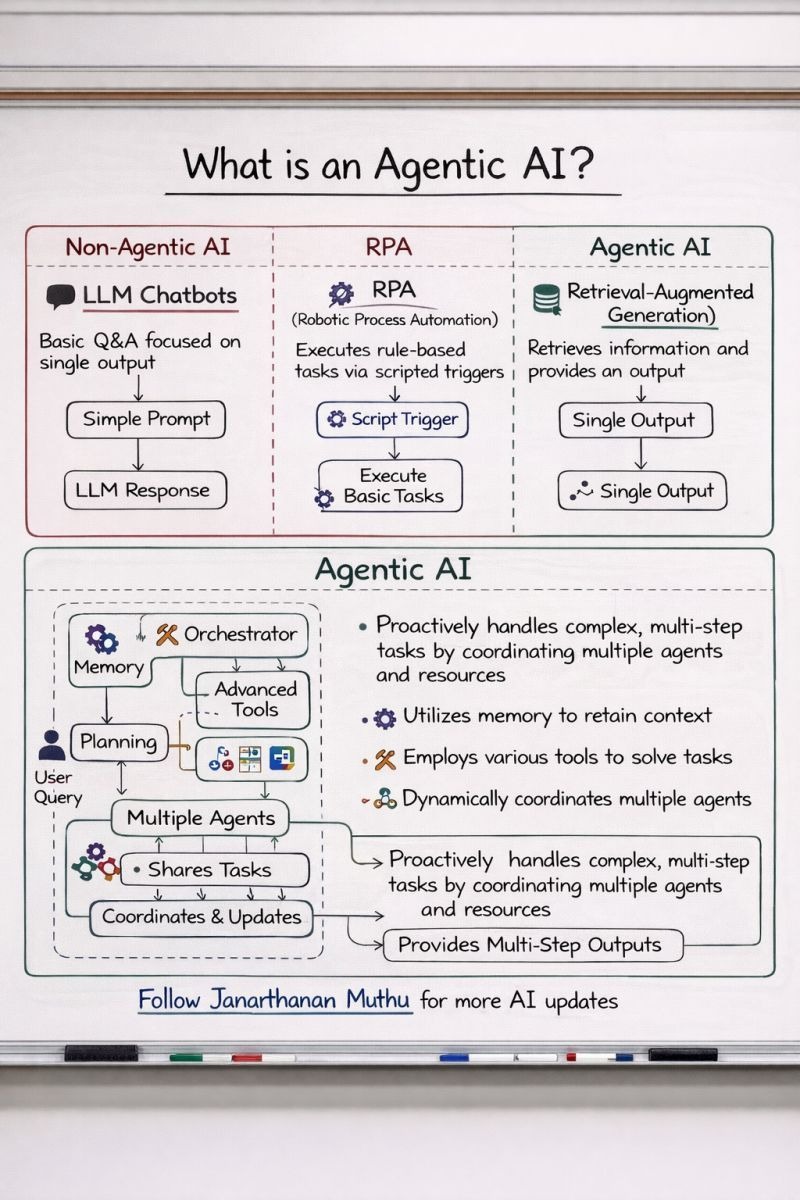
Imagine a digital assistant that doesn’t just answer your questions but takes action on your behalf—booking appointments, analyzing data, adjusting settings, and making decisions based on goals you’ve set. This isn’t science fiction. It’s the emerging reality of agentic AI, a new class of artificial intelligence systems designed to act autonomously toward specific objectives.
Unlike traditional AI tools that respond to direct commands, agentic AI operates with a degree of independence. It plans, reasons, and executes tasks without constant human oversight. This shift marks a significant evolution in how we interact with technology, moving from passive tools to proactive digital agents.
The Core Concept of Agentic AI
At its heart, agentic AI refers to artificial intelligence systems capable of goal-directed behavior. These systems don’t merely process information—they pursue outcomes. The term “agentic” comes from “agency,” the capacity to act intentionally. In this context, an AI agent is a software entity that perceives its environment, makes decisions, and takes actions to achieve predefined goals.
Agentic AI goes beyond pattern recognition or data classification. It involves planning, learning from experience, adapting to changing conditions, and sometimes even collaborating with other agents or humans. Think of it as a virtual employee that understands your priorities and works to fulfill them, rather than waiting for step-by-step instructions.
How Agentic AI Differs from Traditional AI
Traditional AI, such as chatbots or recommendation engines, operates within narrow boundaries. A chatbot answers questions based on trained data. A recommendation system suggests products based on user history. These systems are reactive—they respond to inputs but don’t initiate actions.
Agentic AI, by contrast, is proactive. It sets internal goals, evaluates options, and executes multi-step workflows. For example, an agentic AI managing your calendar might detect a scheduling conflict, propose alternative times, contact participants, and confirm the new meeting—all without prompting. This level of autonomy requires advanced reasoning, memory, and decision-making capabilities.
Key Components of Agentic AI Systems
Building an agentic AI involves several interconnected components that enable autonomous operation. These include perception, reasoning, planning, and action.
Perception
The system must gather and interpret data from its environment. This could involve reading emails, analyzing sensor inputs, or monitoring user behavior. Perception allows the AI to understand the current state of the world and identify relevant information.
Reasoning and Decision-Making
Once data is collected, the AI uses reasoning to evaluate options. This often involves rule-based logic, probabilistic models, or machine learning algorithms. The system weighs trade-offs, predicts outcomes, and selects the best course of action based on its goals.
Planning
Agentic AI doesn’t act impulsively. It creates plans—sequences of actions designed to achieve a goal. These plans may be short-term (e.g., sending a reminder) or long-term (e.g., optimizing a monthly budget). Planning enables the system to handle complex, multi-step tasks efficiently.
Action and Execution
After planning, the AI takes concrete steps. This might include sending messages, adjusting settings, initiating transactions, or interfacing with other software systems. Execution requires integration with external tools and platforms, such as email clients, databases, or APIs.
Learning and Adaptation
Many agentic AI systems incorporate learning mechanisms. They improve over time by analyzing the results of their actions, receiving feedback, or observing user preferences. This adaptability allows them to refine their strategies and become more effective.
Real-World Applications of Agentic AI
Agentic AI is already being deployed in various domains, though often in limited or experimental forms. Its potential spans industries and use cases.
Personal Assistants
Next-generation personal assistants could manage schedules, handle correspondence, and even make purchases on your behalf. These agents would understand your preferences and act in your best interest, reducing cognitive load and saving time.
Business Automation
In enterprises, agentic AI can streamline operations. For instance, an AI agent might monitor supply chain data, predict shortages, and automatically reorder inventory. In customer service, it could resolve routine inquiries, escalate complex issues, and follow up with clients.
Healthcare
In healthcare, agentic AI could assist with patient monitoring, medication reminders, and preliminary diagnostics. It might analyze symptoms, suggest consultations, and coordinate with medical records systems—always under human supervision.
Software Development
Some developers are experimenting with AI agents that write code, test applications, and fix bugs. These systems can interpret project requirements, generate solutions, and iterate based on feedback, accelerating the development cycle.
Challenges and Considerations
Despite its promise, agentic AI presents significant challenges. Autonomy introduces risks related to control, safety, and ethics.
Reliability and Trust
Can we trust an AI to make important decisions? Errors in perception, reasoning, or execution could lead to unintended consequences. Ensuring reliability requires rigorous testing, transparency, and fail-safes.
Ethical and Legal Implications
Who is responsible when an agentic AI makes a harmful decision? Current legal frameworks aren’t fully equipped to handle autonomous systems. Issues of accountability, privacy, and bias must be addressed as these technologies evolve.
Human Oversight
Even with advanced capabilities, human oversight remains essential. Agentic AI should augment human decision-making, not replace it. Clear boundaries and intervention mechanisms are necessary to maintain control.
Key Takeaways
- Agentic AI refers to AI systems that act autonomously to achieve specific goals, going beyond simple responses to initiate actions.
- It combines perception, reasoning, planning, action, and learning to operate independently in dynamic environments.
- Unlike traditional AI, agentic AI is proactive and capable of managing multi-step tasks without constant human input.
- Applications include personal assistants, business automation, healthcare, and software development.
- Challenges include reliability, ethical concerns, legal accountability, and the need for human oversight.
FAQ
How is agentic AI different from a regular chatbot?
A regular chatbot responds to user queries based on predefined rules or trained data. It doesn’t initiate actions or make decisions. Agentic AI, on the other hand, can set goals, plan steps, and execute tasks independently, such as scheduling meetings or managing workflows.
Can agentic AI make mistakes?
Yes. Like any AI system, agentic AI can make errors due to incorrect data, flawed reasoning, or unexpected environmental changes. That’s why human oversight, testing, and fail-safe mechanisms are critical in its deployment.
Is agentic AI safe to use in critical areas like healthcare or finance?
Agentic AI can be used in critical domains, but only with strict safeguards. It should operate under human supervision, with clear boundaries and audit trails. Regulatory frameworks and ethical guidelines are still evolving to address these concerns.