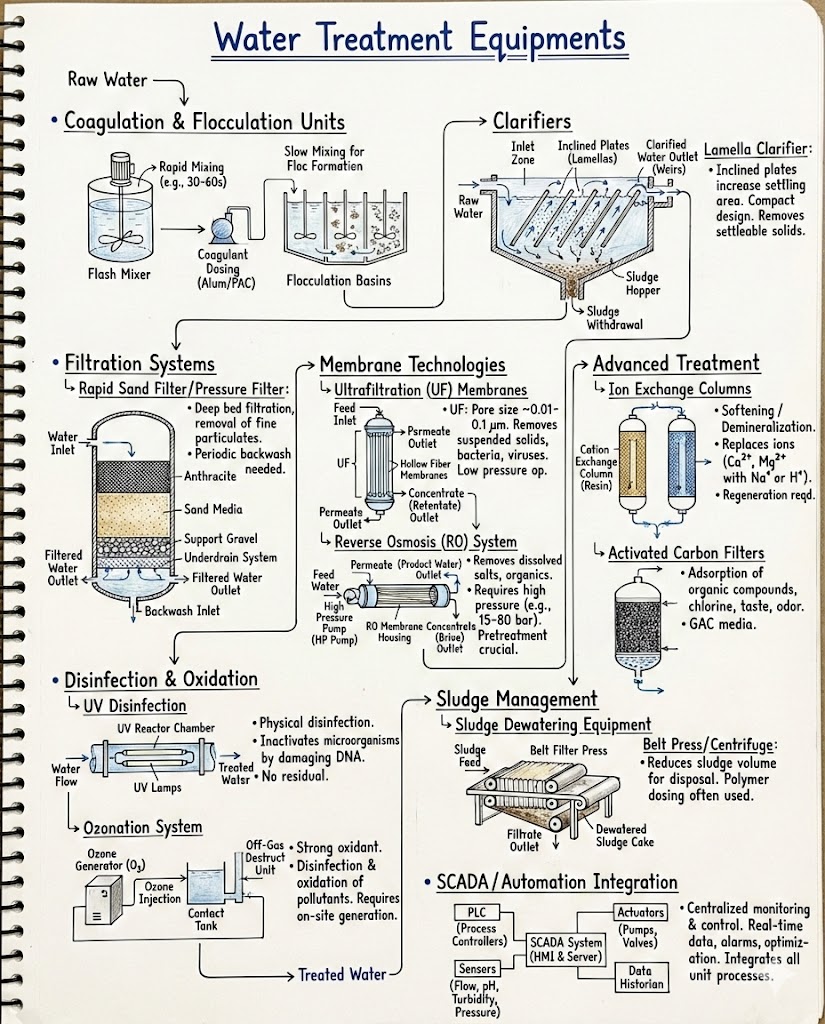
Clean water is a fundamental necessity for human health, industrial operations, and environmental sustainability. However, natural water sources often contain impurities such as sediments, bacteria, chemicals, and dissolved minerals that make them unsafe for consumption or industrial use. This is where water treatment equipments come into play. These systems and devices are designed to remove contaminants, improve water quality, and ensure that water meets specific safety and usability standards.
Water treatment equipments encompass a wide range of technologies and machinery used across residential, commercial, and industrial settings. From simple filtration units to complex chemical processing systems, these equipments play a vital role in delivering safe drinking water, protecting public health, and supporting sustainable water management practices.
Types of Water Treatment Equipments
Water treatment processes vary depending on the source of water, the intended use, and the level of contamination. As a result, a diverse array of equipments is used to address different treatment needs. Below are the most common types of water treatment systems and their primary functions.
Filtration Systems
Filtration is one of the most basic and widely used methods in water treatment. Filtration systems use physical barriers—such as sand, gravel, or membrane filters—to remove suspended solids, sediments, and larger microorganisms from water. Common types include:
- Sand Filters: Effective for removing larger particles and are often used in municipal water treatment plants.
- Cartridge Filters: Used in homes and small businesses to filter out rust, dirt, and sediment from tap water.
- Membrane Filters: Include microfiltration, ultrafiltration, nanofiltration, and reverse osmosis systems, which can remove even microscopic contaminants, including viruses and dissolved salts.
Disinfection Units
Disinfection is crucial for eliminating harmful pathogens such as bacteria, viruses, and protozoa. Several equipments are used to achieve this:
- Chlorination Systems: Add chlorine or chlorine compounds to water to kill microorganisms. These are commonly used in municipal water supplies.
- Ultraviolet (UV) Sterilizers: Use UV light to disrupt the DNA of microorganisms, rendering them inactive. UV systems are chemical-free and widely used in homes and hospitals.
- Ozonation Units: Generate ozone gas, a powerful oxidant that destroys bacteria and viruses. Often used in advanced treatment facilities.
Softening and Demineralization Equipment
Hard water, which contains high levels of calcium and magnesium, can cause scaling in pipes and reduce the efficiency of appliances. Water softeners use ion exchange resins to replace these minerals with sodium or potassium ions. In industrial settings, demineralization systems go a step further by removing almost all dissolved ions, producing highly purified water suitable for boilers and laboratories.
Reverse Osmosis (RO) Systems
Reverse osmosis is a highly effective method for removing dissolved salts, heavy metals, and organic compounds. RO systems use high-pressure pumps to force water through a semi-permeable membrane, leaving contaminants behind. These systems are commonly used in desalination plants, pharmaceutical manufacturing, and home drinking water purification units.
Activated Carbon Filters
Activated carbon is highly porous and excellent at adsorbing organic compounds, chlorine, pesticides, and unpleasant odors and tastes. These filters are often used as a final polishing step in both residential and industrial water treatment systems.
Applications of Water Treatment Equipments
The use of water treatment equipments spans multiple sectors, each with unique requirements and standards.
Municipal Water Supply
City water treatment plants rely on a combination of coagulation, sedimentation, filtration, and disinfection to provide safe drinking water to millions of people. These large-scale systems must comply with strict regulatory standards to ensure public safety.
Industrial Use
Industries such as pharmaceuticals, food and beverage, power generation, and electronics require high-purity water for manufacturing processes. Specialized equipments like deionization units, electro-deionization systems, and high-pressure RO units are used to meet these stringent quality demands.
Residential and Commercial Settings
Homeowners and businesses use point-of-use and point-of-entry systems to improve water quality. Under-sink RO units, whole-house filtration systems, and UV purifiers are common examples. These systems help protect plumbing, improve taste, and ensure safe drinking water.
Wastewater Treatment
Water treatment equipments are also essential in treating sewage and industrial wastewater before it is released back into the environment. Processes include biological treatment, sludge digestion, and advanced oxidation, all supported by specialized machinery.
Key Takeaways
- Water treatment equipments are essential for removing contaminants and ensuring water is safe for consumption, industrial use, and environmental discharge.
- Common types include filtration systems, disinfection units, softening equipment, reverse osmosis systems, and activated carbon filters.
- Applications range from municipal water supply and industrial manufacturing to residential purification and wastewater management.
- The choice of equipment depends on water source, contamination level, and intended use.
- Regular maintenance and monitoring are crucial to ensure long-term efficiency and compliance with health and safety standards.
Frequently Asked Questions
What is the most effective water treatment method?
There is no single “most effective” method, as the best approach depends on the specific contaminants present and the intended use of the water. Reverse osmosis is highly effective for removing dissolved solids, while UV disinfection excels at killing microorganisms. Often, a combination of methods is used for optimal results.
How often should water treatment equipment be maintained?
Maintenance frequency varies by system type. Filters should be replaced according to manufacturer guidelines—typically every 3 to 12 months. UV lamps usually need replacement annually, while membrane systems in RO units may require servicing every 2 to 5 years. Regular inspection and water quality testing help determine maintenance needs.
Can water treatment equipments remove all contaminants?
While advanced systems can remove a wide range of contaminants, no single technology eliminates everything. For example, reverse osmosis is effective against dissolved salts and heavy metals but may not remove certain volatile organic compounds unless combined with activated carbon filtration. A comprehensive treatment plan often involves multiple stages to address different types of pollutants.