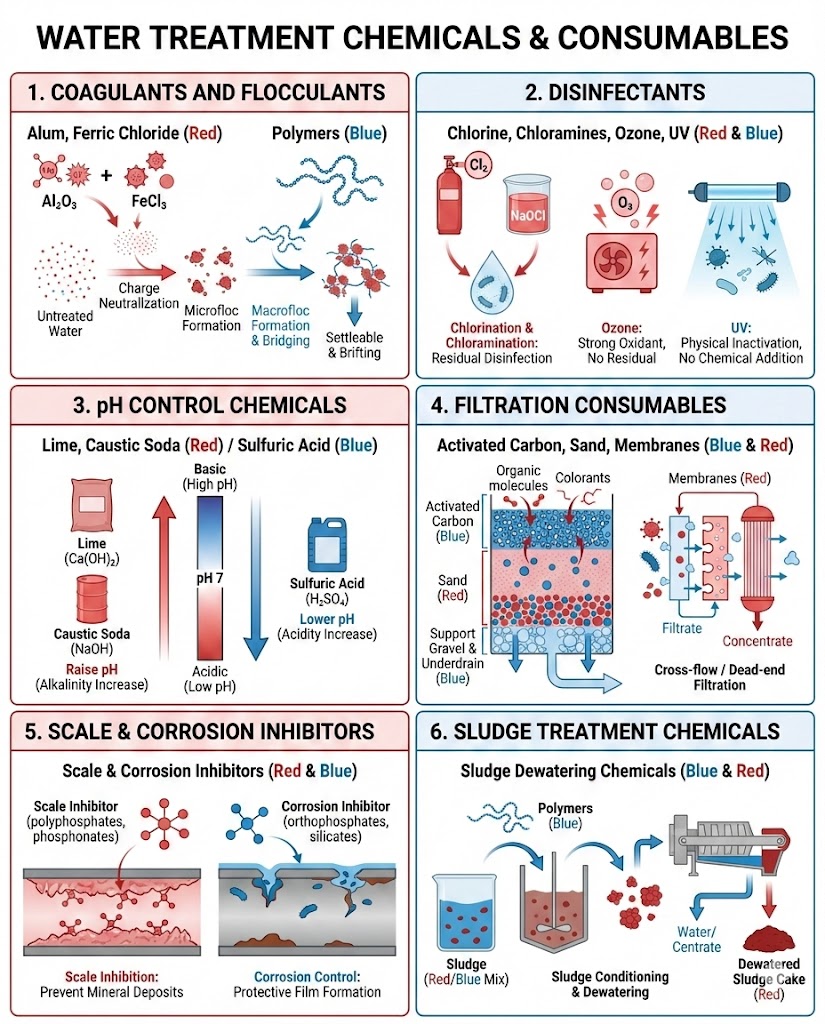
Water treatment chemicals and consumables are a broad group of chemical substances, reagents, and expendable materials used to improve water quality by removing physical, chemical, and biological contaminants. They are essential to the treatment of drinking water, wastewater, industrial process water, cooling and boiler water, desalinated water, and reclaimed or reused water. These chemicals and consumables support public health protection, industrial efficiency, environmental compliance, and sustainable water management.
Definition and Scope
Water treatment chemicals are chemical formulations added to water to facilitate purification, conditioning, or protection of water systems. Consumables refer to materials that are depleted or replaced regularly during treatment operations, such as filtration media, membranes, resins, and disinfection components. Together, they form the operational backbone of water and wastewater treatment infrastructure worldwide.
Historical Development
The use of chemicals in water treatment dates back to ancient civilizations, where alum and sand filtration were employed to clarify water. Modern chemical water treatment expanded significantly in the 19th and 20th centuries with the introduction of chlorination, coagulation chemistry, and industrial boiler water conditioning. Advances in polymer science, membrane technology, and analytical monitoring have since led to more efficient, targeted, and environmentally conscious treatment solutions.
Major Categories of Water Treatment Chemicals
Coagulants
Coagulants neutralize the electrical charges of suspended particles, allowing them to aggregate and be removed.
Common coagulants include:
-
Aluminum-based compounds (alum, polyaluminum chloride)
-
Iron-based compounds (ferric chloride, ferric sulfate)
They are primarily used in drinking water treatment, wastewater clarification, and sludge thickening.
Flocculants
Flocculants promote the formation of larger, heavier flocs after coagulation.
-
Synthetic polymers (polyacrylamides)
-
Natural polymers (starch-based, chitosan-derived)
Flocculants improve sedimentation, flotation, and dewatering efficiency.
Disinfectants and Oxidants
These chemicals destroy or inactivate pathogenic microorganisms.
-
Chlorine gas and hypochlorites
-
Chloramines
-
Ozone
-
Hydrogen peroxide
Disinfection consumables may also include UV lamps and sleeves used in physical disinfection systems.
pH Adjusters and Neutralizing Agents
pH control optimizes chemical reactions and protects pipelines and equipment.
-
Bases: lime, sodium hydroxide, magnesium hydroxide
-
Acids: sulfuric acid, hydrochloric acid, carbon dioxide
These chemicals are critical in both municipal and industrial systems.
Scale Inhibitors
Scale inhibitors prevent mineral deposits that reduce heat transfer efficiency and damage equipment.
-
Phosphonates
-
Polycarboxylates
-
Specialty polymers
They are widely used in cooling towers, boilers, and desalination plants.
Corrosion Inhibitors
Corrosion inhibitors protect metal surfaces from chemical attack.
-
Orthophosphates and blended phosphates
-
Zinc-based formulations
-
Organic film-forming amines
These chemicals extend the service life of infrastructure and reduce maintenance costs.
Biocides and Algaecides
Used to control microbial growth in water systems.
-
Oxidizing biocides (chlorine, bromine)
-
Non-oxidizing biocides (quaternary ammonium compounds, isothiazolinones)
They are critical for preventing biofouling and pathogen proliferation.
Water Treatment Consumables
Filtration Media
Physical media used to remove suspended solids.
-
Sand and gravel
-
Anthracite coal
-
Garnet and multimedia blends
These materials require periodic backwashing and replacement.
Adsorbents
Materials that remove dissolved contaminants through adsorption.
-
Activated carbon (powdered and granular)
-
Specialty adsorbents for arsenic, fluoride, and organics
Ion Exchange Resins
Used to remove hardness, nitrates, and heavy metals.
-
Cation exchange resins
-
Anion exchange resins
-
Mixed-bed resins
Resins are regenerated or replaced depending on application.
Membranes
Semi-permeable materials used in advanced treatment systems.
-
Reverse osmosis (RO) membranes
-
Nanofiltration (NF) membranes
-
Ultrafiltration (UF) membranes
Membranes are consumables with defined operational lifespans.
Applications
Drinking Water Treatment
Chemicals ensure compliance with potable water standards by removing turbidity, pathogens, taste and odor compounds, and harmful contaminants.
Wastewater Treatment
Used for solids removal, nutrient reduction (nitrogen and phosphorus), odor control, and sludge management.
Industrial Water Treatment
Industries use chemicals to:
-
Protect boilers and cooling systems
-
Maintain process water quality
-
Reduce downtime and equipment failure
Desalination and Water Reuse
Specialty antiscalants, biocides, and membrane cleaners are critical to maintaining efficiency in high-pressure membrane systems.
Environmental and Health Considerations
The handling and disposal of water treatment chemicals are governed by strict safety and environmental regulations. Overdosing or improper discharge may result in ecological harm or public health risks. As a result, the industry is increasingly focused on:
-
Low-toxicity formulations
-
Reduced chemical consumption
-
Biodegradable and green alternatives
Quality Control and Monitoring
Effective use of water treatment chemicals requires continuous monitoring of:
-
pH
-
Turbidity
-
Residual disinfectant levels
-
Total dissolved solids (TDS)
-
Microbial activity
Automation and digital dosing systems are increasingly used to optimize chemical usage.
Technological Trends
-
Growth of smart chemical dosing systems
-
Integration of AI-driven water quality analytics
-
Expansion of membrane-based consumables
-
Development of bio-based and sustainable chemicals
Economic Importance
Water treatment chemicals and consumables represent a significant segment of the global water industry, driven by population growth, industrialization, urban water demand, and tightening environmental regulations.