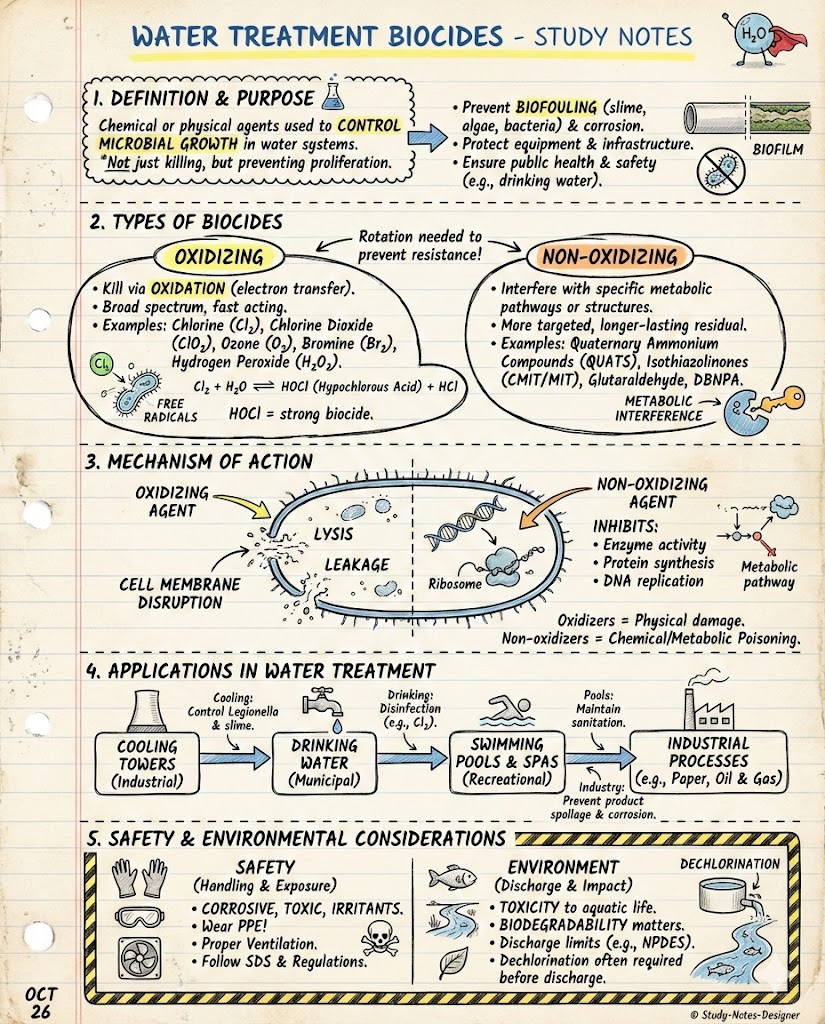
Water Treatment Biocides are specialized chemical agents designed to control, reduce, or eliminate harmful microorganisms in water systems. These microorganisms—such as bacteria, algae, and fungi—can cause corrosion, biofouling, health risks, and reduced system efficiency. From industrial cooling towers to municipal drinking water plants, Water Treatment Biocides play a vital role in maintaining water quality and system integrity.
In today’s world, where water scarcity and infrastructure efficiency matter more than ever, effective microbial control is not optional—it’s essential.
Why Water Treatment Biocides Are Essential
Microbial Growth Challenges in Water Systems
Water systems provide ideal conditions for microbial growth: moisture, nutrients, and moderate temperatures. Without proper treatment, biofilms can form on pipes and equipment surfaces, leading to blockages, corrosion, and contamination.
Economic and Operational Impacts
Unchecked microbial activity increases maintenance costs, energy consumption, and downtime. Water Treatment Biocides help extend equipment life, reduce cleaning frequency, and ensure consistent system performance—saving both time and money.
Types of Water Treatment Biocides
Oxidizing Biocides
Oxidizing biocides work by disrupting the cellular structure of microorganisms through oxidation reactions.
Chlorine-Based Biocides
Chlorine is one of the most widely used Water Treatment Biocides due to its effectiveness and affordability. It is commonly applied in municipal water treatment and cooling systems.
Bromine and Ozone
Bromine is effective at higher temperatures and pH levels, while ozone offers rapid disinfection with minimal chemical residue.
Non-Oxidizing Biocides
Non-oxidizing biocides attack specific cellular functions, making them effective against resistant microorganisms.
Quaternary Ammonium Compounds
These biocides disrupt cell membranes and are often used in industrial water systems.
Isothiazolinones
Highly effective at low concentrations, isothiazolinones are popular in cooling towers and process water applications.
Applications of Water Treatment Biocides
Industrial Cooling Water Systems
Cooling towers are highly susceptible to microbial fouling. Water Treatment Biocides prevent biofilm formation, improve heat transfer efficiency, and reduce corrosion risks.
Municipal Water Treatment
In drinking water facilities, biocides ensure safe, pathogen-free water for public consumption, aligning with guidelines from organizations like World Health Organization.
Oil & Gas and Power Generation
These industries rely on large-scale water systems where microbial control is critical to operational safety and efficiency.
How Water Treatment Biocides Work
Water Treatment Biocides function by penetrating microbial cells and disrupting vital processes such as respiration, enzyme activity, or cell wall integrity. The result is rapid microbial death or inhibited reproduction, keeping water systems clean and functional.
Safety, Environmental, and Regulatory Considerations
Regulatory Standards and Compliance
Biocide usage is regulated by authorities such as the Environmental Protection Agency to ensure safety for humans and ecosystems. Compliance with dosing limits and handling guidelines is mandatory.
Environmental Impact and Sustainability
Modern Water Treatment Biocides are increasingly designed to be biodegradable and eco-friendly, reducing long-term environmental impact while maintaining performance.
Best Practices for Using Water Treatment Biocides
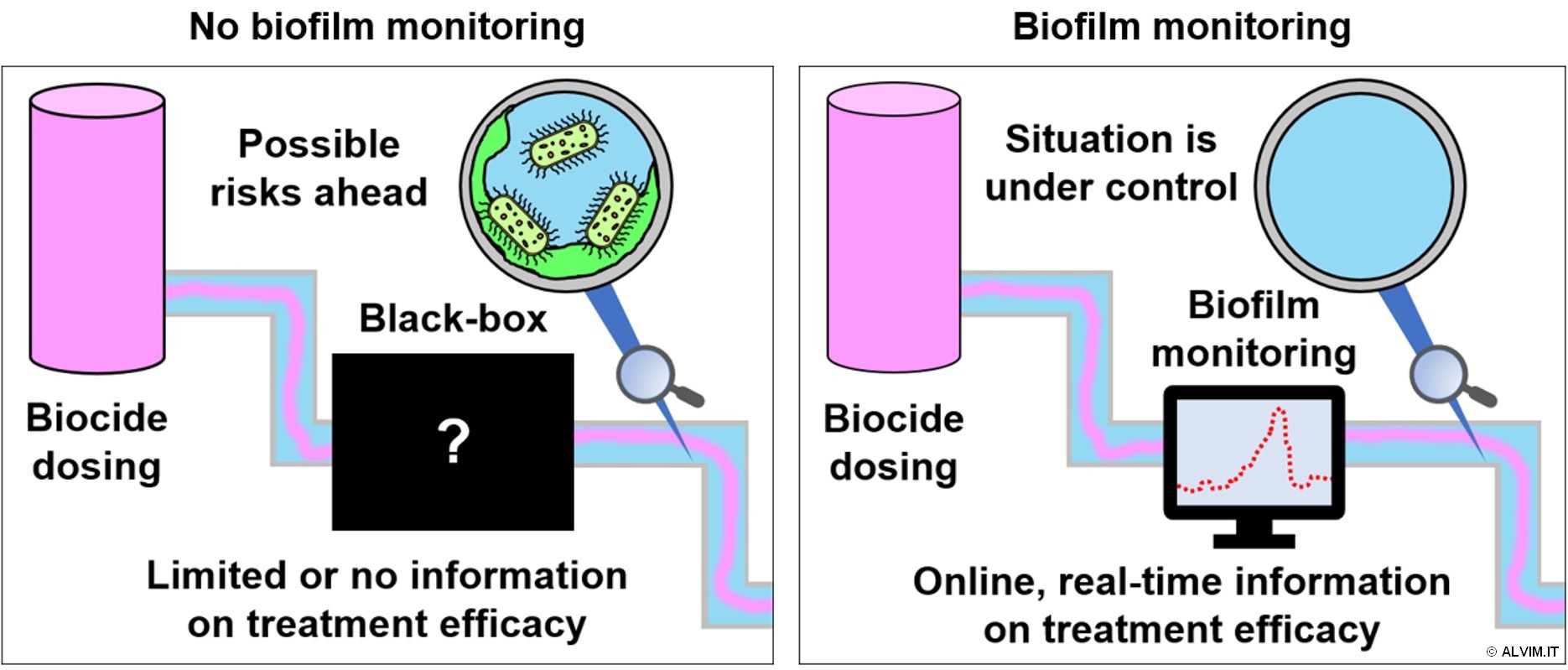
- Conduct regular microbial monitoring
- Rotate biocide types to prevent resistance
- Follow manufacturer dosing recommendations
- Train personnel in safe handling procedures
- Integrate biocides with filtration and physical cleaning
Future Trends in Water Treatment Biocides
The future of Water Treatment Biocides lies in smart dosing systems, greener formulations, and advanced monitoring technologies. Innovations such as real-time sensors and AI-driven treatment optimization are shaping a more sustainable and efficient water treatment landscape.
Frequently Asked Questions (FAQs)
1. What are Water Treatment Biocides used for?
They are used to control harmful microorganisms in industrial, municipal, and commercial water systems.
2. Are Water Treatment Biocides safe for drinking water?
Yes, when used according to regulatory guidelines and approved concentrations.
3. What is the difference between oxidizing and non-oxidizing biocides?
Oxidizing biocides kill microbes through oxidation, while non-oxidizing biocides target specific cellular functions.
4. Can Water Treatment Biocides harm the environment?
Improper use can be harmful, but modern formulations focus on reduced toxicity and biodegradability.
5. How often should biocides be applied?
Application frequency depends on system type, microbial load, and water conditions.
6. Where can I learn more about water treatment regulations?
You can refer to official guidance from the EPA via https://www.epa.gov.
Conclusion
Water Treatment Biocides are indispensable tools for maintaining clean, safe, and efficient water systems across industries. By understanding their types, applications, and best practices, organizations can protect infrastructure, comply with regulations, and support sustainable water management. As technology advances, these biocides will continue to evolve—offering smarter, safer, and more environmentally responsible solutions.