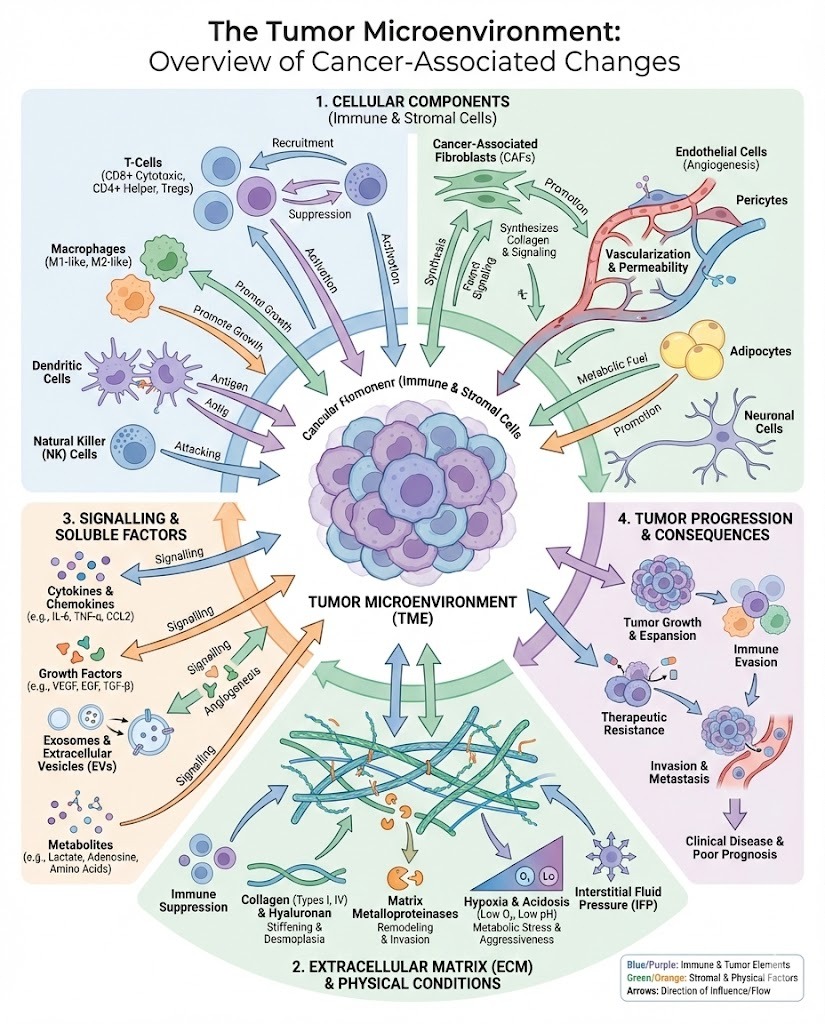
Cancer is no longer viewed as a disease driven solely by malignant cells. Modern research shows that tumors exist within a complex ecosystem of surrounding cells, structural components, and signaling molecules that actively influence disease progression. This ecosystem is known as the tumor microenvironment. Understanding The Tumor Microenvironment: Overview of Cancer-Associated Changes is essential for researchers, clinicians, and biotechnology developers working to improve diagnosis, treatment, and long-term patient outcomes.
This article provides a practical and comprehensive explanation of what the tumor microenvironment is, how it changes during cancer development, and why it has become a major focus of therapeutic innovation.
What Is the Tumor Microenvironment?
The tumor microenvironment refers to the immediate biological environment surrounding a tumor. It includes both cellular and noncellular components that interact dynamically with cancer cells.
Key elements include:
-
Immune cells
-
Fibroblasts
-
Endothelial cells and blood vessels
-
Extracellular matrix proteins
-
Cytokines and growth factors
-
Metabolic byproducts
Rather than being passive bystanders, these components actively shape tumor behavior, influencing growth, invasion, immune evasion, and response to therapy.
Why Cancer-Associated Changes in the Tumor Microenvironment Matter
Cancer alters its surroundings to create conditions favorable for survival and expansion. These changes:
-
Promote tumor growth
-
Support metastasis
-
Suppress immune responses
-
Reduce drug effectiveness
-
Increase genetic instability
As a result, therapies that target cancer cells alone often fail to produce lasting responses. A detailed understanding of the tumor microenvironment is therefore critical to developing more effective treatment strategies.
Major Cellular Components and Their Roles
Cancer-Associated Fibroblasts
Fibroblasts in healthy tissue maintain structural integrity. In tumors, they become cancer-associated fibroblasts that:
-
Remodel the extracellular matrix
-
Secrete growth factors
-
Promote angiogenesis
-
Facilitate tumor invasion
These cells often contribute to therapy resistance by creating physical and biochemical barriers.
Immune Cells
The tumor microenvironment contains a diverse population of immune cells, including:
-
T lymphocytes
-
Macrophages
-
Natural killer cells
-
Dendritic cells
Cancer-associated changes often shift these cells from tumor-fighting roles to tumor-supporting functions. For example, tumor-associated macrophages can suppress immune activity and promote blood vessel formation.
Endothelial Cells and Blood Vessels
Tumors stimulate the formation of abnormal blood vessels through angiogenesis. These vessels:
-
Are poorly organized
-
Have irregular blood flow
-
Increase tissue hypoxia
-
Limit drug delivery
These structural abnormalities significantly affect treatment outcomes.
Noncellular Components of the Tumor Microenvironment
Extracellular Matrix
The extracellular matrix provides structural support but is heavily remodeled in cancer.
Cancer-associated changes include:
-
Increased stiffness
-
Altered protein composition
-
Enhanced degradation and rebuilding
These modifications enable cancer cells to migrate and invade neighboring tissues.
Chemical and Metabolic Conditions
Tumors create unique chemical environments characterized by:
-
Low oxygen levels
-
High acidity
-
Nutrient competition
These conditions favor aggressive cancer cell phenotypes while impairing immune cell function.
Signaling Networks and Molecular Interactions
Cells in the tumor microenvironment communicate through:
-
Cytokines
-
Chemokines
-
Growth factors
-
Extracellular vesicles
These signaling networks regulate:
-
Cell survival
-
Proliferation
-
Immune suppression
-
Tissue remodeling
Disruption of these pathways is a key goal of many emerging therapies.
How Cancer-Associated Changes Develop Over Time
The tumor microenvironment evolves alongside the tumor itself.
Early stages:
-
Mild immune activation
-
Limited structural remodeling
Intermediate stages:
-
Recruitment of suppressive immune cells
-
Increased angiogenesis
-
Fibroblast activation
Advanced stages:
-
Extensive matrix remodeling
-
Strong immune suppression
-
Enhanced metastatic potential
This dynamic evolution complicates treatment and highlights the importance of early intervention.
Impact on Cancer Progression and Metastasis
The tumor microenvironment directly contributes to:
-
Tumor cell survival under stress
-
Resistance to apoptosis
-
Increased genetic diversity
-
Enhanced migration and invasion
Metastatic spread often depends on cancer cells interacting with distant microenvironments that support their growth.
Influence on Treatment Response
Cancer-associated changes in the tumor microenvironment reduce treatment effectiveness by:
-
Blocking drug penetration
-
Deactivating immune responses
-
Protecting cancer stem cells
-
Altering drug metabolism
This explains why tumors with similar genetic profiles can respond differently to the same therapy.
Therapeutic Strategies Targeting the Tumor Microenvironment
Recognizing its importance, modern oncology increasingly targets the microenvironment.
Key approaches include:
-
Immune checkpoint inhibitors
-
Anti-angiogenic drugs
-
Fibroblast-targeting agents
-
Matrix-modifying enzymes
-
Metabolic pathway inhibitors
Combination therapies that address both cancer cells and their environment show promising clinical results.
Diagnostic and Research Applications
The tumor microenvironment is also valuable for:
-
Biomarker discovery
-
Prognostic modeling
-
Patient stratification
-
Drug screening platforms
Advanced imaging and molecular profiling techniques now allow detailed mapping of microenvironmental features.
Challenges in Studying the Tumor Microenvironment
Despite major progress, significant challenges remain:
-
High cellular diversity
-
Temporal variability
-
Differences between tumor types
-
Limited representation in traditional cell culture models
Three-dimensional cultures, organoids, and animal models are increasingly used to overcome these limitations.
Industry and Clinical Implications
For pharmaceutical developers, understanding the tumor microenvironment improves:
-
Target selection
-
Drug design
-
Clinical trial stratification
-
Prediction of resistance mechanisms
Clinically, it enables more personalized treatment strategies and supports the growing role of immuno-oncology.
Future Directions
Ongoing research focuses on:
-
Spatial transcriptomics
-
Single-cell analysis
-
Personalized microenvironment profiling
-
Microbiome interactions
-
Real-time monitoring during treatment
These technologies will further refine therapeutic approaches and improve patient outcomes.
Conclusion
The Tumor Microenvironment: Overview of Cancer-Associated Changes highlights a fundamental shift in how cancer is understood and treated. Tumors are not isolated masses of abnormal cells but complex biological systems shaped by continuous interactions with their surroundings.
Cancer-associated changes in immune activity, blood vessel structure, extracellular matrix composition, and cellular signaling create conditions that promote survival, progression, and therapy resistance. Addressing these changes is now central to modern oncology research and drug development.
By integrating microenvironment-focused strategies with traditional cancer treatments, the medical community is moving closer to more durable, effective, and personalized cancer care.
Frequently Asked Questions
What is meant by the tumor microenvironment in cancer research?
It refers to the collection of cells, structural components, and molecular signals surrounding a tumor that influence its growth, behavior, and response to therapy.
Why is an overview of cancer-associated changes in the tumor microenvironment important?
These changes explain how tumors evade immune detection, resist treatment, and spread, making them critical targets for new therapies.
How does the tumor microenvironment affect cancer treatment outcomes?
It can limit drug delivery, suppress immune responses, and protect resistant cancer cell populations, reducing the effectiveness of many therapies.
Are current cancer treatments targeting the tumor microenvironment?
Yes. Many modern treatments, including immunotherapies and anti-angiogenic drugs, are designed specifically to modify the tumor microenvironment and improve treatment response.