Antibiotics have transformed modern medicine by enabling doctors to treat bacterial infections that were once fatal. However, the widespread and often excessive use of antibiotics has created a growing global concern—antimicrobial resistance (AMR). As bacteria evolve to resist commonly used drugs, healthcare systems worldwide are under pressure to improve antibiotic stewardship.
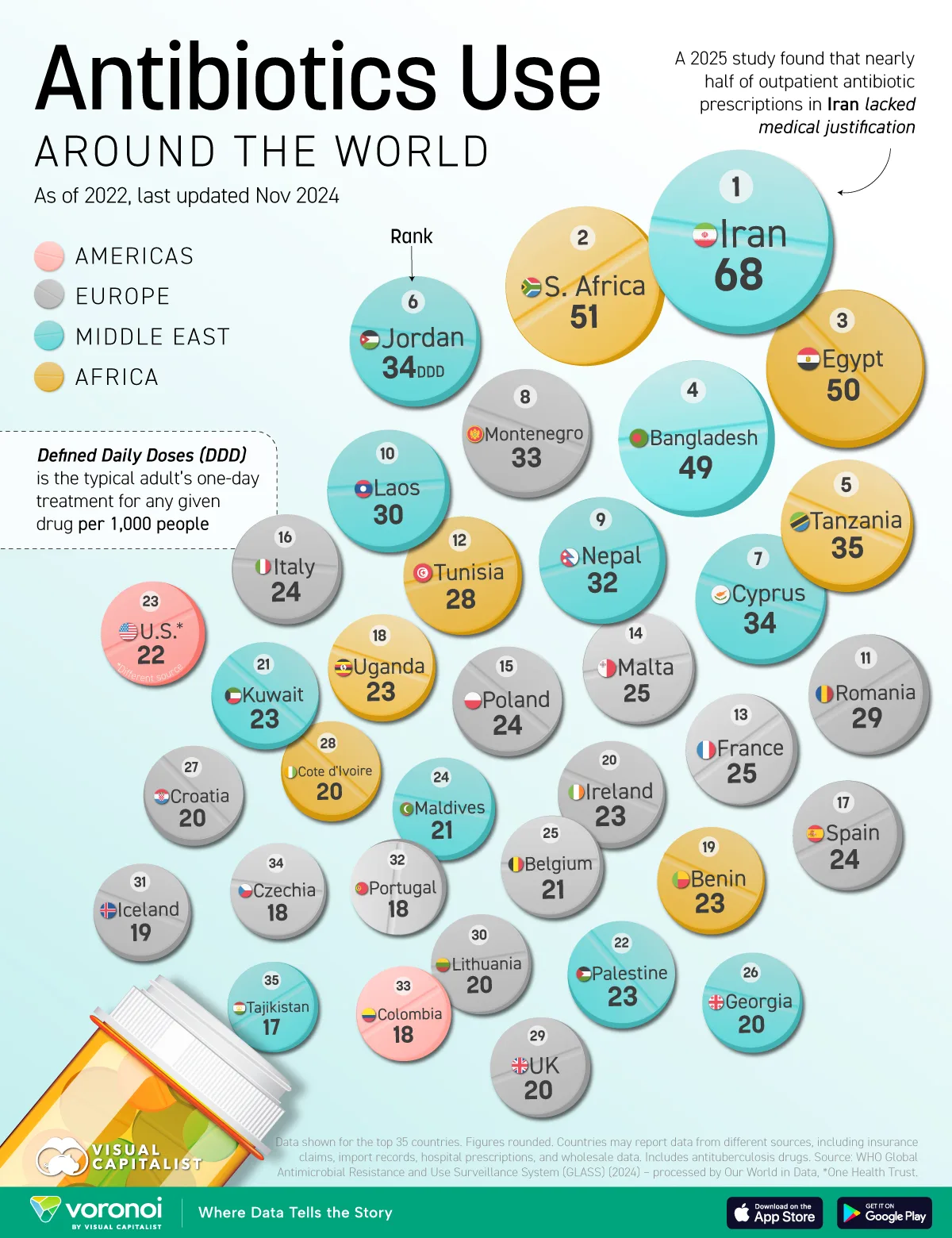
A recent global comparison of antibiotic consumption reveals significant differences between countries. The ranking measures Defined Daily Dose (DDD) of antibiotics used per 1,000 inhabitants in 2022, a standard metric used by public health agencies to estimate national antibiotic consumption.
The data highlights surprising patterns across regions and shows where major healthcare systems—including the United States—stand in terms of antibiotic usage.
Global Leaders in Antibiotic Consumption
The top positions in antibiotic use are dominated by countries across the Middle East, Africa, and parts of Asia, where access to antibiotics may be less regulated and infectious disease burdens remain high.
Leading the global ranking is Iran, with 68 daily doses per 1,000 inhabitants, significantly higher than most countries in the dataset. This level of antibiotic consumption reflects a combination of factors including high prescription rates, easier access to antibiotics, and ongoing infectious disease challenges.
Following Iran are South Africa (51) and Egypt (50), both of which report very high antibiotic utilization. In many developing and middle-income countries, antibiotics are frequently used as a first-line treatment for a wide range of illnesses—even when bacterial infections are not confirmed.
Other countries in the top ten include:
- Bangladesh – 49
- Tanzania – 35
- Jordan – 34
- Cyprus – 34
- Montenegro – 33
- Nepal – 32
- Laos – 30
These countries highlight regions where antibiotic demand is strongly driven by infectious disease prevalence, healthcare access challenges, and sometimes the availability of over-the-counter antibiotics without strict prescription control.
Europe Shows Moderate but Significant Use
Several European nations appear in the middle of the rankings, demonstrating moderate but still notable levels of antibiotic consumption.
Countries such as Romania (29), Tunisia (28), and France (25) represent the upper tier of antibiotic use in Europe. Meanwhile, southern European countries like Italy (24) and Spain (24) also report relatively high consumption compared with northern European nations.
Western and central Europe generally show better antibiotic stewardship policies, but cultural prescribing habits and patient expectations still influence antibiotic use.
Countries in this mid-range cluster include:
- France – 25
- Malta – 25
- Poland – 24
- Italy – 24
- Spain – 24
- Ireland – 23
- Belgium – 21
Despite strict healthcare systems, antibiotics are still commonly prescribed for respiratory infections and other conditions where they may not always be necessary.
Where the United States Ranks
The United States ranks 23rd globally, with 22 daily doses of antibiotics per 1,000 inhabitants.
While this places the U.S. outside the top 20, it still indicates substantial antibiotic usage compared with many developed nations, particularly those in northern Europe where stricter prescribing guidelines have significantly reduced consumption.
The U.S. healthcare system has made notable progress in antibiotic stewardship over the past decade. Hospitals and healthcare organizations increasingly follow guidelines designed to ensure antibiotics are prescribed only when necessary.
However, several factors continue to drive antibiotic use in the U.S., including:
- High outpatient prescription rates
- Patient demand for antibiotics during viral infections
- Preventive antibiotic use in certain medical procedures
- Agricultural antibiotic use impacting broader resistance patterns
Compared with countries like Germany (10), Norway (12), and Finland (12), the U.S. still consumes significantly more antibiotics per capita.
Countries with the Lowest Antibiotic Consumption
At the bottom of the ranking are several countries with comparatively low antibiotic use.
Oman records the lowest usage at just 6 DDD per 1,000 inhabitants, followed by Qatar (7) and Mali (8). Other countries with low consumption include Rwanda (9), Peru (10), and Germany (10).
Lower consumption can reflect multiple factors:
- Strong antibiotic stewardship policies
- Limited access to antibiotics in some regions
- Different healthcare practices and prescribing behaviors
- Public awareness campaigns about antimicrobial resistance
Nordic countries such as Norway, Finland, and Denmark are often cited as global leaders in antibiotic stewardship, demonstrating how policy and education can effectively reduce unnecessary antibiotic use.
Why Antibiotic Use Matters
High antibiotic consumption increases the risk of antimicrobial resistance, one of the most serious global health threats today.
When antibiotics are used too frequently or incorrectly, bacteria evolve mechanisms to survive these drugs. Over time, this leads to infections that are harder—and sometimes impossible—to treat with existing medications.
The World Health Organization (WHO) estimates that antimicrobial resistance could cause millions of deaths annually by 2050 if global antibiotic stewardship does not improve.
Healthcare systems worldwide are therefore focusing on several key strategies:
- Promoting responsible prescribing practices
- Restricting over-the-counter antibiotic sales
- Increasing vaccination rates to prevent infections
- Encouraging pharmaceutical innovation for new antibiotics
The Future of Antibiotic Stewardship
The data clearly shows that antibiotic consumption varies widely across countries, reflecting differences in healthcare systems, regulations, and disease burdens.
While some nations are successfully reducing unnecessary antibiotic use, others continue to rely heavily on these medications to manage public health challenges.
For policymakers and healthcare leaders, understanding where countries rank in antibiotic consumption is crucial for designing effective strategies to combat antimicrobial resistance.
As global awareness grows, improving antibiotic stewardship will be essential to preserving the effectiveness of life-saving drugs for future generations.