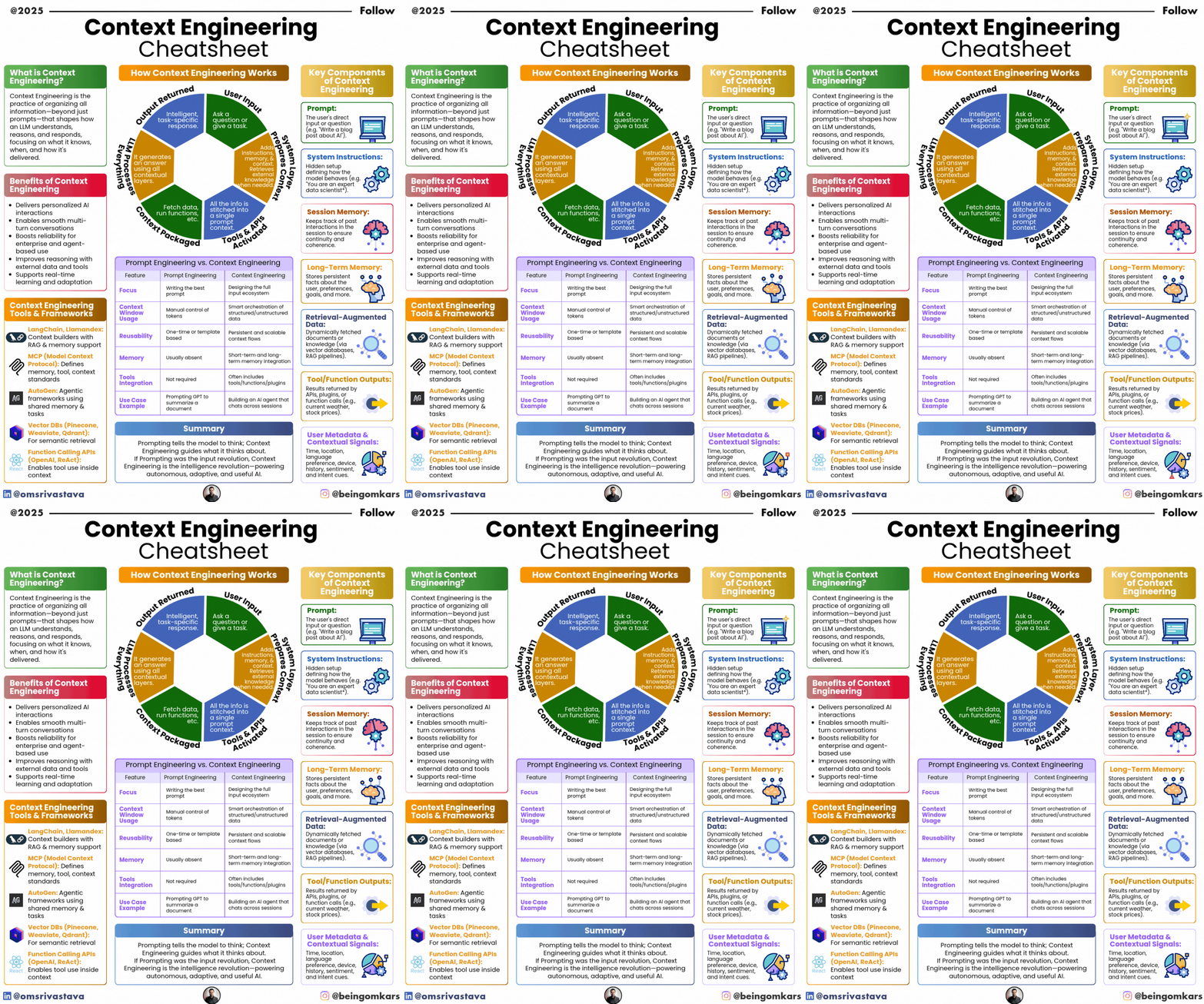
Ever felt like you’re shouting into the void when using AI tools? You’re not alone. The secret to getting precise, high-quality responses lies in one powerful skill: prompt engineering. A well-crafted prompt engineering cheatsheet can transform your interactions with AI, turning vague outputs into actionable insights. Whether you’re using ChatGPT, Claude, or Gemini, mastering how to structure your prompts is no longer optional—it’s essential.
This guide delivers a practical, no-fluff prompt engineering cheatsheet packed with proven techniques, real-world examples, and pro tips. From zero-shot prompting to chain-of-thought strategies, you’ll learn how to communicate with AI like a seasoned expert—without needing a PhD in machine learning.
What Is Prompt Engineering?
Prompt engineering is the art and science of designing input queries that guide AI models to generate accurate, relevant, and useful outputs. It’s not just about asking questions—it’s about framing them in a way that aligns with how large language models (LLMs) process information.
Think of it as teaching a brilliant but literal-minded assistant. Without clear instructions, even the smartest AI can misinterpret your intent. Effective prompt engineering bridges that gap, ensuring the model understands context, tone, and desired format.
Why Prompt Engineering Matters
In today’s AI-driven workflows, prompt quality directly impacts output quality. Whether you’re drafting emails, coding, analyzing data, or creating content, a well-engineered prompt saves time, reduces revisions, and boosts productivity.
- Improves accuracy: Reduces hallucinations and off-topic responses.
- Enhances efficiency: Gets you the right answer on the first try.
- Unlocks advanced capabilities: Enables complex reasoning and multi-step tasks.
Essential Techniques from the Prompt Engineering Cheatsheet
Below are the core strategies every professional should have in their prompt engineering cheatsheet. These methods are battle-tested across industries and AI platforms.
1. Use Clear, Specific Instructions
Vague prompts yield vague results. Instead of “Write about marketing,” try “Write a 300-word blog introduction about influencer marketing for small businesses in Southeast Asia.” Specificity reduces ambiguity and increases relevance.
Include details like:
- Target audience
- Word count or format (e.g., bullet points, table)
- Tone (professional, casual, persuasive)
- Key points to include
2. Leverage Role Prompting
Assign the AI a role to shape its response style and depth. For example: “Act as a senior UX designer reviewing a mobile app prototype.” This technique improves contextual accuracy and professional tone.
Role-based prompts work especially well for:
- Technical documentation
- Customer support responses
- Creative writing (e.g., “You are a mystery novelist…”)
3. Chain-of-Thought (CoT) Prompting
Encourage step-by-step reasoning by asking the AI to “think aloud.” Instead of “Solve this math problem,” say “Solve this math problem step by step, explaining each calculation.”
This method significantly improves performance on logic, math, and analytical tasks by mimicking human problem-solving.
4. Few-Shot Prompting
Provide examples within your prompt to guide the model’s output style. For instance, when generating product descriptions, include two sample descriptions to set the tone and structure.
Few-shot learning helps the AI understand patterns without needing fine-tuning—ideal for custom branding or niche content.
5. Use Constraints and Boundaries
Set limits to keep responses focused. Try: “List 5 benefits of remote work, each in one sentence, without using the word ‘flexible’.” Constraints prevent rambling and ensure precision.
Common Mistakes to Avoid
Even experienced users fall into traps. Here’s what to watch out for when building your prompt engineering cheatsheet:
- Overloading the prompt: Too much info confuses the model. Keep it concise.
- Assuming prior knowledge: Don’t expect the AI to infer unstated context.
- Ignoring output format: Always specify if you need JSON, markdown, or plain text.
- Neglecting iteration: Treat prompts as drafts. Refine based on results.
Key Takeaways
A solid prompt engineering cheatsheet isn’t just a list of tips—it’s a dynamic toolkit for better AI collaboration. Remember these core principles:
- Be specific and structured in your requests.
- Use roles and examples to guide tone and format.
- Encourage reasoning with chain-of-thought techniques.
- Test, refine, and iterate your prompts regularly.
With practice, prompt engineering becomes second nature—turning AI from a black box into a reliable thought partner.
FAQ
What is the best way to start with prompt engineering?
Begin by analyzing your current prompts. Identify where responses fall short—too vague, off-topic, or incomplete. Then apply one technique at a time: start with role prompting or adding constraints. Track improvements and build your personal prompt engineering cheatsheet over time.
Can prompt engineering improve AI coding assistance?
Absolutely. For coding tasks, use prompts like: “Write a Python function to sort a list of dictionaries by a specific key. Include error handling and a docstring.” Specificity and structure dramatically improve code quality and relevance.
Do I need technical skills to master prompt engineering?
No. While understanding AI basics helps, prompt engineering is more about communication than coding. Anyone can learn it through practice, experimentation, and using a reliable prompt engineering cheatsheet as a reference.
Whether you’re a marketer, developer, student, or entrepreneur, refining your prompts is one of the highest-leverage skills in the AI era. Start small, stay consistent, and watch your AI outputs transform from mediocre to exceptional.