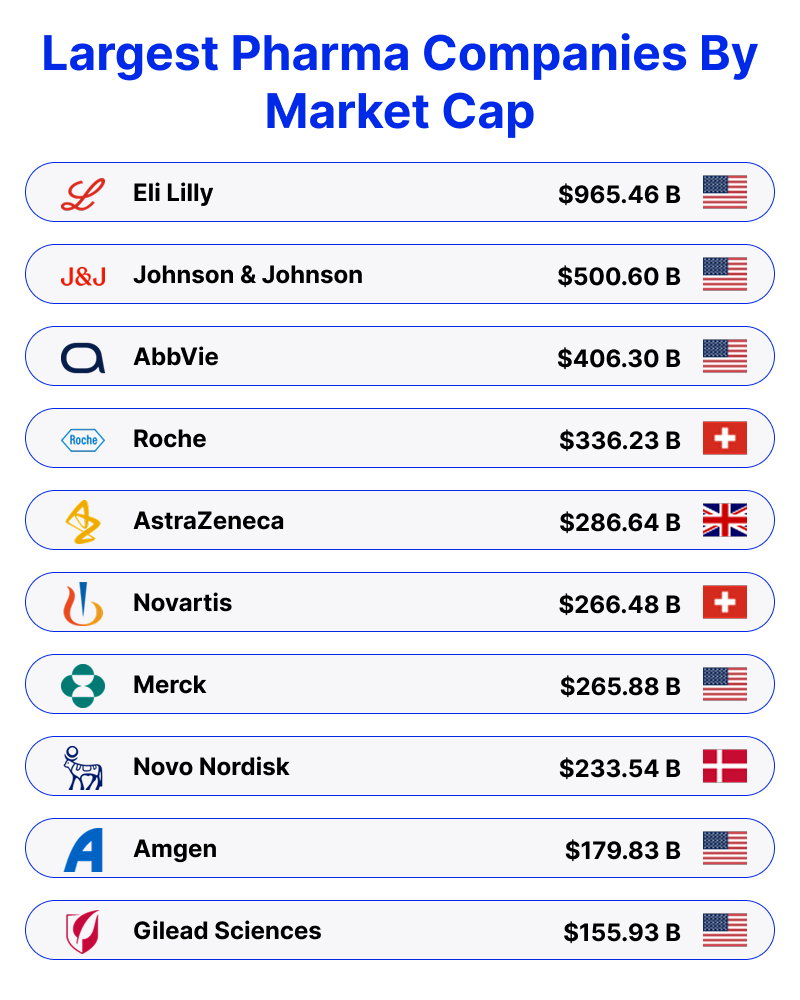
The global pharmaceutical industry is one of the most valuable and influential sectors in the world economy. Driven by innovation in drug development, biotechnology, vaccines, and specialty medicines, leading pharma companies play a crucial role in improving global health while generating enormous shareholder value. Market capitalization (market cap) — the total value of a company’s outstanding shares — is often used to gauge a company’s size, stability, and investor confidence.
Below is an overview of the largest pharmaceutical companies by market capitalization, along with the factors behind their dominance.
1. Eli Lilly and Company
Market Cap Leader
Eli Lilly has emerged as the world’s most valuable pharmaceutical company, driven largely by its blockbuster drugs for diabetes and obesity. Products such as Mounjaro and Zepbound have transformed the company’s growth trajectory, placing Lilly at the forefront of metabolic disease treatment.
Key strengths:
-
Leadership in diabetes and obesity drugs
-
Strong R&D pipeline
-
Rapid revenue growth and global demand
2. Novo Nordisk
Diabetes and Obesity Powerhouse
Novo Nordisk, a Danish pharmaceutical giant, is best known for its dominance in insulin and GLP-1 therapies. Its flagship drugs Ozempic and Wegovy have seen unprecedented global demand, making Novo Nordisk one of the most valuable companies in Europe.
Key strengths:
-
Market leadership in diabetes care
-
Expanding obesity treatment portfolio
-
Strong pricing power and global reach
3. Johnson & Johnson
Diversified Healthcare Giant
Johnson & Johnson (J&J) stands apart due to its diversified healthcare model, spanning pharmaceuticals, medical devices, and consumer health (now separated as Kenvue). Its pharma division remains a major growth engine, supported by oncology and immunology drugs.
Key strengths:
-
Diversified revenue streams
-
Strong presence in oncology and immunology
-
Long history of stability and dividends
4. Roche Holding AG
Leader in Oncology and Diagnostics
Swiss-based Roche is a global leader in cancer therapies and diagnostics. Its integrated approach — combining pharmaceuticals with advanced diagnostics — gives it a competitive advantage in precision medicine.
Key strengths:
-
Dominance in oncology drugs
-
Strong diagnostics business
-
Focus on personalized healthcare
5. Pfizer
Global Scale and Innovation
Pfizer became a household name during the COVID-19 pandemic with its mRNA vaccine developed alongside BioNTech. While pandemic-related revenues have declined, Pfizer remains a pharmaceutical heavyweight with a deep pipeline and aggressive acquisition strategy.
Key strengths:
-
Global manufacturing and distribution scale
-
Broad therapeutic portfolio
-
Strong focus on acquisitions and pipeline expansion
6. AbbVie
Immunology Specialist
AbbVie rose to prominence with Humira, once the world’s best-selling drug. Despite facing biosimilar competition, AbbVie has successfully transitioned to newer drugs like Skyrizi and Rinvoq, maintaining strong market capitalization.
Key strengths:
-
Strong immunology portfolio
-
Successful post-Humira transition
-
High cash flow generation
7. Merck & Co.
Oncology Growth Engine
Merck’s market value is largely supported by Keytruda, one of the most successful cancer drugs ever developed. The company continues to expand Keytruda’s approved uses while investing heavily in oncology research.
Key strengths:
-
Oncology leadership
-
Expanding indications for Keytruda
-
Robust R&D investment
8. AstraZeneca
Rapid Global Expansion
AstraZeneca has experienced strong growth due to its oncology, cardiovascular, and rare disease drugs. Its global footprint and strong emerging-market presence have helped boost long-term growth.
Key strengths:
-
Strong oncology pipeline
-
Rapid expansion in emerging markets
-
Balanced therapeutic portfolio
9. Novartis
Focus on Innovative Medicines
Novartis has streamlined its business by spinning off its generics arm (Sandoz) to focus exclusively on innovative branded medicines. This strategic shift has strengthened its market position.
Key strengths:
-
Focus on high-margin innovative drugs
-
Strong cardiovascular and immunology offerings
-
Simplified business model
10. Bristol Myers Squibb
Specialty Pharma Leader
Bristol Myers Squibb (BMS) is known for its strength in oncology, cardiovascular disease, and immunology. Its acquisitions, including Celgene, have significantly expanded its drug portfolio.
Key strengths:
-
Strong oncology presence
-
Diversified specialty drugs
-
Strategic acquisitions
Key Trends Shaping Pharma Market Capitalization
Several trends explain why these companies dominate global rankings:
-
Breakthrough therapies in obesity, diabetes, and cancer
-
Biotechnology innovation, including mRNA and gene therapies
-
Aging populations driving long-term demand
-
High barriers to entry, protecting established leaders
-
Global expansion, particularly in emerging markets
Conclusion
The largest pharmaceutical companies by market capitalization reflect where innovation, demand, and investor confidence converge. Companies like Eli Lilly and Novo Nordisk highlight how breakthrough treatments can rapidly reshape industry rankings, while established giants such as Johnson & Johnson, Roche, and Pfizer continue to rely on scale and diversification.
As healthcare needs grow and scientific advances accelerate, the global pharmaceutical landscape will remain dynamic — but market cap leaders will continue to be those that combine innovation, execution, and long-term vision.