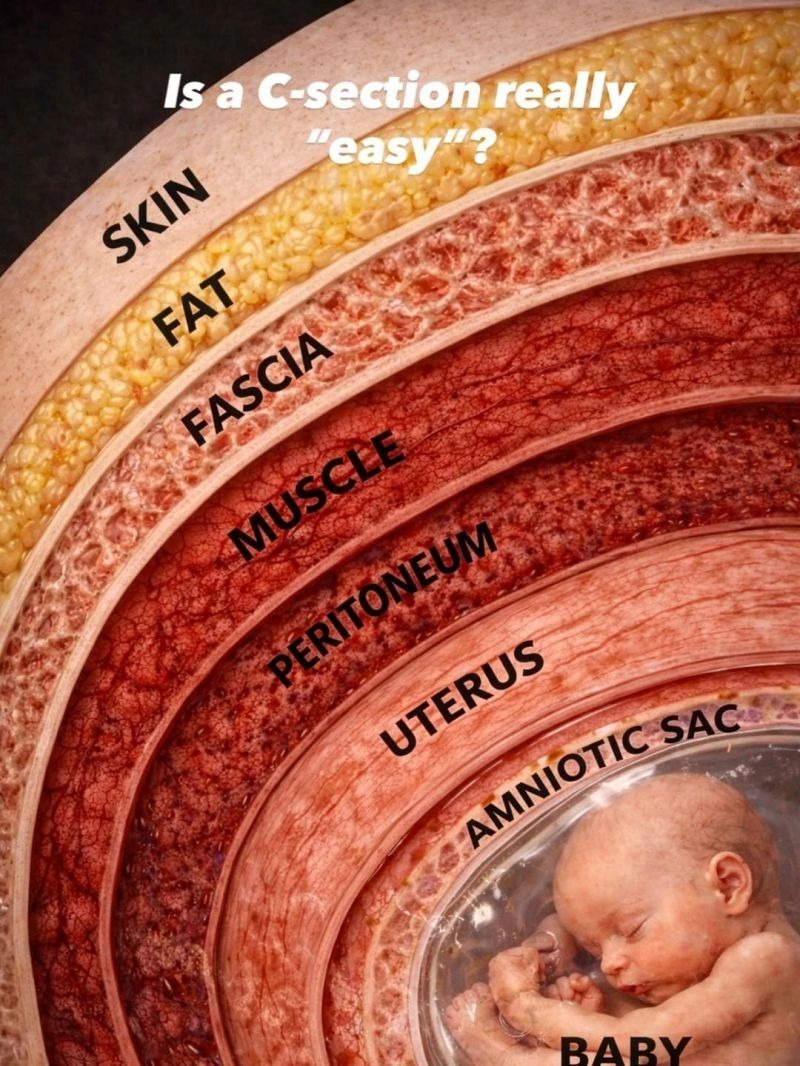
The image breaks down a cesarean section (C-section) layer by layer, offering a powerful visual reminder of what actually happens during this common surgical procedure. While C-sections are routine in modern medicine and often life-saving, the idea that they are the “easy way out” of childbirth doesn’t hold up when you look at the anatomy involved.
What the Image Shows: Layers Crossed During a C-Section
A C-section is not a single cut—it involves passing through multiple layers of tissue, each with its own function and role in protecting both the mother and the baby.
1. Skin
This is the outermost layer where the surgical incision begins. After surgery, this layer heals visibly, forming the familiar C-section scar.
2. Fat
Below the skin lies a layer of fatty tissue. Its thickness varies from person to person and must be carefully separated during surgery.
3. Fascia
The fascia is a tough, fibrous layer that holds muscles and organs in place. Surgeons must open this layer precisely, as it plays a key role in abdominal strength and healing.
4. Muscle
Contrary to popular belief, abdominal muscles are usually separated, not cut, but this still causes trauma and contributes to post-surgery pain and reduced mobility.
5. Peritoneum
This thin membrane protects the abdominal organs. Opening it allows access to the uterus but also increases the complexity of the surgery.
6. Uterus
The uterus is then carefully incised. This is a major muscle organ, and healing here is critical for future pregnancies and overall recovery.
7. Amniotic Sac
Once the uterus is opened, the amniotic sac is reached, and the baby is delivered from within this protected environment.
8. Baby
Only after crossing all these layers does the baby enter the world.
Why Calling a C-Section “Easy” Misses the Reality
-
A C-section is major abdominal surgery, not a shortcut
-
Recovery can take weeks to months, often longer than vaginal delivery
-
Mothers may experience pain, limited movement, and fatigue while also caring for a newborn
-
There are long-term considerations, including scar tissue and impacts on future pregnancies
Why C-Sections Matter
Despite the challenges, C-sections are essential and life-saving in many situations—such as fetal distress, obstructed labor, placenta complications, or medical risks to the mother. Choosing or needing a C-section is not a failure; it is a medical decision focused on safety.
The Bigger Message of the Image
This image isn’t meant to scare—it’s meant to educate and build respect. Every birth, whether vaginal or surgical, involves strength, resilience, and recovery. A C-section is not “easy”; it is different, complex, and deeply demanding on the body.