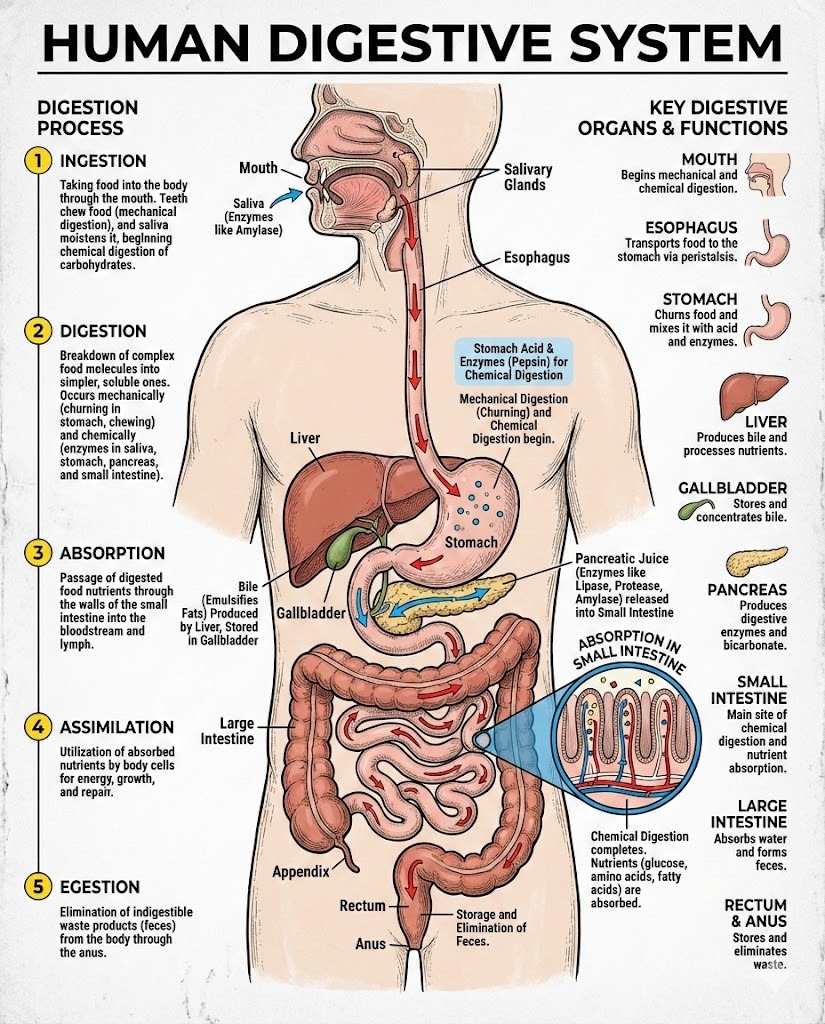
The human digestive system is a complex group of organs that work together to convert food into energy and essential nutrients required for growth, repair, and overall health. From the moment food enters the mouth to the elimination of waste, the digestive system plays a vital role in maintaining life.
What Is the Human Digestive System?
The human digestive system is a continuous muscular tube, also known as the gastrointestinal (GI) tract, along with accessory organs that help break down food chemically and physically. Its primary functions include:
-
Ingestion of food
-
Digestion of food into simpler substances
-
Absorption of nutrients into the bloodstream
-
Elimination of undigested waste
Main Organs of the Digestive System
1. Mouth (Oral Cavity)
Digestion begins in the mouth. Teeth break food into smaller pieces (mechanical digestion), while saliva contains enzymes that start the breakdown of carbohydrates.
Key functions:
-
Chewing (mastication)
-
Mixing food with saliva
-
Formation of bolus for swallowing
2. Esophagus
The esophagus is a muscular tube that transports food from the mouth to the stomach through rhythmic contractions called peristalsis.
Key function:
-
Movement of food to the stomach
3. Stomach
The stomach is a J-shaped muscular organ that stores food and mixes it with gastric juices containing hydrochloric acid and enzymes.
Key functions:
-
Partial digestion of proteins
-
Killing harmful bacteria
-
Converting food into semi-liquid chyme
4. Small Intestine
The small intestine is the longest part of the digestive tract and the main site of digestion and absorption.
Parts:
-
Duodenum
-
Jejunum
-
Ileum
Key functions:
-
Complete digestion of carbohydrates, proteins, and fats
-
Absorption of nutrients into the bloodstream
5. Large Intestine
The large intestine absorbs water and electrolytes from undigested food and forms solid waste (feces).
Key functions:
-
Water absorption
-
Vitamin production by gut bacteria
-
Formation and storage of feces
6. Rectum and Anus
These final parts of the digestive system store feces and control their elimination from the body.
Accessory Digestive Organs
Liver
-
Produces bile to help digest fats
-
Processes absorbed nutrients
Gallbladder
-
Stores and releases bile into the small intestine
Pancreas
-
Secretes digestive enzymes and hormones like insulin
Process of Digestion
-
Ingestion – Taking food into the mouth
-
Digestion – Mechanical and chemical breakdown of food
-
Absorption – Nutrients enter the bloodstream
-
Assimilation – Cells use absorbed nutrients
-
Egestion – Removal of undigested waste
Importance of the Digestive System
A healthy digestive system:
-
Supports immunity
-
Provides energy
-
Maintains nutrient balance
-
Promotes overall well-being
Poor digestion can lead to nutrient deficiencies, fatigue, and various gastrointestinal disorders.
Conclusion
The human digestive system is essential for survival, ensuring that the body receives nutrients needed for growth, repair, and energy. Maintaining digestive health through a balanced diet, hydration, and regular physical activity is crucial for long-term wellness.