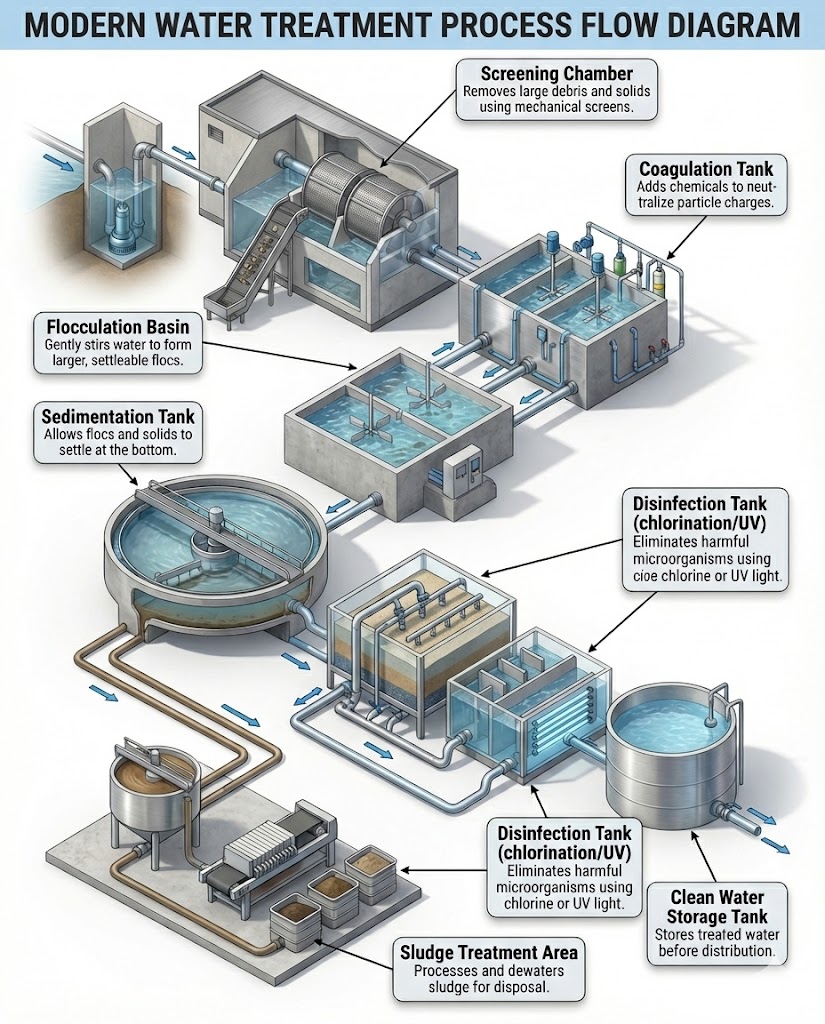
Clean water doesn’t magically appear in your tap. Behind the scenes, modern water treatment plants work 24/7, using advanced technology to turn raw, dirty water into safe drinking water. With rising urban populations and growing water stress, these facilities have quietly become one of the most critical parts of modern infrastructure.
Here’s a simple look at how today’s water treatment plants work—and why they matter more than ever.
Where It All Starts: Collecting Raw Water
Water treatment begins with raw water drawn from rivers, lakes, reservoirs, or underground sources. This water may look clear at times, but it often contains dirt, bacteria, chemicals, and other harmful substances that make it unsafe to drink.
Before any treatment starts, the water is tested to check quality levels and decide the exact treatment needed.
Step One: Screening and Removal of Large Waste
The first stage is all about removing big, visible impurities. Screens and filters trap leaves, plastics, sticks, and other debris. This protects equipment downstream and keeps the process running smoothly.
Think of it as a basic clean-up before the real work begins.
The Science Kicks In: Coagulation and Flocculation
Here’s where chemistry plays a key role. Chemicals like alum are added to the water to make tiny dirt particles stick together. These clusters, called “flocs,” grow larger and heavier during gentle mixing.
This step makes it much easier to remove impurities that are too small to filter out directly.
Letting Dirt Settle: Sedimentation
Once flocs are formed, water is left undisturbed in large tanks. The heavy flocs settle at the bottom, leaving clearer water on top. The settled sludge is collected and treated separately.
This process removes a major portion of suspended solids from the water.
Deep Cleaning: Filtration
The clearer water now passes through layers of sand, gravel, and sometimes activated carbon. Filtration removes remaining fine particles, bacteria, and some chemicals.
By this stage, the water looks clean—but it’s not fully safe yet.
Final Shield: Disinfection
To kill harmful microorganisms, disinfectants such as chlorine, ozone, or ultraviolet (UV) light are used. This step ensures the water is safe for drinking and prevents diseases like cholera and typhoid.
A small amount of disinfectant is often left in the water to protect it while it travels through pipelines.
Smart Tech and Sustainability
Modern plants now use automation, sensors, and real-time monitoring to improve efficiency and reduce water loss. Many facilities also recycle treated wastewater for industrial use, gardening, or groundwater recharge.
Energy-efficient pumps and eco-friendly treatment methods are helping reduce the environmental footprint of these plants.
Why It Matters
With climate change, pollution, and growing demand, clean water is becoming harder to secure. Modern water treatment plants play a vital role in protecting public health, supporting cities, and ensuring a reliable water supply for the future.
The next time you turn on the tap, remember—there’s a powerful system working behind the scenes to keep that water safe.