The pharmaceutical industry is undergoing a profound metamorphosis, driven by the integration of Artificial Intelligence (AI) and Machine Learning (ML). Historically viewed as a specialized computational tool used primarily for data crunching in silos, AI has rapidly evolved into a central value creator, fundamentally reshaping the entire drug lifecycle, from initial target identification to patient stratification and commercial strategy. This shift is critical because the traditional model of drug development is increasingly unsustainable, characterized by escalating costs, long timelines that frequently exceed a decade, and notoriously high failure rates, often peaking above 90% in clinical phases. AI promises to be the decisive lever that can bend this curve, offering predictive accuracy, enhanced speed, and ultimately, greater patient benefit.
The journey begins in the foundational stage of drug discovery. Target identification and validation—the process of selecting a molecule or pathway to intervene upon—is traditionally manual, expensive, and often reliant on fragmented literature and institutional knowledge. AI algorithms, particularly those leveraging Natural Language Processing (NLP) and graph neural networks, can sift through billions of data points derived from scientific publications, electronic health records (EHRs), genomic repositories, and chemical compound libraries at speeds impossible for human researchers. By identifying novel protein-protein interactions, mapping disease pathways, and prioritizing targets based on predicted druggability and disease relevance, AI dramatically shrinks the search space. This move ensures that resources are committed to the most promising avenues from the outset, moving target selection from an educated guess to a data-driven certainty.
Once a target is validated, the subsequent stage, hit identification and lead optimization, is equally transformed. Computational chemistry, powered by deep learning models, is now capable of *de novo* drug design, generating entirely new chemical entities with desired properties (e.g., binding affinity, specificity, permeability) rather than simply screening existing libraries. Generative AI models can optimize molecular structures iteratively, predicting how slight chemical modifications will impact efficacy and safety profiles. This accelerated process not only saves millions of dollars in wet-lab experimentation but also bypasses synthesis bottlenecks, bringing lead compounds into preclinical testing faster. For instance, predicting ADMET (absorption, distribution, metabolism, excretion, and toxicity) properties *in silico* minimizes the risk of late-stage failure due to unexpected toxicity, a major historical impediment in drug development.
Moving into preclinical development, AI becomes indispensable for risk reduction. High-throughput screening (HTS) data, toxicology reports, and animal model results are fed into ML models to create predictive toxicity and efficacy profiles far more nuanced than traditional statistical methods. Digital pathology, utilizing AI for image analysis, can rapidly and accurately quantify tissue responses to novel compounds, ensuring objective assessment. Furthermore, the integration of multi-omics data (genomics, proteomics, metabolomics) allows researchers to create virtual patient cohorts and simulate drug response dynamics, providing essential context before the costly transition to human trials. This meticulous preclinical AI-driven vetting is crucial for creating value by filtering out toxic or ineffective candidates early.
The clinical trial phase represents the most significant financial and time commitment in the pharmaceutical pipeline, and it is here that AI’s value creation potential is enormous. AI is revolutionizing trial design and execution. Firstly, patient recruitment and retention are notoriously slow. ML algorithms can analyze EHRs, insurance claims data, and demographic information to identify and predict suitable patient populations with high accuracy, ensuring trials are populated efficiently and reducing enrollment timelines. Secondly, AI enables adaptive trial designs, allowing parameters like dosage, treatment arms, or endpoints to be modified in real-time based on accumulating data, accelerating decision-making while maintaining statistical rigor. This capability significantly shortens the duration of trials and reduces the number of patients required, optimizing resource allocation.
Beyond logistics, AI enhances data management and analysis during trials. Wearable sensors and continuous patient monitoring generate massive, complex, longitudinal datasets. Deep learning models can analyze this high-dimensional data for subtle patterns indicative of treatment response, adverse events, or disease progression that human monitors might miss. NLP is used to quickly synthesize unstructured data from investigator notes, adverse event reports, and patient diaries, turning qualitative information into quantifiable metrics. This not only streamlines regulatory submissions but also generates richer insights into drug mechanism and heterogeneity of patient response, driving the trend toward precision medicine.
The impact of AI extends well beyond the lab and clinical settings, permeating manufacturing and supply chain management—areas where efficiency directly translates to cost reduction and reliable product availability. AI-driven predictive maintenance monitors manufacturing equipment using sensor data, anticipating failures before they occur and minimizing costly downtime, which is particularly critical in sterile environments. Furthermore, advanced process control algorithms optimize complex chemical synthesis and fermentation processes, ensuring maximum yield and consistent product quality, adhering strictly to Good Manufacturing Practices (GMP). In the supply chain, AI models predict demand fluctuations, optimize inventory levels across global distribution networks, and track temperature and logistics conditions in real-time, preventing spoilage and ensuring drug integrity from factory to patient. This optimization creates value by reducing waste, improving resilience, and lowering operational expenditure.
Post-commercialization, AI continues to generate value through personalized medicine and enhanced pharmacovigilance. Precision medicine relies on stratifying patient populations based on their genetic makeup and biological markers to ensure they receive the most effective treatment. AI algorithms analyze genomic data alongside clinical data to develop companion diagnostics and predict individual response to therapies, maximizing efficacy and minimizing side effects for the end-user. In pharmacovigilance, AI systems use NLP and machine learning to rapidly scan and interpret vast quantities of post-market safety data, including social media, online forums, and official regulatory submissions. This capability allows pharmaceutical companies to detect rare or complex adverse drug reactions much faster than traditional methods, enabling quicker response times, maintaining patient safety, and ensuring regulatory compliance, thereby protecting the brand and financial viability of the approved medication.
However, the transition to an AI-driven pharmaceutical enterprise is not without significant hurdles, which the industry is actively addressing. The most prominent challenge is data. AI models are only as good as the data they are trained on, yet pharmaceutical data often remains siloed, proprietary, heterogeneous, and plagued by quality issues. Establishing robust, standardized data governance frameworks, promoting data sharing (while maintaining patient privacy and competitive advantage), and integrating disparate datasets are prerequisite steps for maximizing AI’s potential. Furthermore, regulatory bodies, such as the FDA and EMA, are grappling with how to validate and regulate AI/ML algorithms, particularly those that are continuously learning or ‘locked down’ for commercial use. Clear guidelines on explainability (XAI) and model robustness are essential to build trust and ensure the safety of AI-derived therapies.
Ethical considerations are also central to AI’s value creation. Bias embedded in training data—often reflecting historical underrepresentation of certain demographic groups in clinical trials—can lead to models that perform poorly or unfairly in diverse populations. Pharmaceutical companies must commit to developing ethical AI practices, ensuring model fairness, transparency, and accountability throughout the development lifecycle, especially as AI influences critical decisions in patient care and clinical research. The industry must proactively mitigate algorithmic bias to ensure that AI serves as an equitable tool for global health improvement.
The future of AI in pharma centers on convergence and hyper-automation. Expect to see greater integration of ‘digital twins’—virtual representations of patients, organs, or clinical trials—where AI simulations drive real-world decision-making. Furthermore, the convergence of AI with synthetic biology and advanced robotics is leading to fully automated ‘lights-out’ labs capable of autonomous discovery and experimentation. This hyper-automation dramatically accelerates the entire R&D pipeline, reducing the discovery-to-market timeline from twelve years to potentially half that duration, solidifying AI’s role not just as a computational aid, but as the foundational engine of innovation.
In conclusion, the story of AI in the pharmaceutical world is no longer about incremental efficiency gains; it is about transformational value creation. By accelerating target identification, optimizing compound design, streamlining clinical trials, ensuring manufacturing quality, and personalizing treatment after launch, AI addresses the core inefficiencies of the legacy drug development model. It moves the industry towards a future defined by higher success rates, lower costs, and treatments precisely tailored to individual patient needs. Mastery of AI is now synonymous with operational excellence and competitive advantage in the race to bring life-saving therapies to market, cementing AI’s status as the quintessential value creator in modern pharmacology.
The ongoing development of specialized AI platforms dedicated solely to therapeutic areas, such as oncology or rare diseases, indicates a deepening maturity in the field. These platforms incorporate disease-specific knowledge graphs and proprietary biological insights, allowing for highly contextualized predictive modeling. Instead of generic screening, these AI systems can simulate the complex microenvironment of a tumor or the systemic effects of a genetic mutation, offering unprecedented specificity in drug design. This focus on domain-specific AI applications ensures that the generated value is highly targeted and clinically relevant.
Moreover, the economic value generated by AI extends to intellectual property (IP). AI is increasingly used to explore novel chemical spaces, generating compounds that are inherently patentable and defensible. This proactive approach to IP generation protects future revenue streams and increases the valuation of pharmaceutical assets. The ability of AI to rapidly iterate and discover backup compounds also strengthens a company’s portfolio against unexpected clinical setbacks or competitor challenges, providing a strategic safety net that traditional R&D lacks.
Another crucial area of value is the reduction of patient burden. By using AI to identify the most suitable candidates for a trial and predict likely responders, fewer patients are subjected to potentially ineffective placebos or treatments. Furthermore, the use of remote monitoring via AI-connected devices allows for decentralized clinical trials, reducing the need for frequent site visits and significantly improving patient quality of life and adherence to trial protocols. This human-centric application of AI is a key component of its long-term ethical and societal value proposition.
The financial impact of AI integration is quantifiable. Studies consistently show that companies leveraging AI heavily across their R&D pipeline demonstrate higher productivity per dollar spent compared to their peers. This productivity gain is measured not just in faster timelines but in the quality of the candidates advanced—candidates with better predicted toxicity profiles and higher probabilities of success. This improved asset quality fundamentally shifts the risk landscape for investors and stakeholders, reinforcing AI’s role as a financial value driver.
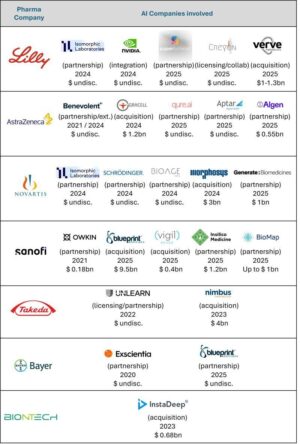
Finally, the competitive landscape is forcing adoption. Pharmaceutical firms that hesitate in integrating advanced AI are quickly finding themselves at a disadvantage in the race for novel targets and market entry. Partnerships between established pharmaceutical giants and nimble AI-first biotech startups are becoming the norm, indicating that AI competence is now a non-negotiable requirement for leadership in the industry. The transformation is comprehensive: AI is not merely optimizing processes; it is defining the future capacity of the industry to innovate and deliver health outcomes.
Further refinements in chemical synthesis and manufacturing quality control through AI are continuously improving the reliability of drug supply. Using vision systems coupled with deep learning, AI can inspect drug products, packaging, and raw materials with far greater speed and accuracy than human operators, minimizing batch failures and ensuring purity standards. Real-time release testing, enabled by AI-driven analysis of manufacturing data, accelerates the time it takes for a finished product to reach the market, creating faster access for patients and quicker revenue recognition for the company. This operational excellence driven by AI provides tangible economic benefits.
The complexity of modern drug modalities, such as gene therapies and advanced biologics, necessitates AI intervention. These therapies involve incredibly complex manufacturing and delivery challenges. AI models are essential for designing optimal vectors, predicting the immunogenicity of therapeutic proteins, and managing the intricate supply chain requirements (e.g., ultra-cold chain logistics). Without AI to manage the vast input variables and biological complexities, the scaling and industrialization of these cutting-edge treatments would be significantly slower, if not impossible. Thus, AI is not just enhancing traditional pharma; it is enabling the next generation of therapeutics.
In essence, the narrative arc of AI in the pharmaceutical industry has matured from early hype to realized capability. It has transitioned from being a niche computational tool to an embedded layer of strategic intelligence across all operational domains. The value generated is multifaceted—spanning scientific discovery, financial efficiency, regulatory compliance, and most importantly, improved patient outcomes. The persistent commitment to data infrastructure, ethical development, and interdisciplinary collaboration will determine which organizations fully capitalize on AI’s potential to become the dominant value creators in the future of medicine.